
Is a 3-in-1 filling machine suitable for bottled water?
Time : Sep 30, 2026
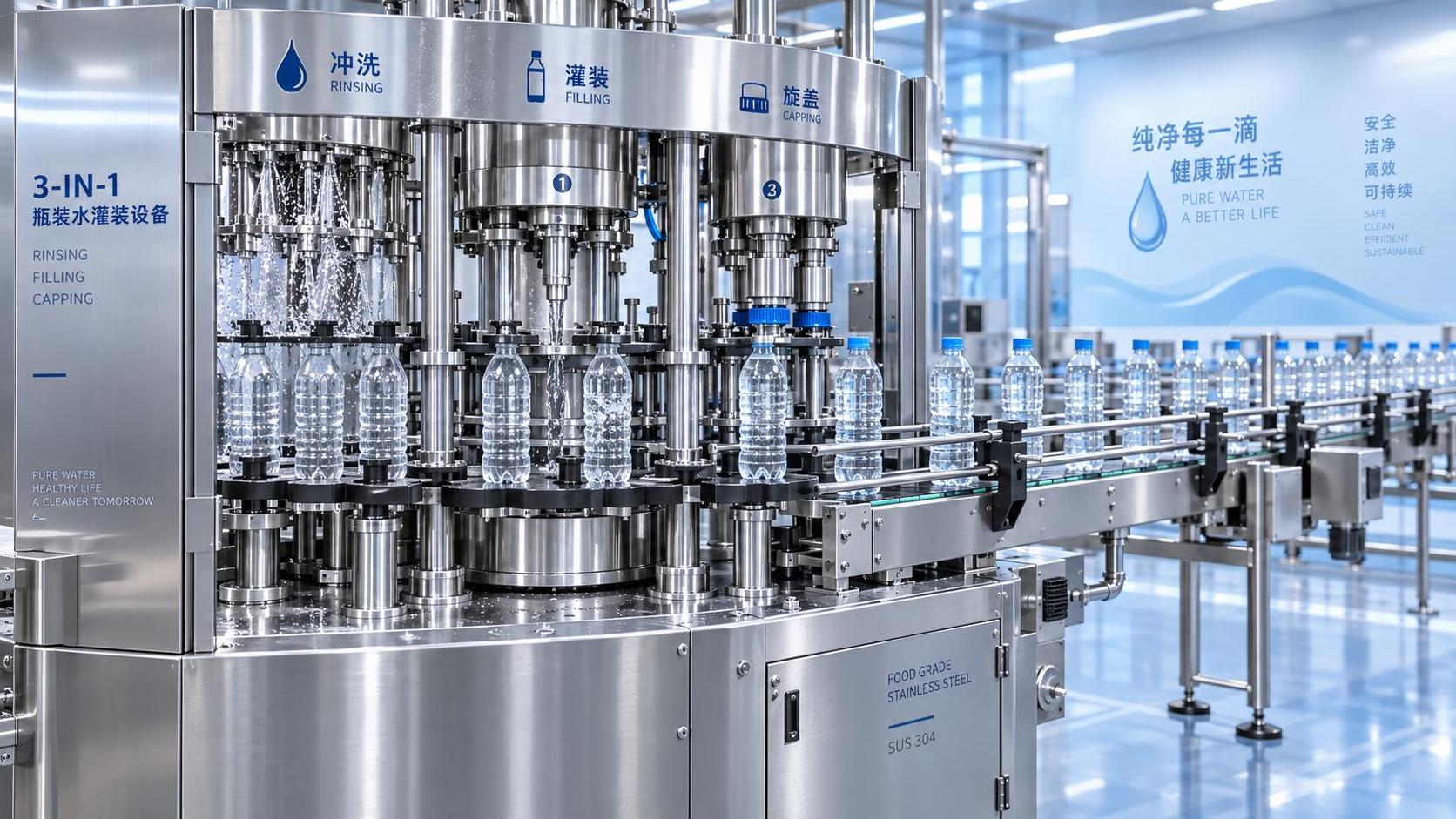
A 3-in-1 filling machine is usually a suitable choice for bottled water when the product is still, non-carbonated water and the facility needs a hygienic, continuous process for bottle rinsing, filling, and capping. For many new lines or equipment replacement projects, combining these stations reduces bottle handling between operations and simplifies the line layout.
It is not automatically the best choice in every case. A procurement decision should depend on the intended bottle format, required output, water treatment arrangement, cap type, sanitation expectations, available floor space, and the ability of the surrounding equipment to match the monoblock’s speed. Buying a machine with the right nominal capacity but the wrong bottle range or utility requirements can create delays long after installation.
Where a 3-in-1 configuration fits bottled water production
In a typical bottled water process, treated water arrives at the filling section after filtration, sterilization, storage, and transfer through sanitary piping. Empty bottles then need to be rinsed or blown clean, filled under controlled conditions, and capped before they are conveyed to labeling and packing. A 3-in-1 Filling Machine places the rinsing, filling, and capping functions inside one coordinated enclosure or machine frame.
This arrangement is especially practical when the line is dedicated primarily to one category of bottled water. It is commonly considered for purified water, mineral water, spring water, and other still-water products packed in PET bottles. The integrated design can reduce the number of transfer points where bottles are exposed to the production environment. It also avoids the need to synchronize three separate standalone machines through a longer conveyor system.
The strongest fit is usually a facility that wants stable, repeatable production rather than frequent changes between unrelated products. When operators are producing the same bottle family across a regular schedule, the benefits of integration become more meaningful: fewer handoffs, fewer independent control points, and a more compact wet-end line.
The answer changes with the water product
“Bottled water” can describe several products with very different filling requirements. Procurement teams should first define the actual beverage rather than assuming every water product uses the same machine configuration.
Still water is the most straightforward application because it does not require the pressure management associated with carbonated drinks. However, a simple product does not remove the need for hygienic engineering. The filler should be matched to the water source treatment process, sanitation routine, and the level of protection expected around open bottles and filling valves.
Flavored water creates a different concern. Even when the beverage looks similar to plain water, added sweeteners, acids, vitamins, or flavor compounds can leave residues and increase cleaning demands. A machine selected only for plain water may be difficult to clean adequately after frequent product changes. In that situation, the supplier should clarify the cleaning sequence, contact surfaces, drainability, and whether the filler arrangement is appropriate for the product formula.
Why integration can reduce operational friction
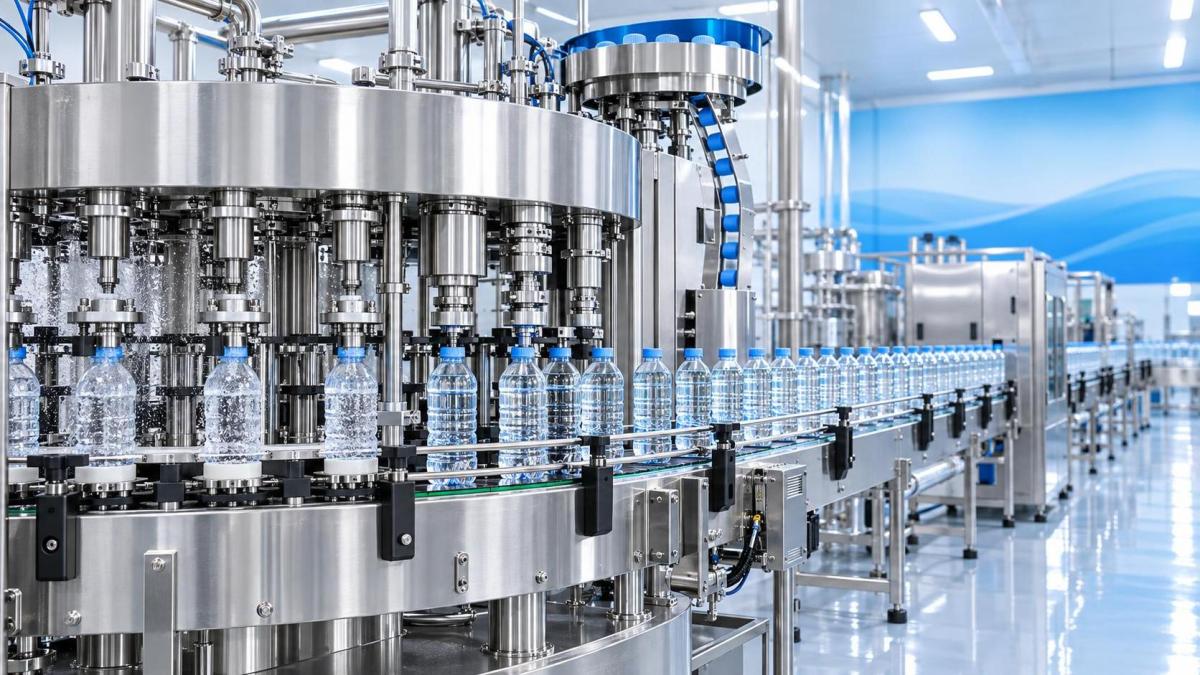
On a line built from separate rinser, filler, and capper units, bottles travel through multiple transfers. Each transfer requires alignment, conveyor control, and enough accumulation to prevent one machine from stopping another. That setup can work well, especially in complex plants, but it creates more points where bottles can tip, jam, scuff, or lose spacing.
An integrated monoblock keeps the bottle under controlled handling through the three main stages. This can improve consistency when bottle neck dimensions are stable and the machine is properly adjusted. The layout is also generally easier to fit into a smaller production area than three fully separate units with long connecting conveyors.
There is an important trade-off: integration also means that a fault in one section can stop the whole monoblock. A cap feed issue, for example, may halt filling even if the rinser and filler are mechanically ready. For this reason, procurement should not treat “integrated” as a synonym for “maintenance-free.” It should mean fewer interfaces, not fewer maintenance responsibilities.
Capacity should be assessed as a line condition, not a catalog number
A common purchasing mistake is selecting equipment based only on bottles per hour. The stated output of a filling machine is meaningful only under defined bottle size, product conditions, cap supply, operator practices, and downstream acceptance. If the labeler, shrink packer, or case packer runs more slowly, the filling machine will either wait frequently or require accumulation space.
Start with the expected production schedule. Consider the volume to be packed during a normal operating period, then allow for cleaning, changeovers, startup checks, cap replenishment, label changes, and routine stoppages. The practical requirement is not simply the highest possible speed. It is the speed that allows the line to meet planned production without forcing every connected machine to run at its limit.
Ask suppliers to state capacity against the specific bottle size being quoted. A machine may handle several bottle formats, but output can vary according to bottle diameter, neck finish, filling volume, and transfer stability. Small bottles may move differently from larger bottles, while unusually lightweight PET bottles can be more sensitive to guide-rail and starwheel adjustment.
Check the upstream and downstream balance
- Confirm that treated water storage and transfer pumps can supply the filler continuously at the required flow and pressure.
- Verify that the bottle unscrambler or air conveyor can feed bottles without starvation or excessive pressure.
- Match cap elevator or cap sorter output to the capper’s operating demand.
- Review whether the labeler and packing equipment can accept the real operating speed, not only their peak rating.
- Allow suitable accumulation where short downstream interruptions are expected.
A line is only as stable as its least coordinated section. The filling monoblock may be technically capable of the requested output, yet still operate inefficiently if the cap supply or packing station repeatedly interrupts production.
Bottle and cap details often decide the project
Before requesting a final quotation, provide actual bottle samples whenever possible. Drawings are useful, but physical bottles reveal issues such as uneven neck rings, flexible sidewalls, inconsistent base shape, or labels that make handling more difficult. The machine’s bottle gripping method must suit the bottle finish and body geometry. This matters particularly when several bottle sizes will be used on the same line.
Cap selection should receive equal attention. The capper must be configured for the cap diameter, height, thread pattern, closure material, and required application method. A poor cap-machine match can lead to cross-threading, loose closures, damaged tamper bands, or unstable cap feeding. These defects are not just cosmetic; they can affect package integrity and increase inspection or rework requirements.
Where multiple bottle formats are planned, ask what change parts are required and how the changeover is performed. Starwheels, guide parts, neck holders, and cap-handling components may need replacement or adjustment. The relevant question is not whether a machine is described as “multi-size,” but whether the planned format changes are realistic for the production schedule and available operator skill.
Hygiene depends on the complete process around the machine
A 3-in-1 arrangement supports hygienic production, but it cannot compensate for weak water treatment, poor bottle storage, contaminated caps, or inadequate cleaning procedures. Procurement teams should review the complete route from treated water outlet to sealed bottle discharge.
Key points include the construction of product-contact parts, the accessibility of cleaning areas, the ability to drain residual water, the protection of open bottles before capping, and the cleaning method for the filler. The required level of sanitation should reflect the water source, product category, plant environment, and internal quality-control procedures.
Rinsing also needs clarification. Some lines use treated water for bottle rinsing; others may use air rinsing or another configured method depending on the bottle condition and production concept. The goal is not to add a rinse step by default, but to ensure that the selected method is suitable for incoming bottles and does not introduce an avoidable contamination pathway.
When a separate-machine layout may be the better decision
An integrated system is not always preferable. Separate rinser, filler, and capper machines can make sense when a plant needs unusual process flexibility, expects frequent major format changes, has an existing line where only one station needs replacement, or wants to isolate maintenance work to a single unit. A facility with diverse beverage types may also prefer separate equipment if the filling section needs to change substantially between products.
There may also be practical reasons to avoid a monoblock. Limited access for maintenance, difficult utility routing, irregular building layout, or a need to retain existing conveyors can affect the decision. In these cases, the cost of adapting the site may outweigh the compactness benefit of an integrated machine.
Questions to settle before issuing a purchase order
Rather than starting with a broad request for a “water bottling machine,” prepare a process brief that defines the operating conditions. The more specific this information is, the easier it becomes to compare proposals on the same basis.
- What water product will be filled, and is it always still water?
- Which bottle volumes, neck finishes, materials, and shapes will run on the line?
- What cap types will be used, including tamper-evident requirements?
- What is the required practical output by bottle format?
- How is water treated and delivered to the filling machine?
- What cleaning and sanitation procedures are expected between runs?
- Which upstream and downstream machines must connect to the monoblock?
- What utilities are available, including electrical supply, compressed air, water, drainage, and space for maintenance access?
The packaging scope should also be defined early. A filling machine closes the bottle, but it does not necessarily handle secondary packaging or every form of tamper-evident finishing. Where the finished pack requires an additional heat-shrink operation, that equipment should be evaluated separately from the filling monoblock. For example, the RS-1 Automatic Capsule Heat Shrink Machine may be considered as a separate downstream element where the chosen package specification calls for that type of finishing. Its role, footprint, and operating speed should be checked against the rest of the line rather than assumed to be included in the filler purchase.
A practical selection position
For a dedicated still-water operation using consistent PET bottle formats, a properly specified 3-in-1 filling machine is often a sound procurement choice. It can streamline the wet end of the line, reduce transfers between rinsing, filling, and capping, and support a compact production layout. The decision becomes less straightforward when the product is carbonated, hot-filled, heavily flavored, packed in difficult container formats, or produced alongside many other beverage types.
The most reliable way to evaluate suitability is to treat the machine as one part of a connected system. Confirm the real bottle and cap specifications, sanitation needs, utility conditions, expected operating output, changeover demands, and downstream packaging requirements before comparing models. That approach prevents a seemingly suitable monoblock from becoming the point where the entire bottled water line loses flexibility or throughput.
Leave A Message
If you are interested in our products and want to know more details, please leave a message here, we will reply you as soon as we can.