
How to choose a bottle capping machine for multiple cap sizes
Time : Oct 09, 2026
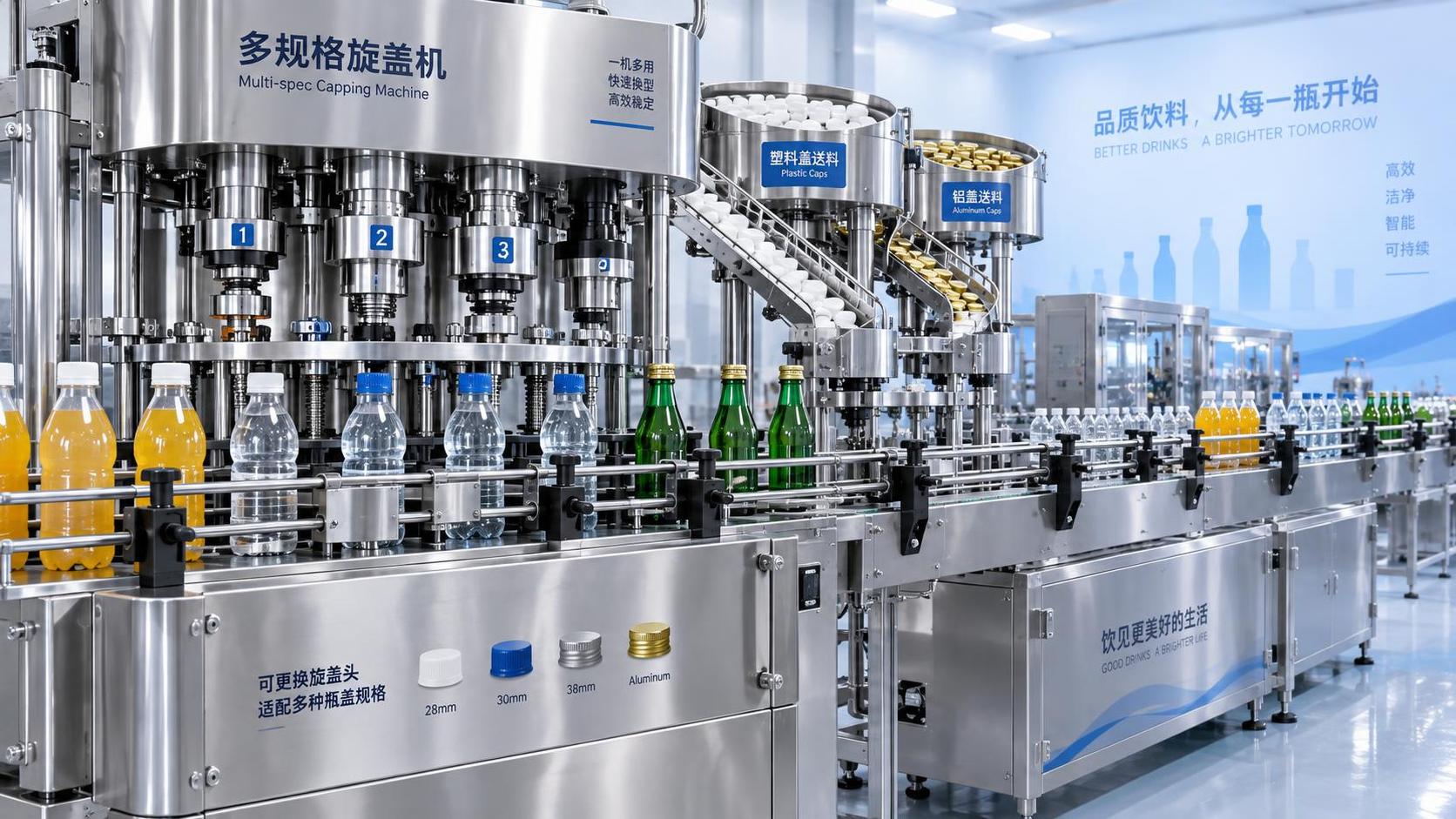
A multi-size capping requirement usually becomes visible when a beverage line starts handling more than one bottle format: a standard retail bottle, a smaller promotional pack, a premium glass bottle, or a seasonal SKU with a different closure. The problem is rarely just whether the cap can physically fit into a machine. The real risks are inconsistent sealing, cap damage, slow format changes, rejected bottles, and operators spending too much time re-adjusting the capper between runs.
The right Bottle Capping Machine for multiple cap sizes is not necessarily the one with the widest published size range. It is the machine whose cap handling, bottle guidance, capping heads, torque adjustment, and change parts can be configured for your actual bottle-and-cap combinations without creating excessive downtime. Before comparing prices or maximum speeds, define every closure format, verify compatibility through samples or trials, and evaluate how each changeover is performed on the production floor.
Start with the cap-and-bottle matrix, not the machine brochure
Procurement decisions often begin with a target output rate, then move directly to equipment quotations. That approach can miss the source of most multi-format problems: the interaction between the closure and the container. Two caps with a similar diameter may need very different handling because their height, skirt shape, thread design, liner, knurling, or material behaves differently during application.
Build a matrix listing every current format and any confirmed future format that the line is expected to run. Include the bottle and cap as a matched set. A useful review should cover:
- Bottle material: PET, glass, or another container material.
- Neck finish dimensions, thread profile, neck height, and support-ring geometry.
- Cap type: screw cap, aluminum cap, plastic closure, lug cap, tamper-evident cap, or another format.
- Cap diameter, height, internal liner or insert, and whether the cap has a tamper-evident band.
- Required sealing method, such as threaded closure application, roll-on forming, or another process.
- Expected speed by SKU, including whether short runs require frequent changes.
- Product conditions that may affect the package, such as carbonation, hot filling, cold filling, or sticky exterior surfaces.
This information separates a genuinely flexible requirement from a loosely defined one. For example, a line may only need to run two related cap diameters with the same basic closure style. That is much easier to manage than a line expected to alternate between tall plastic screw caps and aluminum roll-on closures. A supplier may describe both as “multi-size,” but the mechanical requirements, cap feeding arrangement, and change parts can be very different.
Distinguish adjustable settings from format-specific hardware
One of the most important questions in a multi-cap project is: what actually changes when the cap size changes? Some adjustments can be made through guides, handwheels, height settings, or controlled parameters. Others need dedicated hardware. Purchasing teams should ask for this distinction in writing rather than assuming that “adjustable” means no additional parts are required.
A machine that requires several well-designed change parts is not automatically a poor choice. In fact, dedicated components can provide better cap control and repeatability than a universal arrangement pushed beyond its practical range. The decision point is whether the parts are easy to identify, store, install, and verify. Ask for a format-parts list for each cap and bottle combination, including whether parts are included in the quotation and what must be ordered separately.
Also ask whether the machine can retain repeatable settings for each format. A changeover becomes less dependent on operator judgment when guide positions, head height, feeder settings, and capping parameters are clearly documented. Marks, scales, recipes, or other controlled reference methods can reduce the chance of returning to a previous SKU with incorrect adjustments.
Cap feeding is often the hidden limitation
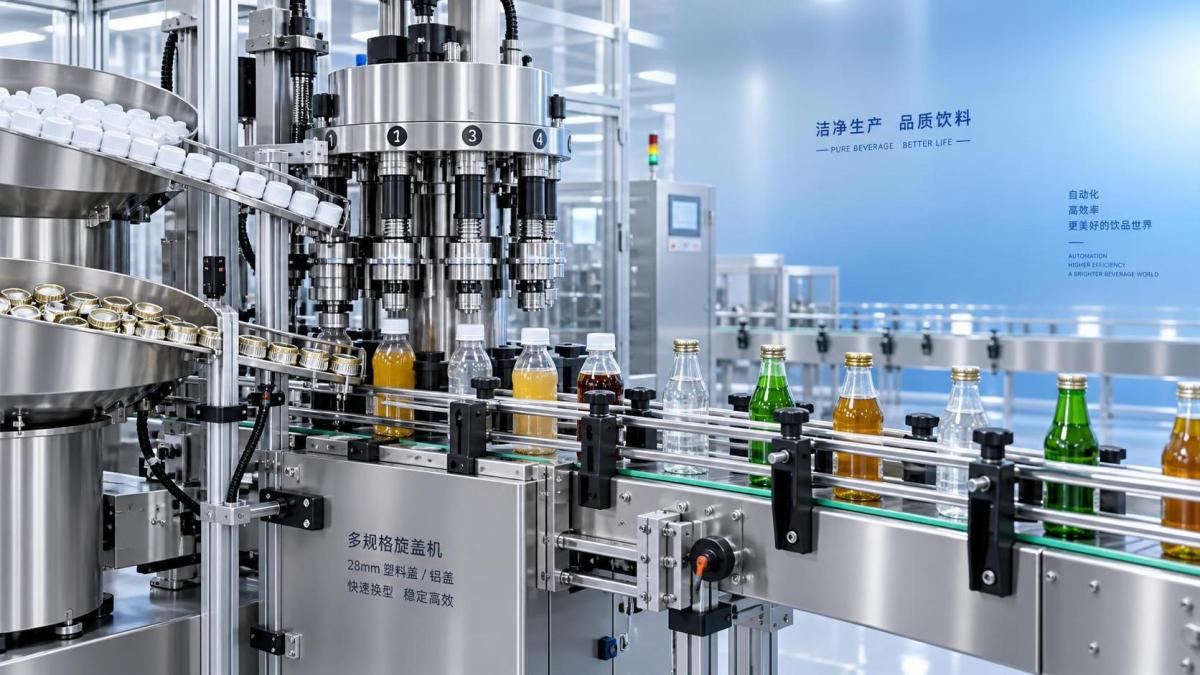
Buyers sometimes focus on the capping head because it performs the final closure operation. Yet cap feeding can determine whether a line runs smoothly or stops repeatedly. Every cap must arrive at the application point in the correct orientation, at the right spacing, without scuffing, nesting, or jamming. Different cap sizes may not travel reliably through the same hopper, elevator, centrifugal sorter, chute, or cap rail.
This is particularly relevant when cap dimensions vary noticeably. A taller cap may tip differently in a chute. A lightweight cap can be affected by static or airflow. A closure with a tamper-evident band may catch on an unsuitable rail. Aluminum closures need handling that avoids deformation before capping, since even minor damage can affect the final appearance or application process.
Ask the supplier to explain the feeding path from bulk loading to cap presentation. The review should not stop at a statement that the feeder supports a diameter range. Request confirmation of how each cap format will be oriented and transferred. If multiple cap types need different feeder components, include feeder changeover time in the overall format-change estimate.
Questions that reveal real feeder compatibility
- Does each cap run through the same sorting and delivery route?
- Which rails, chutes, or escapement parts change with each closure?
- Can the feeder be adjusted without tools, and which adjustments require tools?
- How is cap orientation checked before caps reach the bottles?
- What happens when caps bridge, overlap, or arrive incorrectly oriented?
- Can operators safely clear a jam without disturbing critical settings?
A supplier response should describe the mechanism, not simply confirm compatibility. “Suitable for different caps” is less useful than a clear explanation of the changes required for a 28 mm closure, a taller closure, or an aluminum cap with a particular profile.
Torque control must match the closure and the sealing objective
“Torque” is frequently used as a universal indicator of cap quality, but the relevant control method depends on the closure system. Threaded plastic caps often require controlled tightening behavior. Aluminum roll-on caps use a forming process that depends on the relationship between the capping head, rollers, bottle neck finish, and closure material. In either case, a machine must apply the closure consistently without damaging the cap, stripping threads, distorting the neck, or leaving an inadequate seal.
For multiple cap sizes, ask whether capping force, roller geometry, chuck contact, or head setup changes between formats. A setting that works well for a shorter cap may not be correct for a taller closure because the contact position and stability of the cap can change. Bottle height and neck rigidity matter as well. Lightweight PET bottles may need different support than glass bottles to prevent movement during application.
Do not rely only on a demonstration where a few bottles are capped successfully. The evaluation should consider startup behavior, sustained operation, and the quality checks used after a changeover. Define what your plant will inspect, such as cap alignment, visual damage, closure engagement, leak performance, and evidence of excessive application force. The equipment supplier does not need to make product-quality promises for you to establish acceptance criteria; the point is to ensure that the machine can be set up and monitored against your own packaging requirements.
Measure changeover in practical production terms
A stated changeover time can be misleading when it only refers to replacing one visible part. A full format change may include clearing caps from the feeder, changing rails, adjusting bottle guides, replacing star wheels, setting the capping head height, loading the correct recipe, restarting the machine, and confirming seal quality. For a line with short production runs, these activities may have more financial impact than a modest difference in top speed.
During machine evaluation, separate the changeover into three parts:
- Mechanical conversion: changing guides, cap components, supports, and other physical parts.
- Parameter setup: setting heights, pressures, speeds, or format-specific operating values.
- Restart verification: producing bottles, inspecting caps, and correcting minor alignment issues before the line is released.
Ask which tasks require a trained technician and which can be completed by an operator following documented instructions. A capper may be technically flexible but operationally unsuitable if each change demands extended manual adjustment by a specialist. Conversely, a machine with a moderate number of organized change parts may be a stronger fit if the procedure is stable and repeatable.
Check the machine’s place in the complete line
Capping performance does not depend on the capper alone. Bottles must enter in a consistent position and leave without being destabilized. Upstream filling conditions can leave product on the finish or shoulder, affecting grip and cleanliness. Downstream conveyors, labeling equipment, and accumulation zones may introduce pressure that causes freshly capped bottles to shift or fall.
Review the interfaces around the proposed machine. Confirm conveyor height, bottle transfer method, available line space, electrical and pneumatic requirements, and the ability to access feeder and capping components for cleaning and maintenance. If one bottle is significantly taller or narrower than another, check whether the infeed and discharge sections maintain stable control during both formats.
Where aluminum closures are part of the packaging range, an option such as the ZFG-6 Fully Automatic 6-Head Aluminum Cap Capping Machine should be assessed against the specific neck finish, closure dimensions, cap-feeding arrangement, and required change parts for the intended formats. Its suitability cannot be determined from head count alone; the closure type and conversion requirements remain central to the decision.
Use samples to test the difficult formats, not only the easiest one
When submitting samples for a technical review or machine trial, provide the complete set of containers and closures, including the formats most likely to cause trouble. Do not send only the standard bottle that already runs reliably elsewhere. Include the tallest bottle, the smallest cap, the cap with the most delicate finish, and any format with a tamper-evident feature or unusual bottle neck.
Samples should represent actual production materials rather than early design approximations whenever possible. A minor change in bottle neck finish, cap liner, cap material, or tamper band can change capping behavior. If final packaging is still under development, identify what remains subject to change and avoid treating compatibility as fully confirmed until the final components are available.
During evaluation, watch for more than obvious jams. Observe whether bottles remain centered, whether caps are presented consistently, whether the closure sits squarely before application, and whether operators can see and access the areas that need adjustment. A good test also shows how the machine recovers after a temporary interruption, not merely how it performs under ideal continuous feeding.
Build the purchase specification around repeatability
The final specification should translate the format matrix into measurable equipment requirements. State the bottle and cap ranges, identify every known closure type, list required change parts, define expected output by format, and specify the information needed for format conversion. Include requirements for operating manuals, parts identification, adjustment guidance, and recommended spare components for high-wear cap-contact areas.
For procurement, the most useful comparison is not “Which machine handles the most cap sizes?” It is “Which machine can run our confirmed cap range with controlled application quality, understandable conversion work, and manageable downtime?” That question keeps the selection focused on actual beverage packaging conditions rather than broad capability claims.
Leave A Message
If you are interested in our products and want to know more details, please leave a message here, we will reply you as soon as we can.