
What creates bottlenecks in a bottling production line?
Time : Nov 15, 2026
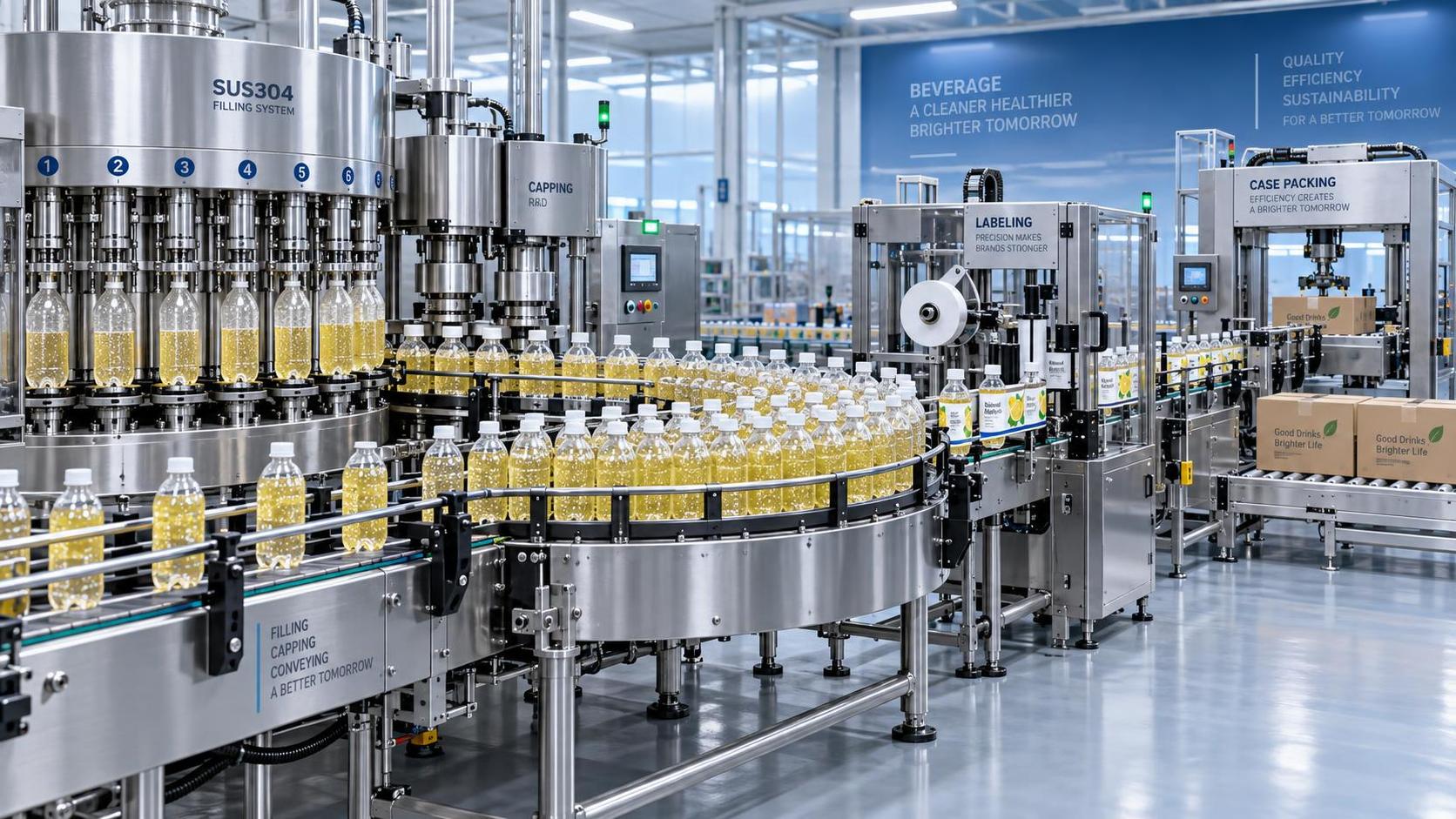
A bottling line rarely slows down because of one dramatic failure. More often, output is constrained by a small mismatch between connected machines: bottles arrive unevenly, the filler pauses to recover, caps or stoppers do not feed consistently, labels reject too often, or downstream packing cannot clear finished bottles quickly enough. The visible symptom may be a stopped conveyor, but the real bottleneck is usually the point that has the least stable effective capacity.
For decision-makers, the practical question is not simply which machine has the lowest rated speed. A bottling production line becomes constrained where actual performance falls below the pace required by the rest of the process. That gap can be caused by mechanical reliability, product variation, operator interventions, sanitation routines, poor line balancing, or an upstream or downstream accumulation problem. Finding it requires observing the line while it is running under normal production conditions, not relying only on nameplate capacity.
The bottleneck is often different from the machine that stops
When a line stops at the labeler, it is tempting to treat labeling as the root cause. Yet the labeler may be reacting to unstable bottle spacing from the filler, wet containers affecting label adhesion, or an accumulation table that is already full because case packing is not clearing bottles. In the same way, a filler that frequently starves may be capable of operating faster, but is limited by bottle infeed, rinsing, depalletizing, or an intermittent bottle unscrambler.
A useful working definition is simple: the bottleneck is the stage that most consistently limits sustainable output over a complete production period. It is not necessarily the station with the highest number of alarms, the most complicated equipment, or the most visible operator activity. The true constraint may shift during the day. At startup, bottle supply may control throughput. During stable running, filling or closure application may become the limit. During frequent product changes, changeover and cleaning time may matter more than running speed.
That distinction affects investment decisions. Adding speed to a filler will not improve total output when the capper, stopper feeder, labeler, or packer cannot absorb the additional flow. Before purchasing capacity, teams need to identify where bottles accumulate, where empty conveyor sections repeatedly appear, and which stop events consume the most production time.
Where bottlenecks usually form
Unstable container supply
Every downstream station depends on bottles arriving upright, correctly oriented, and at a predictable spacing. Bottle supply problems may begin with inconsistent depalletizing, poor accumulation control, damaged containers, static buildup, guide rails set too tightly, or conveyor speeds that do not match. Lightweight bottles can tip, while containers with unusual bases may rotate or drift through transfers. A bottle jam that lasts only a few seconds can trigger a longer recovery sequence when sensors remain blocked or infeed timing is lost.
Watch the conveyor before the suspected bottleneck. A sparse infeed indicates starvation. A dense, compressed queue that reaches the previous machine indicates blockage downstream. These two conditions require different action. Starvation points upstream; blockage points downstream. Treating both as “conveyor problems” often leads to adjustments that move the disruption rather than remove it.
Filling capacity that looks adequate on paper
Fillers are frequently evaluated by nominal bottles-per-hour ratings, but real output depends on fill volume, product viscosity, foaming behavior, fill-temperature variation, container geometry, sanitation requirements, and the amount of time spent correcting rejects. Carbonated or foam-prone beverages may require gentler handling or settling time. Products containing particulates can affect valve performance and cleaning intervals. A line may run smoothly with water and become unstable with a more demanding beverage, even when the bottle and target volume remain unchanged.
Repeated underfill or overfill corrections create a hidden bottleneck because operators may slow the line to protect quality. The appropriate response is not always to increase machine speed. Review fill consistency, product feed pressure, tank level stability, valve condition, container positioning, and the relationship between filler discharge and closure application. Filling should be assessed by accepted output, not gross bottles presented to the machine.
Closure and stoppering interruptions
Cap, cork, stopper, and closure handling can constrain an otherwise balanced line because these components are small, variable, and sensitive to orientation. Feeding faults, poor chute adjustment, worn escapement components, inconsistent closure dimensions, and incorrect application force can all create short but recurring stops. The effect is amplified when the filler must pause whenever the closure station loses synchronization.
In applications that use stoppers, reliable presentation and insertion need to be treated as part of line capacity rather than as a secondary finishing task. An automatic unit such as the DZ-2 Fully Automatic Stoppering Machine may be relevant where manual or inconsistent stoppering is limiting downstream flow, but its fit should be evaluated against bottle neck finish, stopper type, required output, infeed control, and the available accumulation space. Installing a faster closure unit without correcting upstream bottle positioning can simply create faster misfeeds.
Closure defects also have a quality cost. Loose, skewed, damaged, or missing closures can lead to rejects later in the line, which consumes inspection capacity and complicates traceability. The highest-value correction is usually to identify whether the issue originates in component quality, feeding, bottle alignment, application settings, or sensor logic.
Labeling and coding that cannot recover quickly
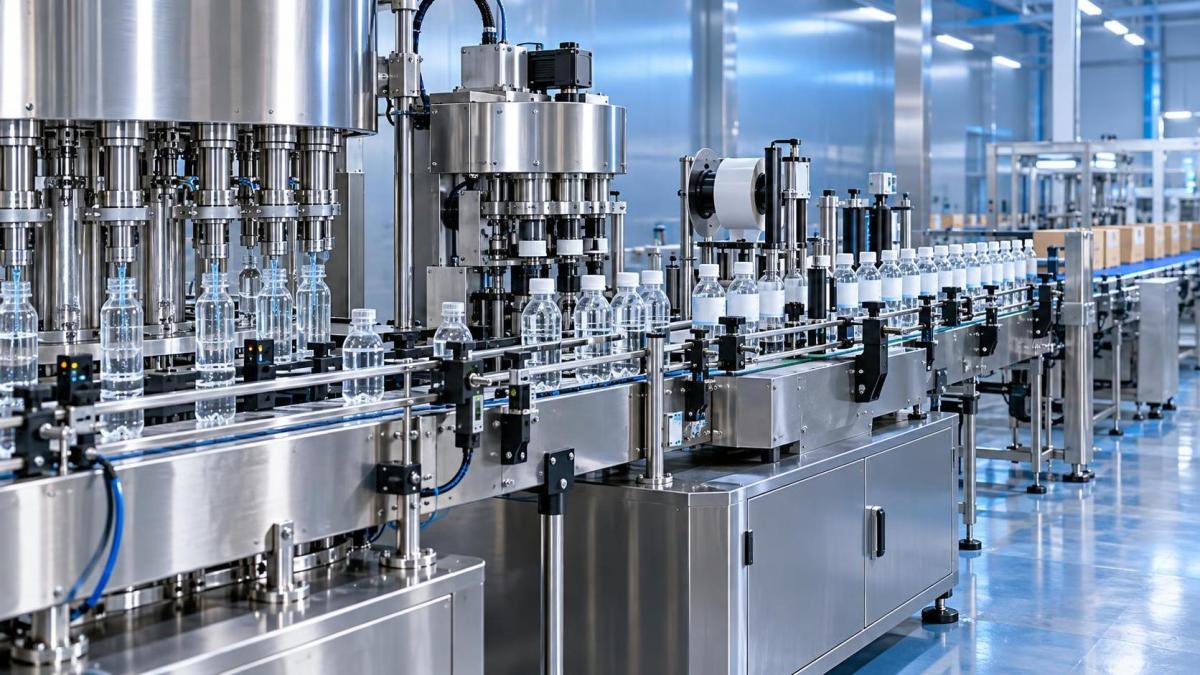
Labeling stations can become bottlenecks even when the application mechanism itself is fast. Bottles may arrive wet, poorly spaced, or rotated incorrectly. Label stock may be stored under unsuitable conditions, causing curl or poor dispensing. Different bottle diameters, tapered surfaces, and wraparound label materials can require more precise handling than a standard cylindrical container. Date coding adds another dependency: unreadable codes, incorrect placement, or verification failures can turn a minor adjustment into a stream of rejected bottles.
The most revealing measure is not just the number of labeling faults. Observe how long the machine takes to return to stable operation after an interruption. A line that restarts after a brief sensor reset behaves very differently from one that requires label-web rethreading, manual bottle removal, and repeated trial runs. Recovery time often matters more than the frequency of the alarm itself.
Downstream packing and discharge limits
Packaging is a common overlooked constraint. Bottles may leave the labeler at a high rate but slow sharply at shrink wrapping, tray loading, case packing, carton sealing, palletizing, or manual inspection. When downstream equipment cannot remove finished bottles, accumulation fills and eventually blocks the labeler, capper, and filler. Operators may then describe the filler as unreliable, when it is actually responding correctly to a full line.
Manual handling deserves the same attention as automated machinery. A person placing bottles into trays, changing carton blanks, clearing a discharge area, or inspecting closures can create predictable interruptions. This does not mean manual work is automatically unsuitable. It means the pace, ergonomics, replenishment timing, and buffer capacity must be compatible with the line’s intended operating rate.
Use symptoms to narrow the search
A production review becomes more useful when each visible symptom is connected to likely causes. The following relationships are not absolute, but they help teams avoid making random adjustments.
Measure effective capacity, not rated speed
To locate the limiting point, observe several complete runs across the products and package formats that matter commercially. Record planned runtime, actual operating time, short stops, longer downtime, changeovers, rejected bottles, and the reason each event occurred. The record does not need to be elaborate at first. A consistent log that distinguishes “starved,” “blocked,” “jam,” “component feed,” “quality adjustment,” and “operator waiting” is far more useful than a single total downtime number.
Then compare each station using accepted bottles per unit of actual operating time. A machine with a lower nominal maximum may not be limiting if it runs steadily. Conversely, a high-speed machine with frequent recovery periods can have lower effective capacity than the rest of the line. Include the time required to clear bottles and stabilize operation after a stop; otherwise the analysis will understate the impact of repeated disruptions.
It is also important to separate chronic bottlenecks from occasional failures. A chronic bottleneck appears every normal run and creates recurring queues or starvation. An occasional failure may be severe, but should be addressed through reliability work rather than a major capacity upgrade. These problems can coexist. Replacing equipment to solve a rare component defect may leave the everyday throughput limit unchanged.
Line balancing is more than matching machine speeds
Machines should not all be specified at exactly the same speed. The line needs controlled buffers and a logical capacity relationship. Some downstream processes may need extra speed to recover after interruptions, while sensitive filling or closure operations may need more stable infeed rather than a higher peak rate. The right arrangement depends on bottle stability, product behavior, packaging format, and how easily each station restarts.
Accumulation is especially important. Too little buffer means a small stop immediately propagates through the entire line. Too much uncontrolled pressure can scuff bottles, compress containers, create label damage, or make fault recovery harder. Accumulation tables and conveyors should be assessed for usable buffer time, bottle handling behavior, and sensor control—not only their physical length.
Changeovers are another balancing issue. A line producing multiple bottle sizes, label formats, or closure types may lose more capacity through setup variation than through normal running speed. Review which adjustments are manual, which settings are repeatable, whether format parts are clearly identified, and whether the first acceptable bottles after a change are produced consistently. A quick mechanical change that requires prolonged quality correction is not a genuinely efficient changeover.
Correct the constraint before expanding capacity
Once the likely bottleneck is identified, begin with the smallest change that removes the actual cause. Mechanical wear, poorly positioned guides, unstable sensors, inappropriate conveyor speed ratios, weak component feeding, and inconsistent operating settings often deserve attention before a capital purchase. Maintenance work should focus on failure modes that affect flow: worn belts and chains, damaged rails, valve performance, vacuum or pneumatic stability, feed mechanisms, and components that cause recurring alignment errors.
Operator practice matters when intervention is frequent. Clear restart procedures, accessible replenishment points, defined settings for each package format, and visible fault categories reduce the time lost after minor stops. This is not about making operators compensate for equipment limitations. It is about ensuring that normal recovery does not depend on memory or improvised adjustments.
Only after stabilizing the current process should a business consider adding speed, automation, or a new machine. The justification should be tied to the constraint’s verified impact: whether additional capacity will be usable by the next station, whether existing buffers can handle it, whether quality controls remain effective, and whether utilities and floor layout support the change. A bottling production line improves most reliably when its slowest unstable point is made predictable first; raising the speed of every other station before that usually increases congestion, rejects, and downtime.
Leave A Message
If you are interested in our products and want to know more details, please leave a message here, we will reply you as soon as we can.