
What causes fill-level variation on a liquid filling line?
Time : Nov 22, 2026
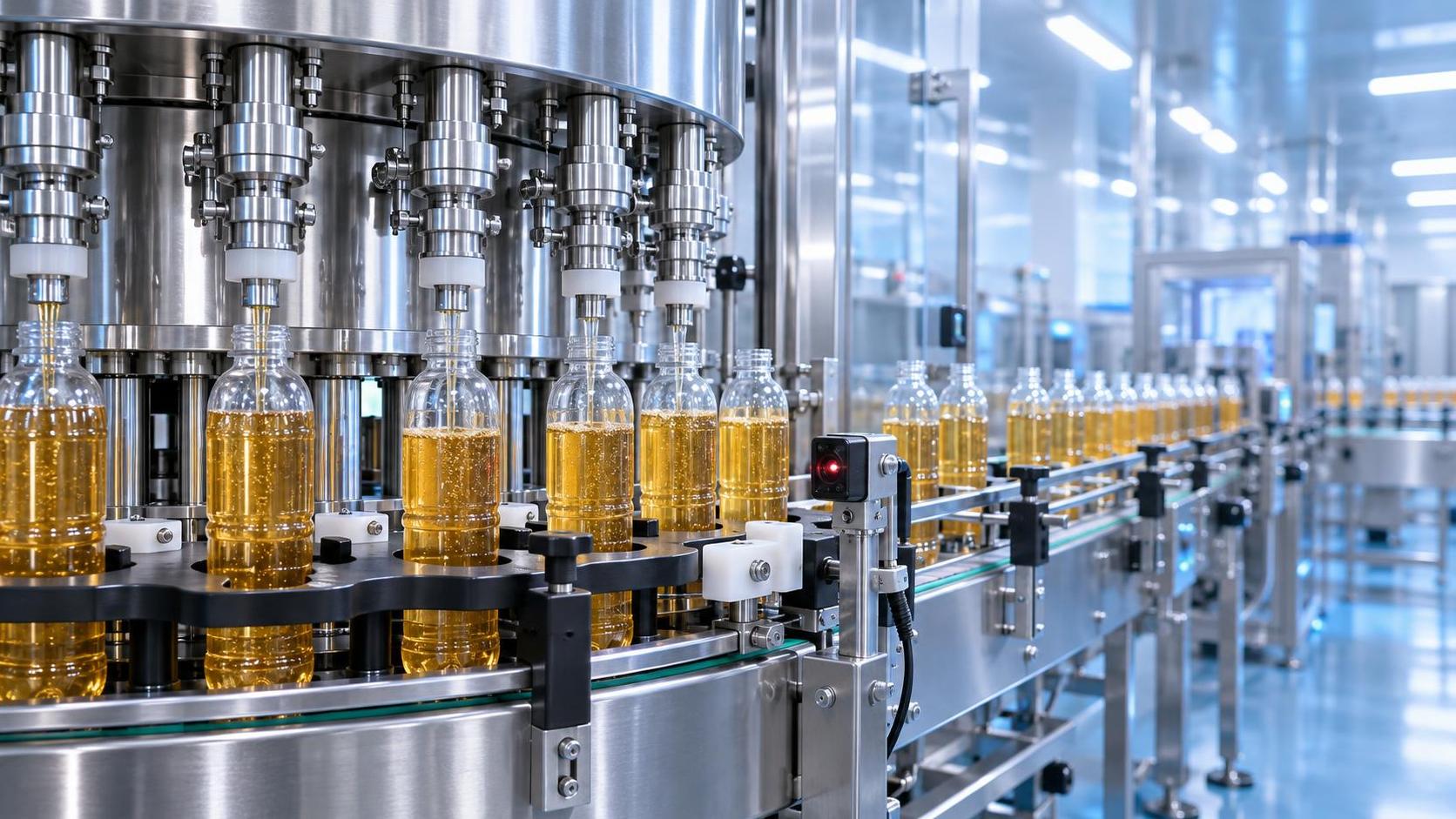
Fill-level variation on a Liquid Filling Line can quietly erode production performance long before it becomes an obvious breakdown. A few containers filled high may appear harmless, but the result is product giveaway, sticky equipment, label defects, and inaccurate inventory. A few containers filled low are more urgent: they can trigger rejects, compliance concerns, customer complaints, or line stoppages when inspection systems begin rejecting too many packages.
For aftermarket maintenance teams, the challenge is rarely finding a single “bad” part. Fill accuracy depends on a chain of conditions working together: stable product delivery, repeatable valve action, correct bottle handling, reliable controls, and a clean, well-maintained environment. The fastest repairs come from reading the pattern of variation before changing components.
For example, does every bottle drift high or low? Does the issue affect only one filling valve? Does it start after a CIP cycle, a product changeover, or an increase in line speed? Those details narrow the search far more effectively than immediately recalibrating the filler.
Start by identifying the fill-level pattern
Not all variation has the same cause. Before opening the filler bowl or adjusting valve settings, collect a representative sample from across the production run. Record the fill level, net content if available, filler valve number, line speed, product temperature, and time of occurrence. A short record often reveals whether the source is process-related, mechanical, or electronic.
- All containers are consistently high or low: Check recipe settings, fill-height adjustment, target weight or volume settings, container specifications, and product density assumptions.
- Random high and low fills across all valves: Look for unstable product pressure, entrained air, inconsistent bottle positioning, fluctuating speed, or an intermittent control signal.
- One or two recurring problem valves: Suspect valve seals, springs, return mechanisms, vent tubes, flow restrictors, solenoids, or local sensor inputs.
- Variation increases at higher speeds: Investigate conveyor timing, starwheel wear, bottle stabilization, valve response time, and insufficient product supply capacity.
- The problem begins after sanitation or maintenance: Verify reassembly, hose routing, CIP residue removal, calibration references, and whether adjustment settings were restored correctly.
This first distinction matters. A filler with one weak valve does not need the same intervention as a line where every valve is responding to unstable product conditions.
Product pressure, flow, and air: the process conditions behind inconsistent fills
In many beverage applications, the most overlooked cause of fill-level variation is an unstable product supply. Gravity, pressure, time-based, volumetric, and level-controlled filling systems respond differently, but all require reasonably stable conditions at the point of fill.
Pressure fluctuations can occur when a product pump cycles unevenly, a pressure regulator hunts, a filter begins to block, or an upstream tank level changes faster than the system can compensate. Restriction in a supply line may produce low fills at peak demand, while sudden pressure recovery can create high fills. On carbonated or sensitive drinks, pressure imbalance can also lead to foaming, which makes a container appear high even though the actual liquid quantity is low.
Entrained air deserves special attention. Air can enter through loose suction fittings, worn pump seals, poor tank drawdown conditions, or incomplete product priming after cleaning. Small bubbles in a product line may not be obvious, yet they alter the effective volume delivered during each cycle. In some cases, an operator sees random underfills and assumes a valve is sticking, while the actual issue is air reaching multiple valves from the manifold.
Maintenance checks should include the supply pump, suction side integrity, filter differential pressure, regulator response, product manifold pressure, and any signs of pulsation in flexible hoses. Where the filler uses a balance tank or bowl, confirm that its level control is stable and that float mechanisms, level probes, or inlet valves are not cycling excessively.
Temperature and viscosity can change the fill without changing the settings
A filling machine may be mechanically sound but still produce inconsistent results when the product condition changes. Beverage temperature affects viscosity, density, dissolved gas behavior, and foam formation. A warmer syrup-based drink may flow differently through the same valve than a cooler batch. Pulp, protein, fiber, or particulate ingredients add another layer of complexity because settling and viscosity changes can alter resistance in the product path.
This is especially important where a Liquid Filling Line runs several SKUs. A setting that works for a low-viscosity beverage may not transfer cleanly to a thicker formulation. If level variation appears only on one product, verify the product temperature at the filler inlet and compare it with the validated operating range before making broad mechanical adjustments.
Operators sometimes compensate by changing fill time or valve lift. That may temporarily reduce rejects, but it can mask the real condition and create a new issue when the product returns to its normal temperature. A better practice is to document fill settings alongside product temperature, pressure, and line speed, then treat them as a working set rather than isolated values.
Filling valve wear is often gradual, not dramatic
Filling valves work in a demanding environment. Repeated opening and closing, abrasive ingredients, aggressive cleaning chemicals, and imperfect lubrication gradually affect their repeatability. A worn seal may allow product to continue flowing after the intended shutoff point. A sticky spring or piston can delay opening. A damaged vent tube in a level-filling system can shift the apparent fill height. Even minor deposits around a valve seat can disrupt the flow pattern enough to create a measurable difference.
When only particular container positions show repeated variation, inspect the corresponding valves rather than adjusting the entire machine. Compare a suspect valve with a known-good one. Check sealing surfaces, moving parts, O-rings, springs, valve stems, return action, and any pneumatic or solenoid components associated with that station.
Pay attention to the type of fault:
- A valve that overfills repeatedly may be closing late, leaking at the seat, or receiving a delayed stop signal.
- A valve that underfills repeatedly may have a restriction, incomplete opening stroke, blocked air vent, insufficient supply, or a sticking actuator.
- A valve that varies from bottle to bottle may be reacting to inconsistent pressure, bottle contact, electrical input, or intermittent mechanical binding.
Replacing seals on a schedule can be sensible, but do not assume every fill problem is a seal problem. A correctly installed new seal will not compensate for distorted hardware, residue inside the product circuit, or an actuator that does not return to its home position.
Container handling can make a good filler look inaccurate
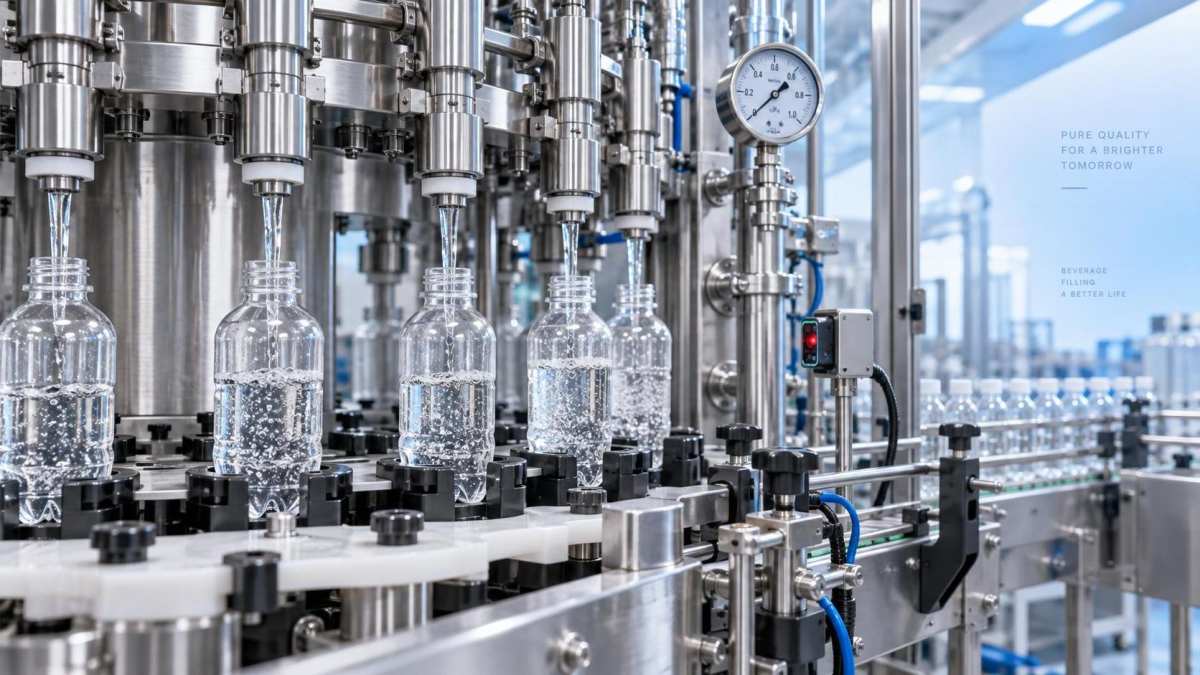
Accurate filling requires the bottle, can, or jar to arrive at the valve in the same position every time. If containers are not centered, not fully elevated, or moving during the filling cycle, the machine may produce a false fill-level problem. This is common on lines where guide rails have been adjusted during a format change, starwheels are worn, or transfer timing has drifted.
Inspect the infeed screw, starwheel pockets, neck guides, lifting cams, container platforms, and discharge transfer points. Look for scuffing, bottle wobble, inconsistent clearance, or containers that hesitate as they enter the filler. On systems that seal against the bottle neck, uneven lifting pressure can affect the seal and change the filling behavior. On timed volumetric systems, a container that is slightly out of position can receive product at the wrong point in the cycle.
Conveyor speed changes are another frequent contributor. If the filler is synchronized with upstream and downstream equipment, a slipping chain, unstable variable-frequency drive feedback, or poor accumulation control can disrupt the relationship between bottle movement and valve action. The symptom may only appear during busy periods, after a downstream stop, or when the line accelerates after restart.
Do not overlook the container itself. Bottle height, neck finish, internal volume, wall shape, and molding consistency affect visible fill level. If a new bottle supplier or resin lot coincides with the issue, compare actual container dimensions and overflow volume against the approved specification. A level difference is not always a volume difference.
Sensors, recipes, and control signals need practical verification
Modern fillers rely on sensors and control logic to confirm bottle presence, manage valve timing, monitor bowl level, and reject nonconforming containers. These systems are valuable, but maintenance teams should verify them at the machine rather than relying only on an HMI status screen.
A dirty photoeye may detect a bottle late. A loose connector can create intermittent signals. A poorly positioned proximity sensor may change state only when vibration is present. Load cells and flowmeters may drift if calibration has been skipped, while level probes can be affected by foam, coating buildup, or electrical noise.
Check sensor alignment, lens cleanliness, mounting rigidity, cable condition, grounding, and live signal repeatability. For timed filling, confirm that the PLC output duration matches the actual valve response. For volumetric or mass-based systems, validate measurement devices using the approved test procedure and traceable references where required by the plant’s quality program.
Recipe management also deserves discipline. A line can run perfectly with the wrong target if a recipe was copied from another package size or modified during a previous shift. Confirm the selected SKU, target fill, speed compensation values, nozzle configuration, and reject thresholds. If access is shared among several teams, review change history whenever the timing of the fault is unclear.
Upstream rinsing and moisture should not be ignored
Fill variation investigations often begin at the filler, but the condition of the incoming container can influence what happens there. Residual rinse water inside bottles can dilute the first portion of product, alter net-content checks, or create a visible level difference in small-volume packages. Water on the outside of containers may also interfere with bottle handling or optical inspection if drainage is poor.
During a line review, check rinse pressure, drain time, bottle inversion, and the transfer from rinser to filler. Equipment such as the CP-6 Six-Wheel Single-Row Chain Track Bottle Rinsing Machine should be assessed not only for cleaning performance, but also for consistent container travel and adequate removal of rinse water before filling. A change in bottle format, guide settings, or rinse cycle can introduce a problem that becomes visible only after the product is added.
A practical fault-finding sequence for maintenance teams
When rejects are rising and production wants an immediate answer, avoid changing several variables at once. That approach can temporarily hide the fault and make later diagnosis harder. Use a controlled sequence instead:
- Confirm the measurement. Determine whether the issue is visual level, net weight, net volume, or an inspection-system reading. Verify the test method before adjusting equipment.
- Map the pattern. Sample by valve number, time, product batch, speed, and container lane. Identify whether the variation is global, localized, or event-driven.
- Stabilize operating conditions. Check product pressure, temperature, bowl level, air supply, and line speed. Correct obvious instability first.
- Inspect the mechanical path. Review valves, bottle lifts, guides, starwheels, conveyors, and change parts for wear, contamination, or poor alignment.
- Validate signals and settings. Test sensors, actuator timing, calibration status, and active recipe parameters.
- Run a documented verification trial. After one targeted correction, collect enough samples to confirm the improvement across normal operating conditions.
This process may feel slower than replacing parts immediately, but it reduces unnecessary intervention and protects the evidence needed to find recurring causes.
Common mistakes that prolong the problem
One common mistake is adjusting all fill heads to correct a fault caused by a single valve. Another is treating every low-level container as an underfill without checking for foam collapse, container-volume variation, or inspection setup. Teams can also overlook compressed air quality; moisture, oil, or pressure drop in the pneumatic system may make valve actuation inconsistent.
Cleaning-related issues are equally easy to miss. After CIP, residual water, loose deposits, incorrectly fitted components, or incomplete purging can affect the first production period. Build a post-CIP inspection around the parts most likely to influence fill repeatability, and require a documented startup sample before full-speed production resumes.
Finally, avoid relying on a single “good” sample. A Liquid Filling Line may appear stable during a short slow-speed check and drift once normal pressure demand, acceleration, and downstream accumulation return. Verify at the speeds and conditions that caused the issue.
Restoring consistency is about controlling the whole system
Fill-level variation is rarely solved by one adjustment alone. It is the visible result of how product, containers, mechanics, and controls interact over time. For maintenance personnel, the most valuable habit is to turn an urgent quality complaint into a structured observation: where it occurs, when it begins, which valves are involved, and what changed upstream.
With reliable sampling, disciplined checks, and attention to bottle preparation as well as filler performance, most variation can be traced to a manageable cause. The goal is not simply to get the next batch through. It is to restore a repeatable filling process that stays stable after the line returns to full production speed.
Leave A Message
If you are interested in our products and want to know more details, please leave a message here, we will reply you as soon as we can.