
How to select a liquid filling line for frequent SKU changes
Time : Nov 20, 2026
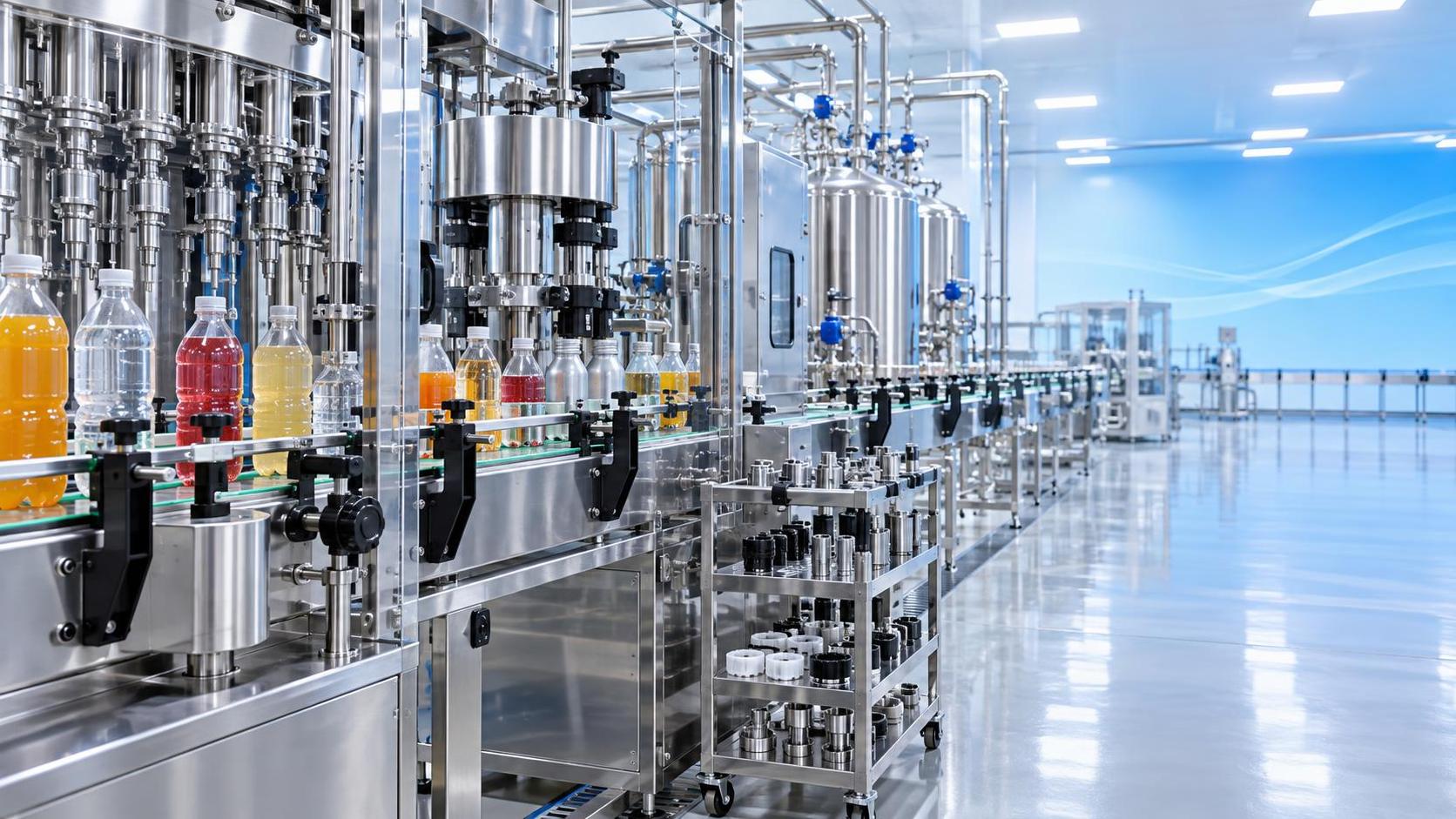
A liquid filling line built for one stable product can look efficient on a specification sheet and become a production bottleneck as soon as the schedule includes several bottle sizes, cap types, flavors, and product formulations. For frequent SKU changes, the right choice is rarely the line with the highest nominal output. It is the one that can return to stable, saleable production quickly after each change.
That distinction affects the entire purchase decision. A fast filler loses much of its value when operators spend too long changing guide rails, filling parts, cap handling components, labels, or product paths. The selection process should therefore begin with the real production mix: how often products change, what changes between them, and which changes require cleaning, mechanical adjustment, or quality verification.
Start with the changeover profile, not the fastest listed speed
“Frequent SKU changes” can mean very different things. A producer may run the same beverage in several bottle volumes. Another may switch between still water, juice drinks, syrup-containing beverages, and functional drinks. A third may change bottle geometry, cap material, label format, and secondary packaging at the same time. These situations create different demands on a Liquid Filling Line.
Before comparing machine proposals, map the planned SKUs into practical change categories:
- Product-only changes: the bottle and closure remain the same, but the beverage changes. These place the greatest focus on product recovery, CIP arrangements, flushing, and protection against flavor or color carryover.
- Container changes: bottle height, diameter, neck finish, shape, or material changes. These affect conveyors, bottle handling, filling valves, star wheels, guides, capping components, labeling equipment, and inspection settings.
- Closure changes: cap diameter, height, material, thread profile, or tamper-evident design changes. This can require different cap feeders, chutes, chuck heads, torque settings, and rejection criteria.
- Full-format changes: product, bottle, cap, label, and carton configuration all change. These are the most demanding and should be evaluated as a complete line event rather than a filler adjustment.
This exercise often exposes a flawed assumption: two SKUs may have the same fill volume but still require a substantial format change because the bottle base, neck, cap, or label presentation differs. Ask suppliers to explain each physical adjustment and each recipe selection needed for the actual SKU list. A generic statement that a line is “multi-format” is not enough.
Measure the cost of a changeover in the right way
Changeover time is more than the interval between stopping one run and starting the next. The relevant period ends when the new SKU is producing compliant packs at a stable rate. That includes product draining or recovery, cleaning where needed, replacement of format parts, parameter selection, cap and label loading, trial runs, fill-level checks, closure checks, code verification, and removal of any unstable output.
A line with a short mechanical conversion may still be slow in practice if its settings are difficult to repeat or if it needs many trial bottles before reaching acceptable fill and cap performance. Conversely, a line with several format parts can be suitable when the parts are clearly identified, quick to install, and paired with repeatable recipe settings.
Ask for a changeover sequence rather than a single promised number. It should identify:
- Which tasks require tools and which use hand adjustments
- Which components are changed, stored, and tracked as format parts
- Whether product contact areas need cleaning between the planned beverages
- Which parameters are stored in the control system
- Which quality checks are required before release
- Whether two operators are needed at critical stages
A useful commercial comparison is not “output per hour” alone, but expected saleable output across a normal shift or production week with the intended SKU schedule. This changes the decision from headline capacity to usable capacity.
Separate product flexibility from package flexibility
Many filling systems can process several products, but not all can do so with the same cleaning burden or fill accuracy. Likewise, a machine may handle multiple bottle sizes while struggling with unusual shapes or lightweight containers. Treat these as separate questions.
Product behavior determines the filling method
Still, low-viscosity beverages often suit gravity or flowmeter-based filling arrangements. Carbonated products require controlled pressure conditions and filling methods designed to manage foaming and product loss. Beverages with pulp, particulates, higher viscosity, or sensitive ingredients may need a different valve design, product path, or agitation approach upstream of the filler.
Do not assume that a filling principle suited to one product family will automatically work across the portfolio. The issue is not simply whether liquid can pass through the machine. The system must fill reliably at the desired level, avoid excessive foam, protect product characteristics, and remain cleanable between runs. A proposal should address the most difficult planned product, not only the easiest water-like SKU.
Where products have substantially different cleaning needs, one highly flexible line is not always the best answer. A dedicated line or a more deliberate production schedule may be preferable if frequent changeovers create unacceptable losses, cleaning downtime, or carryover risk. Flexibility has a practical limit when it is being used to solve a portfolio-planning problem.
Package handling is where compatibility claims need proof
Bottle flexibility depends on more than a stated height and diameter range. Tall, narrow bottles, square bottles, heavily contoured shapes, lightweight PET, and unstable bases can behave differently at transfer points. They may need bottle support, different guide settings, gentler acceleration, or dedicated handling components.
Request a review of representative containers, including the most difficult bottles rather than only the most common ones. The same principle applies to closures. A capping system must consistently present, apply, and verify each closure type. If aluminum caps are part of the range, compatibility should be reviewed as a capping and inspection question, not merely as an accessory selection.
For a line using applicable aluminum closure formats, equipment such as the ZFG-6 Fully Automatic 6-Head Aluminum Cap Capping Machine can be considered as part of the closure-handling section. Its suitability should be assessed against the actual cap dimensions, bottle neck design, line speed, and the format-change process around it.
Look closely at the parts that are changed most often
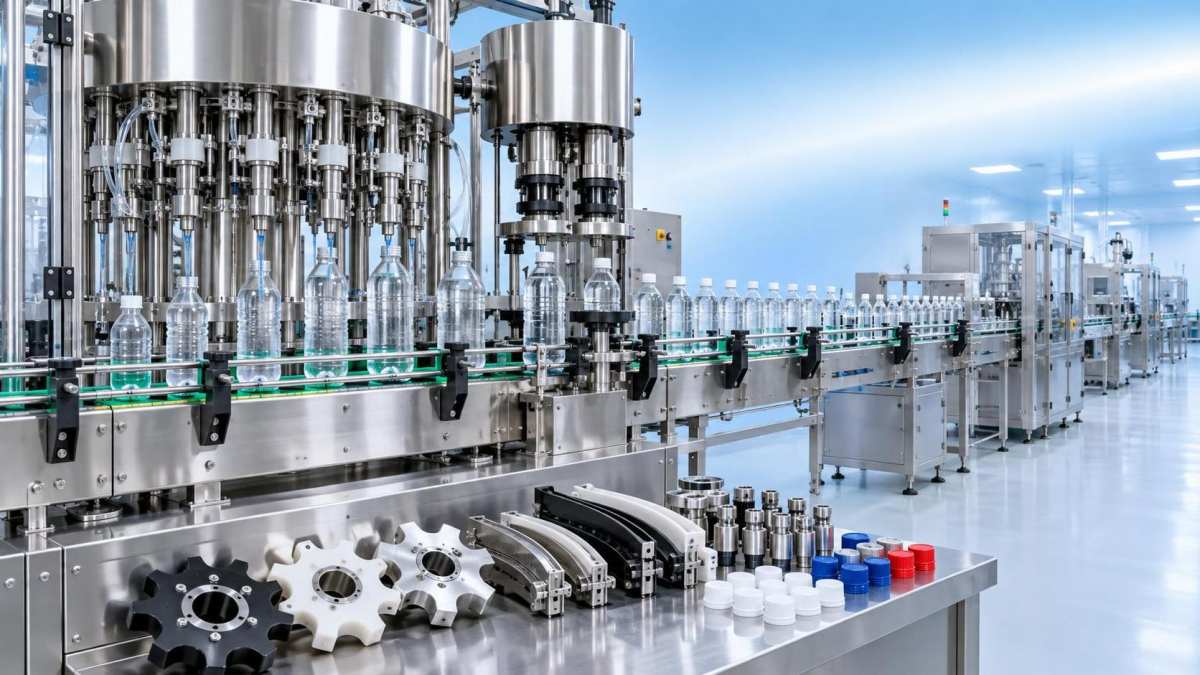
Format parts are normal in flexible beverage packaging lines. The concern is not their existence; it is whether they are manageable. An excessive number of small, loosely controlled parts increases the chance of missing components, incorrect installation, and delayed starts. A poorly organized format-part strategy can make a technically capable line difficult to operate across many SKUs.
During evaluation, establish which parts are common across formats and which are unique. Consider bottle guides, star wheels, augers, neck handling parts, cap chutes, capping heads, label handling components, and packer change parts. A line that shares more components across the real package family usually creates less changeover exposure.
Also examine the physical design of the adjustments. Clear scales, repeatable stop positions, tool-less mechanisms where appropriate, and sensible operator access all matter. Fine adjustments hidden behind guards may be acceptable for infrequent format changes but become costly when the schedule changes several times a day.
Storage deserves attention as well. Format parts should have defined locations, identification, and protection from damage. This may sound operational rather than technical, but a missing change part can stop a filling line just as completely as a machine fault.
Cleaning capability should match the portfolio, not the brochure
For frequent product changes, cleaning is often the limiting factor. The question is not simply whether the line has a CIP connection. It is whether the product path, filler bowl, valves, pipework, and connected equipment can be cleaned effectively and predictably for the products being run.
Pay attention to dead zones, drainability, accessibility of non-CIP components, gasket management, and the ability to isolate or flush sections. Sticky, colored, acidic, dairy-based, or particulate-containing beverages create different cleaning challenges from clear still water. Even where products are technically compatible, residual flavor or color can make an otherwise acceptable changeover commercially unusable.
Ask the supplier to describe the cleaning boundaries of the offered system. This is especially important where the filler is connected to mixing, buffering, carbonating, pasteurization, or downstream equipment. The production line is only as flexible as its least flexible hygienic section.
Automation helps only when it removes repeatable work
Recipe management, automatic positioning, servo-driven adjustments, and guided changeover prompts can reduce variability. They are useful when the line repeatedly returns to known formats and when the underlying mechanical setup is stable. Automation is less valuable when every new SKU introduces a genuinely new bottle or closure design that still requires engineering changes and trial work.
Look for automation that supports repeatability: stored fill parameters, cap application settings, conveyor positions, label settings, inspection limits, and documented format recipes. The operator should be able to confirm the selected recipe, see required parts, and complete a defined changeover sequence without relying on informal memory.
At the same time, avoid paying for automation that does not fit the production pattern. A producer running a small number of formats in long campaigns may benefit more from robust manual quick-change features than from extensive automatic adjustment. The balance shifts when formats change frequently, runs are short, and schedule reliability matters more than peak speed.
Do not select the filler in isolation
A filling machine may be the central asset, but frequent SKU changes expose weaknesses elsewhere. Bottle unscrambling, rinsing, capping, labeling, date coding, inspection, case packing, and conveying must all support the same product and package mix. One downstream unit that requires lengthy manual reconfiguration can negate a fast filler changeover.
Build a line-level compatibility matrix before making a final choice:
Use acceptance trials to test the difficult combinations
A line should be evaluated against representative combinations, not isolated samples. The ideal review includes the smallest and largest bottle, the least stable container, the most demanding beverage, the most difficult closure, and a realistic switch between two contrasting SKUs. This reveals whether the configuration works as a system.
The objective is not to prove that every component can run once. It is to observe the changeover steps, the adjustments required, the number of trial packs, the points where operator judgment is needed, and the consistency of the finished product after restart. Request documentation of the agreed configuration, format parts, operating recipes, and quality checks so that the delivered line matches the evaluated arrangement.
A practical decision sequence
Begin with the production schedule and product-package matrix. Then identify the changes that occur most often and the changes that carry the greatest downtime or quality risk. Select a filling technology that suits the hardest product family, then confirm that bottle handling, capping, labeling, inspection, and cleaning systems support the same range.
Only after those fundamentals are clear should capacity, automation options, and commercial comparisons be finalized. A liquid filling line for frequent SKU changes should make the next run predictable. When its format parts, cleaning method, recipes, and downstream equipment are designed around the real portfolio, short production runs become manageable instead of disruptive.
Leave A Message
If you are interested in our products and want to know more details, please leave a message here, we will reply you as soon as we can.