
When glass bottle filling lines need gentle bottle handling
Time : Nov 01, 2026
When Glass Bottle Filling Lines Need Gentle Bottle Handling
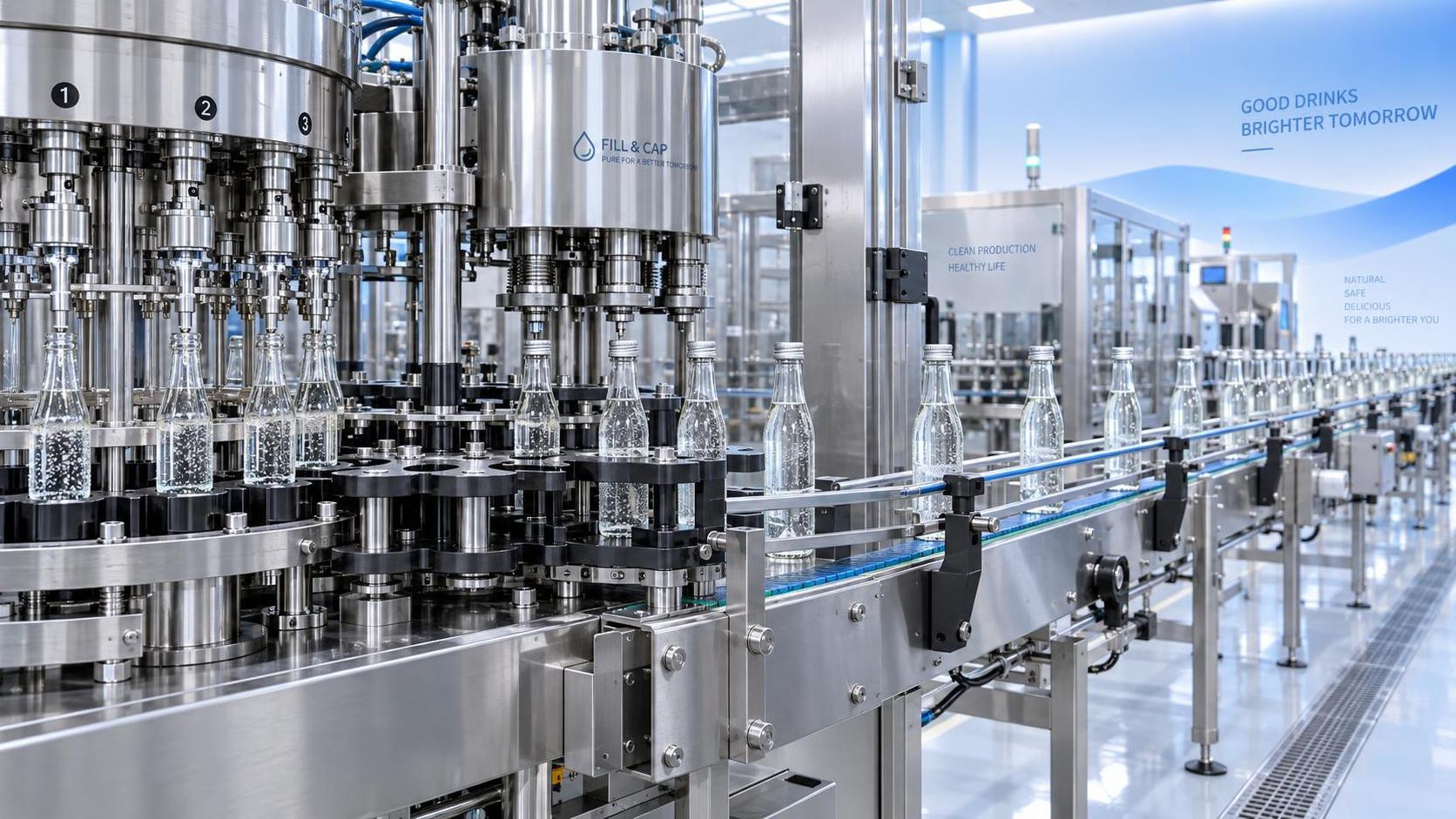
A Glass Bottle Filling Line is often evaluated around output, filling accuracy, sanitation, changeover time, and cap integrity. Those are necessary criteria, but they do not tell the full story. A line can meet its nominal speed while quietly creating a costly reliability problem: bottles chipped at transfers, stressed by back pressure, scuffed by guide rails, or destabilized before capping. The result may be obvious breakage on the floor, but it can also appear later as lower conveyor efficiency, rejected packs, inconsistent closures, or unexplained line stops.
Gentle handling is not a premium feature that every project needs to the same degree. It becomes a design priority when the container is lightweight, unusually shaped, returnable, tall, narrow, embossed, coated, or used in a fast-moving line with multiple machine interfaces. It also matters when product value is high enough that a small number of damaged bottles creates a disproportionate quality risk. For technical teams selecting equipment, the useful question is not simply whether a supplier offers “low-breakage conveying.” It is where bottles can lose control, what loads they experience, and whether the entire line behaves predictably during normal operation and non-routine events.
Breakage is usually a control problem, not just a glass problem
Glass is strong in compression but vulnerable to impact, localized contact, and defects at its surface. A bottle may survive a minor collision when empty, then fail after filling because internal pressure, thermal conditions, or closure loading adds stress. That is why a technical review should look beyond the filling carousel itself. In many installations, risk concentrates at the places where bottle motion changes: infeed screws, star wheels, dead plates, accumulation zones, rinser-to-filler handoffs, filler discharge, capper infeed, labeler transfers, and packer entry.
The line does not need visible crashes to damage containers. Repeated side contact between bottles can create heel or shoulder scuffing. A poorly synchronized star wheel can introduce small impacts at every pocket. Excessive conveyor back pressure may make bottles lean, rotate unpredictably, or rub against stationary guides. These conditions become more serious when the line stops and restarts. A bottle train that looks stable at rated speed may compress sharply during a short downstream interruption, then release unevenly when the conveyor starts again.
This is why “gentle” should be interpreted as controlled energy and controlled position. Bottle handling must limit collision velocity, avoid concentrated force, maintain stable orientation, and prevent one machine from pushing bottles faster than the next machine can accept them. The best outcome is not a line that merely survives ideal conditions; it is one that remains calm through routine fluctuations in operator pace, cap supply, label reel changes, and downstream accumulation.
Situations that justify a more careful handling strategy
Lightweight containers are an obvious trigger. Reducing glass mass can be commercially and environmentally attractive, but it leaves less tolerance for rough transfers and uncontrolled pressure. Lightweight designs should not be treated as a simple substitution for heavier legacy bottles. Their base geometry, stiffness, finish dimensions, center of gravity, and real-world dimensional variation need to be considered in conveyor and star-wheel design.
Premium beverage formats deserve similar attention even when the glass itself is not especially thin. Decorative coatings, special shapes, long necks, flared shoulders, and non-standard bases can make bottles less stable or more sensitive to surface damage. A fine wine, craft spirit, sparkling beverage, or specialty oil may also have lower tolerance for cosmetic defects. In these applications, a bottle that remains intact but acquires a visible abrasion can still be unsuitable for sale.
Returnable glass creates a different set of concerns. Reused bottles can arrive with a wider range of surface condition and dimensional history than one-way containers. The line must still handle them reliably without assuming every bottle is identical. Inspection, rejection, and downstream routing need to be coordinated so a rejected bottle does not create a collision event for those behind it.
High-speed production raises the consequences of small errors. A transfer timing issue that is barely noticeable at a lower output may become persistent contact at higher rates. Yet speed alone is not the decisive variable. A moderately fast line with many transfers, long accumulation sections, frequent format changes, or unstable downstream packaging can be harder on bottles than a faster but well-balanced monoblock. The evaluation should therefore map the complete flow path rather than focus only on bottles per hour.
What to examine in the bottle path
Start with the bottle specification, not the equipment catalogue. Technical evaluators should request the drawing set, including body profile, base diameter, finish dimensions, height, weight, expected tolerances, and any coating or decoration details relevant to contact surfaces. If several formats will run on one line, compare their handling behavior rather than looking only at their nominal diameters. Two bottles of similar size may need very different guide-rail positions, star-wheel pockets, or neck support arrangements.
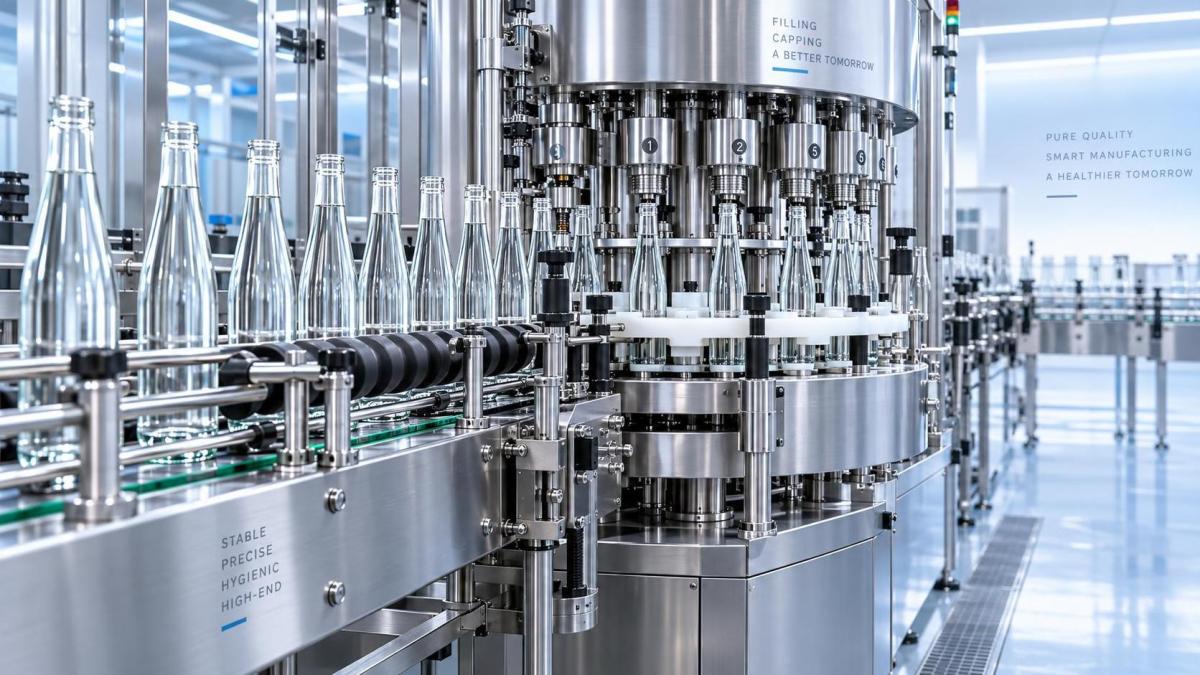
Then review every transfer as a mechanical event. The key questions include whether bottles are positively guided, whether their speed is matched before contact, and whether the receiving device has enough pocket clearance without allowing excessive movement. Infeed screws and timing screws should separate bottles smoothly rather than force a compressed stream into a fixed pitch. Star wheels should hold the bottle at an appropriate support point. For certain tall or lightweight formats, neck guidance may be necessary; for others, poorly positioned upper guides can create unwanted leverage and instability.
Guide rails deserve more attention than they usually receive in early project discussions. Their material, spacing, adjustability, transition geometry, and ability to remain aligned all affect bottle behavior. Rails set too tightly turn the conveyor into a friction source. Rails set too wide allow wandering and bottle-to-bottle impact. Adjustable systems are useful for multi-format lines, but the adjustment method must be repeatable. A line that depends on manual approximation at each changeover may run well only when a highly experienced operator is present.
Accumulation design is equally important. Conventional pressure accumulation can be workable for robust containers and stable line conditions, but it should be assessed carefully where glass is fragile or presentation-sensitive. Low-pressure accumulation, zone control, or controlled release can reduce the force transmitted through a long bottle queue. The appropriate choice depends on required buffer time, available floor space, bottle friction, wet or dry conveyor conditions, and the behavior of downstream equipment during brief stops. There is no universal “best” accumulation method.
Filling, capping, and the hidden interface risks
A filling machine can be hygienically sound and still handle bottles poorly at its entry or discharge. Pay attention to the approach into the filler, bottle lifting method, centering components, and discharge timing. If a bottle is lifted or clamped, contact surfaces need to match the actual container geometry. If filling involves carbonation, hot product, or pressure-related process conditions, the bottle’s suitability must be assessed together with the filling method. Mechanical handling and process stress should not be evaluated as separate subjects.
The capping station is another sensitive point because bottle stabilization and closure application happen together. A capper must control the container without introducing side force, especially when the closure torque or forming action is significant. For aluminum-cap formats, the relationship between capper, bottle finish, neck support, and discharge conveying should be reviewed as one system. A machine such as the ZFG-6 Fully Automatic 6-Head Aluminum Cap Capping Machine may be relevant to this part of a line, but its suitability should be confirmed against the actual bottle drawing, closure type, operating speed, and upstream/downstream transfer arrangement rather than inferred from head count alone.
Do not overlook the condition of bottles after closure. A bottle may leave the capper upright but still have residual oscillation, especially if it is tall or has a small base. The next conveyor curve, inspection point, or labeler infeed can amplify that motion. Stable discharge geometry and a properly tuned speed relationship often matter more than adding restraints after instability has already developed.
How to compare supplier proposals without relying on vague claims
Supplier proposals often use broad language such as “smooth transfer,” “advanced synchronization,” or “gentle handling.” These descriptions may be directionally useful, but they are not enough for a technical decision. Ask each supplier to show the proposed bottle path and identify the guiding principle at each interface. A layout drawing should make it possible to see where bottles are controlled by the base, body, neck, or a star-wheel pocket, and where free running begins.
The following comparison points usually reveal more than a generic equipment list:
- How bottle speed is synchronized across conveyors, screws, star wheels, fillers, cappers, and downstream machines.
- Which points are designed for positive bottle control and which rely on free flow or back pressure.
- How rail width, star-wheel parts, and centering devices are adjusted and verified during format change.
- What happens when the filler, capper, labeler, or packer stops unexpectedly.
- How broken-glass events are contained, cleaned, and prevented from causing a wider line jam.
- Whether the supplier can test or review the actual bottle samples, including the lightest and least stable formats.
It is also worth distinguishing between a machine demonstration and representative line validation. A single machine can run a sample bottle smoothly in isolation while the integrated line behaves differently because of accumulation, wet lubrication, container temperature, or speed changes at adjacent equipment. Where the project risk is meaningful, factory acceptance planning should define the actual formats, closure combinations, target operating conditions, and acceptance observations before equipment is built. Site acceptance should revisit those points after installation, when conveyors, utilities, and real production routines are involved.
Design for recovery, not only normal operation
The most useful handling design is one that allows operators to recover quickly from ordinary disturbances. Broken glass cannot be treated as a purely maintenance issue. It affects hygiene controls, line clearance procedures, production scheduling, and worker safety. Equipment access, drainage, guarding, and cleanable surfaces should be considered alongside the mechanical prevention strategy. A difficult-to-clean transfer area can turn a minor breakage event into a long interruption.
Controls matter here as much as mechanics. Coordinated stopping can prevent a downstream stop from becoming a compression event upstream. Sensible restart logic can allow bottle flow to re-establish before the next machine accelerates. Sensors can be useful, but a sensor alone does not solve poor bottle dynamics. The control philosophy should be reviewed with the physical conveyor design, especially where multiple OEM machines are integrated.
Maintenance access should not be an afterthought. Worn guide rails, damaged star-wheel pockets, loose rails, conveyor debris, and misaligned transfer plates can gradually increase breakage without creating an immediate alarm. A practical maintenance plan identifies the components that need regular inspection and makes replacement straightforward. For multi-shift plants, availability of wear parts and clarity of adjustment references can be more valuable than a complex design that is difficult to restore after routine service.
A practical decision threshold
Gentle bottle handling should be specified explicitly when the glass format is lightweight, premium, unstable, returnable, or subject to meaningful process pressure or thermal exposure. It should also be elevated in the selection process when a line includes many handoffs, substantial accumulation, frequent product changes, or a downstream packaging section that may stop intermittently. In those cases, accepting a generic conveyor concept is a false economy.
For more robust, standard bottles in a simple and stable process, the solution may be less elaborate. Even then, the supplier should demonstrate controlled transfers, sensible guide geometry, and a credible approach to stoppages. The goal is proportional design: enough control to protect the real container and process, without adding unnecessary mechanisms that complicate sanitation or changeover.
Before committing to a Glass Bottle Filling Line, provide representative bottles and closures, map every transfer, and ask how the line behaves outside perfect steady-state running. That conversation is usually more revealing than a headline speed figure. A line that treats glass calmly under interruption, format variation, and normal wear is far more likely to deliver consistent production over time.
Leave A Message
If you are interested in our products and want to know more details, please leave a message here, we will reply you as soon as we can.