

How to budget installation costs for liquid bottling equipment
Time : Nov 04, 2026
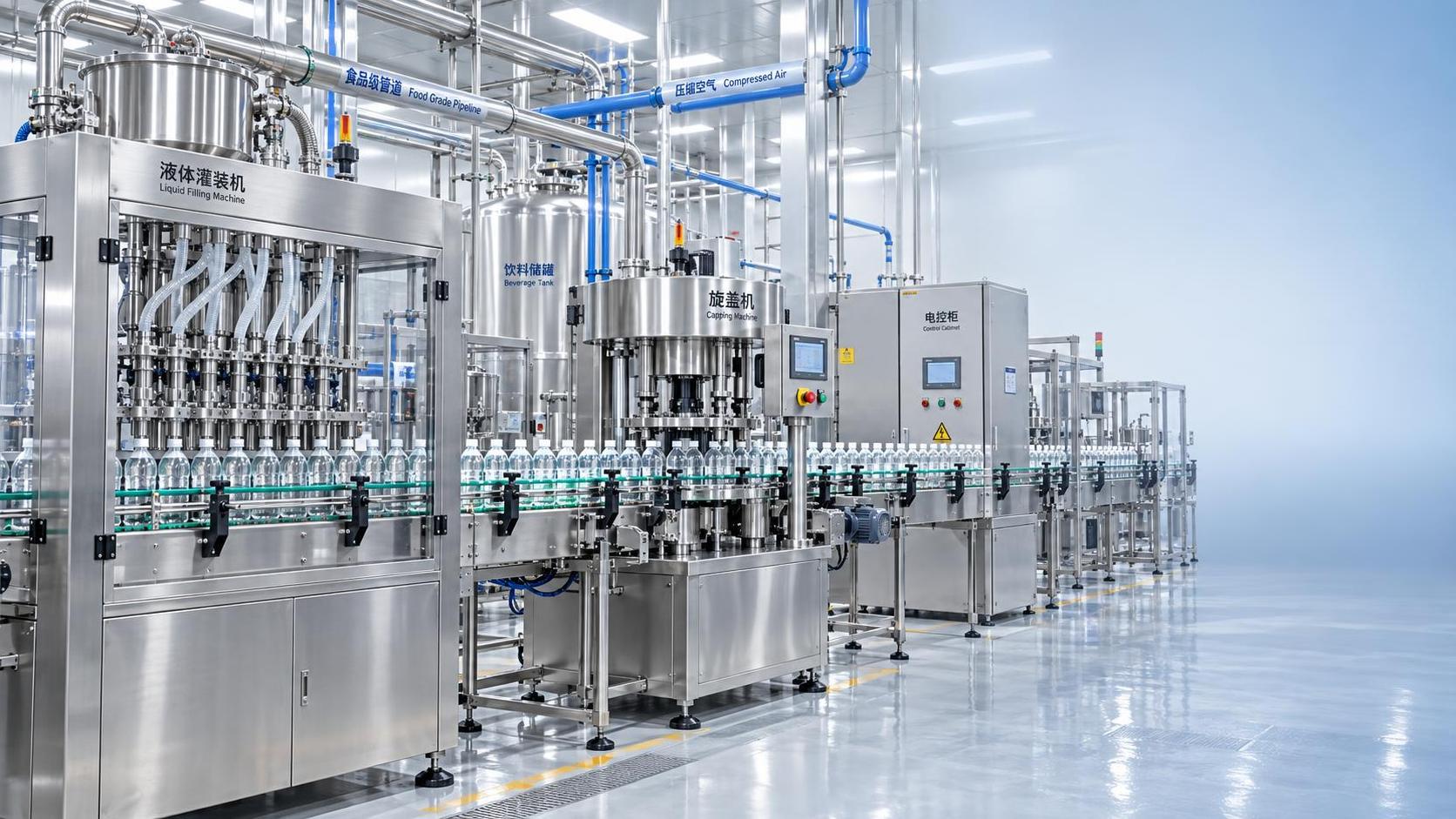
Installation costs for liquid bottling equipment deserve their own budget line, not a small contingency attached to the machine purchase price. A filler, capper, conveyor, labeler, or inspection unit may arrive as a defined piece of capital equipment, but the operating line only becomes valuable after it is positioned, connected, integrated, validated, and accepted for production.
For a financial approver, the practical question is not simply, “What will installation cost?” It is, “What must be funded before this asset can produce saleable bottles at the expected rate?” The difference matters because a project that appears affordable on an equipment quotation can strain cash flow once facility work, utility upgrades, controls integration, contractor time, production downtime, and commissioning are included.
A workable installation budget separates costs that are fixed by the selected equipment from costs that depend on the site, the existing line, and the required production outcome. That separation makes it easier to challenge assumptions before approving capital expenditure.
Start with the installed-system boundary
The first budgeting decision is to define what “installed” means in the approval request. Equipment suppliers may use the term to mean delivery and mechanical placement. Operations teams may assume it means a fully running line. Finance should avoid approving against either interpretation without a written boundary.
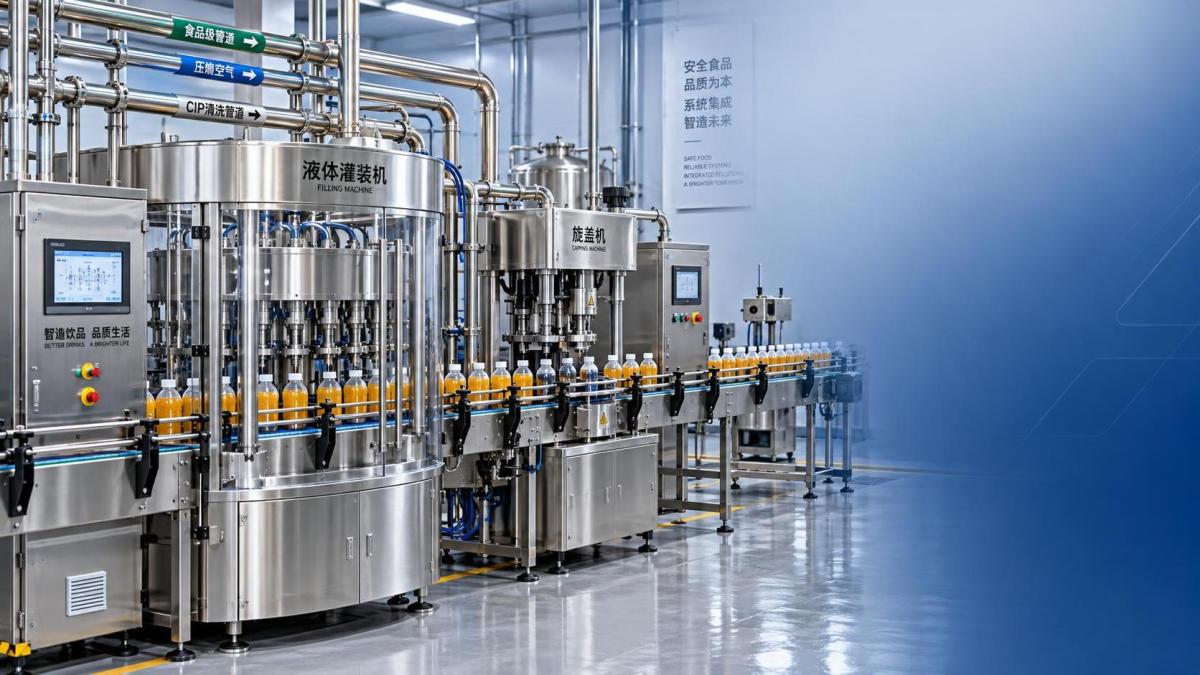
For Liquid Bottling Equipment, an installed-system scope often includes more than the main machine. A complete project may involve infeed and discharge conveyors, bottle handling guides, cap feeding, coding, labeling, rejection handling, electrical panels, guarding, product piping, clean-in-place connections, compressed air drops, and controls communication with upstream or downstream equipment.
A useful approval scope answers four operational questions:
- What equipment is physically included from bottle entry to finished-pack discharge?
- Which utilities must be available at the equipment connection point?
- Who supplies and installs ancillary items such as conveyors, piping, cables, supports, guards, and drains?
- What performance conditions define handover: mechanical completion, dry running, water trial, product trial, or sustained production acceptance?
If these answers are incomplete, installation cost is not yet a reliable number. It is only an early allowance. That may be acceptable at concept stage, but it should not be treated as a final project budget.
Site preparation can change the economics of the purchase
Site readiness is often the largest source of avoidable cost escalation because it is discovered late. A bottling machine can be technically suitable and still require substantial facility work before it can operate safely and consistently.
Floor condition is an early example. Equipment may need level, load-bearing surfaces; anchor locations may conflict with existing trenches, drains, reinforcement, or floor coatings. A line that handles washdown environments can also expose shortcomings in drainage, wall finishes, access clearances, and electrical enclosure placement. None of these items necessarily appear on a machine quotation, yet they can materially affect the installed cost.
Space should be reviewed as a working envelope rather than a footprint on a layout drawing. Finance teams should ask whether the proposed location allows for:
- Access for delivery, unloading, rigging, and movement into the production area.
- Operator stations, cap replenishment, changeover activity, cleaning access, and maintenance access.
- Safe removal of guards, motors, belts, star wheels, or other service parts.
- Accumulation space between machines so a brief stoppage does not immediately halt the entire line.
- Future access to adjacent equipment, panels, drains, and emergency exits.
A layout that fits equipment tightly may look economical at approval stage. It can become expensive when installers need to relocate services, modify guarding, reroute conveyors, or work around an operating line. It can also leave the plant with a configuration that is difficult to maintain, increasing cost long after commissioning.
Before allocating a site-preparation allowance, request a layout review based on actual dimensions, including utility connection points and maintenance clearances. A simple site walk by the equipment supplier, installation contractor, or internal engineering team can expose issues that a generic floor plan misses.
Utilities should be budgeted as capacity, quality, and routing
Utility cost is often underestimated because teams focus on whether power, air, water, or product supply exists somewhere in the building. The relevant question is whether each service is available at the required capacity and quality at the exact point of use.
Electrical work may include a new feeder, disconnects, local panels, cable tray, conduit, grounding, controls wiring, and changes to the plant’s existing distribution. The cost rises when equipment has to be routed through active production areas or when available electrical capacity is limited. Do not assume that a machine’s stated connected load is the same as the cost of providing a compliant installation.
Compressed air requires a similar review. The budget should consider pressure stability, air quality, moisture control, filtration, distribution piping, and the cumulative demand created when several machines operate at once. A capper or pneumatic handling system may function during an isolated demonstration but behave differently when the plant air network is serving other processes.
Product and cleaning connections can be more consequential than their pipe length suggests. Materials of construction, sanitary fittings, valve arrangement, slope, drainability, insulation, heat tracing where relevant, and cleaning requirements can all affect scope. If the line handles more than one beverage type, the budget should also address whether product pathways and changeover arrangements support the intended production schedule.
Utility quotes should therefore be divided into three categories: connection work that is already defined, upgrades that are likely but not engineered, and plant improvements that may be triggered by the project. Combining those categories into one unexplained allowance makes later variance difficult to manage.
Integration is where individual machines become a production line
A machine purchase can be straightforward; integrating several machines into a dependable line is usually less so. The financial risk is highest when equipment comes from multiple sources, when an existing line remains in service, or when the required production rate leaves little room for timing errors.
Mechanical integration includes conveyor elevations, guide rails, transfer points, bottle stability, cap flow, reject handling, guarding transitions, and line accumulation. Controls integration includes start-stop logic, safety circuits, fault communication, speed coordination, emergency-stop zoning, and interfaces with printers, inspection systems, or plant data systems.
These are not cosmetic details. A filler may meet its rated output while the line as a whole loses throughput because containers tip at transfers, caps arrive inconsistently, or downstream equipment cannot absorb normal variation. The installed project should be budgeted around the line’s required performance, not around the nominal capability of its most expensive machine.
When cap application is part of the scope, the interface deserves close attention. A unit such as the ZCG-4 Fully Automatic 4-Wheel Cap Rubbing Machine may be evaluated as a separate machine cost, but installation planning must also include bottle guide alignment, cap delivery, conveyor synchronization, guarding, electrical controls, and the conditions needed to verify closure quality across the relevant bottle and cap combinations.
Financial approvers should ask who owns integration performance. There are three common arrangements: one supplier accepts responsibility for the complete line; the buyer coordinates several suppliers; or a third-party integrator manages the interfaces. Each can work, but the budget must match the chosen model. A fragmented scope can have a lower initial equipment price while creating higher project-management costs and more ambiguity when startup issues arise.
Installation labor is more than crew hours
Labor estimates should distinguish between mechanical installation, electrical installation, automation work, piping, rigging, commissioning support, and project supervision. A quotation that lists a small number of “installation days” may cover only supplier technicians performing final setup after the site is ready. It may exclude the local contractors needed to make the site ready in the first place.
Travel, accommodation, overtime, shift premiums, site induction, permits, lifting equipment, temporary storage, and production-area restrictions should be reviewed separately. These items become especially important when installation must occur during a limited shutdown window.
Shutdown planning has both direct and indirect cost consequences. If an existing bottling line must be stopped for tie-ins, removal, or controls changes, the project budget should recognize lost production opportunity and the cost of contingency work if the restart is delayed. That does not require forecasting every operational consequence with precision. It does require deciding whether the installation schedule is realistic enough to protect the approved business case.
There is also a difference between commissioning labor and acceptance labor. Commissioning proves that components can operate. Acceptance confirms that the system can run the planned bottle, cap, label, product, and speed combination under agreed conditions. Projects that fund only mechanical completion often defer the final cost and disruption into the operating budget.
Compliance costs should be identified early, even when the rule is not the main buying driver
Food and beverage installations are judged within a broader operating environment that includes hygienic design, worker safety, electrical safety, machine guarding, cleaning procedures, and local building or workplace requirements. The exact obligations depend on jurisdiction and facility practices, but the budget risk is consistent: compliance work discovered after installation tends to cost more and delay handover.
Examples include additional guarding, emergency-stop modifications, access platforms, drain changes, electrical documentation, equipment labeling, safety validation, and changes needed to keep cleanable zones accessible. In a retrofit, older upstream or downstream equipment may also create interface issues that were not apparent when the new machine was specified.
Rather than carrying a vague “compliance contingency,” list the open decisions. Identify which party provides guarding, validates safety functions, supplies documentation, and signs off on acceptance. That creates a more useful budget discussion than assuming compliance is automatically included in the equipment price.
Use a budget structure that exposes uncertainty
A financial approval is stronger when it shows where uncertainty remains. One practical structure separates the project into equipment, freight and handling, site preparation, utilities, mechanical installation, electrical and controls integration, commissioning, validation, internal labor, and contingency.
Contingency should be linked to known uncertainty rather than used as a substitute for scope definition. For example, a contingency may reasonably cover concealed floor conditions, final cable routing, or minor modifications during integration. It should not be expected to absorb an unplanned utility upgrade or a missing conveyor system that was never included in the base scope.
Challenge the lowest installed-cost assumption
The lowest purchase price does not always produce the lowest installed cost. Equipment that is difficult to access, requires unusual utility conditions, lacks clear interface documentation, or depends on extensive custom field work can consume savings quickly. Conversely, a higher-priced package may reduce installation exposure if it arrives with defined interfaces, matched ancillary equipment, and clear commissioning responsibility.
This does not mean a bundled package is automatically the better financial choice. It means comparisons should be normalized. Every option should be measured against the same installed performance requirement: the same product range, bottle formats, closure types, target output, operating environment, and acceptance criteria.
Ask suppliers to identify exclusions in plain language. Then ask internal engineering or an independent installation resource to price those exclusions. This step is particularly useful when equipment proposals appear similar but allocate responsibility differently.
Approve the project in stages when information quality is uneven
Some projects cannot wait for every engineering detail before funding begins. In that case, staged approval can protect decision quality. Initial funds may cover layout confirmation, utility assessment, site survey, and final integration design before committing the full installation amount. The value is not administrative formality; it is the chance to convert uncertain assumptions into defined work before the purchase order locks in a schedule.
For larger or more complex installations, the approval package should show the expected cash timing as well as total cost. Equipment deposits, civil work, utility upgrades, progress payments, supplier travel, and startup support rarely occur at the same time. A project with an acceptable total return can still create a cash-flow problem if the installation sequence is poorly understood.
A disciplined installation budget gives finance a clearer view of both exposure and control. It identifies what must happen before the line can produce, assigns ownership to the interfaces that commonly fail, and makes room for justified uncertainty without hiding undefined scope. That is the basis for judging the real capital requirement behind liquid bottling equipment, rather than approving only the machine that happens to appear on the first quotation.
Leave A Message
If you are interested in our products and want to know more details, please leave a message here, we will reply you as soon as we can.