
What throughput should liquid bottling equipment deliver?
Time : Nov 06, 2026
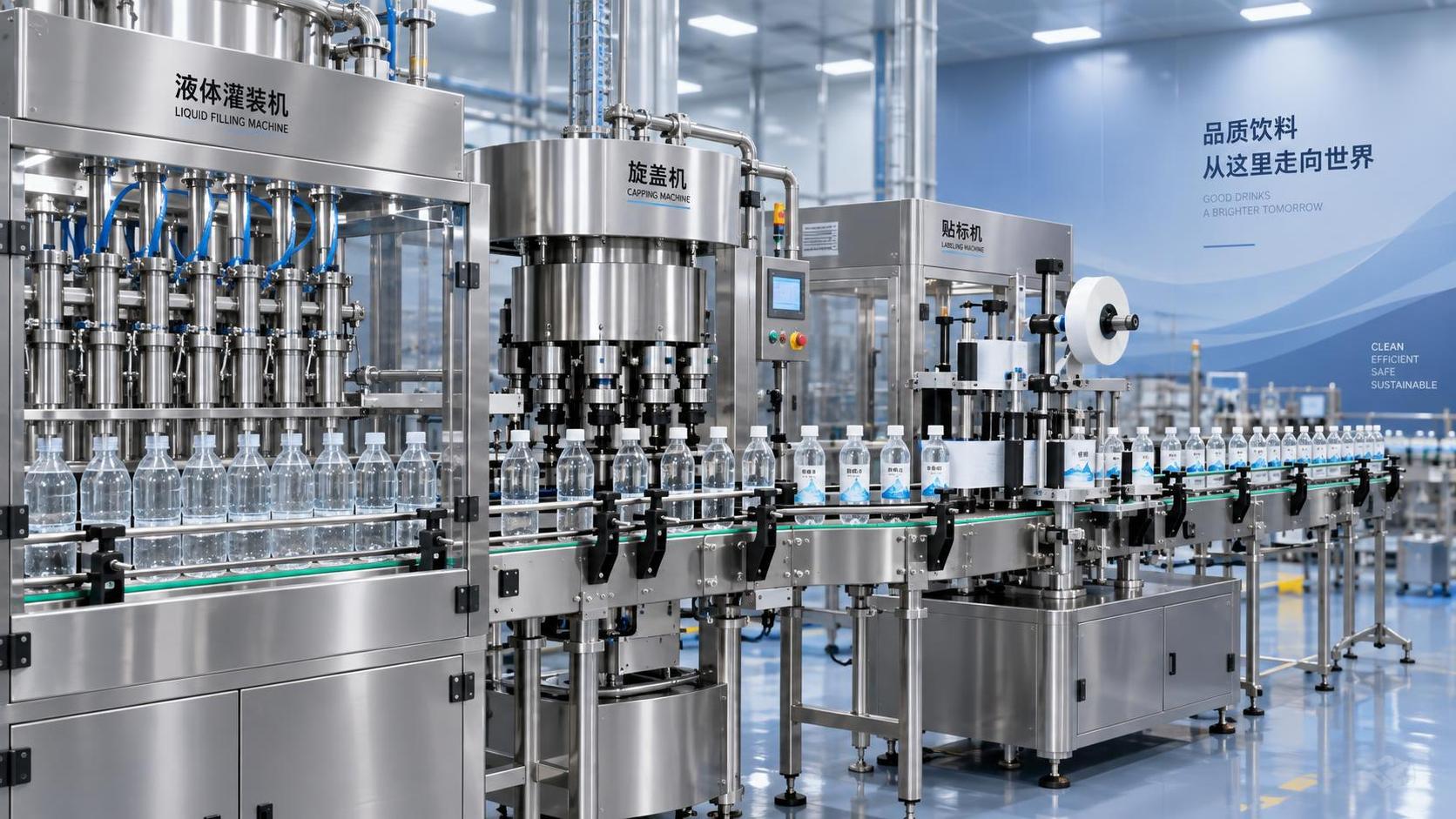
The right throughput is not the highest bottles-per-hour figure a supplier can quote. It is the output your line can sustain across normal shifts, real bottle formats, planned changeovers, and routine stops without creating a bottleneck downstream. For most purchasing decisions, Liquid Bottling Equipment should be sized for reliable net production demand, with practical room for growth, rather than for its theoretical maximum speed.
A line that is too slow forces overtime, delayed shipments, or excessive operating days. A line that is oversized can bring higher capital cost, more complex maintenance, greater utility demand, and poor efficiency when it runs far below its intended range. The useful question is therefore: how many saleable bottles must leave the line during a normal production period, and what conditions prevent the equipment from achieving its rated speed?
Start with required saleable output, not machine nameplate speed
Throughput is often discussed as bottles per hour, containers per minute, or fills per hour. Those figures are useful, but they are incomplete. A filler may be mechanically capable of a certain speed while the operating line produces less because bottles need rinsing, labels need adjustment, caps need replenishment, or operators must stop for format changes.
Begin by defining the production requirement in terms of finished, acceptable product. This means bottles that are filled correctly, capped, labeled, coded, packed, and ready to move into finished-goods storage. Then work backward through the planned operating schedule.
A practical calculation is:
Required net line output = required finished bottles per production period / available productive time
Available productive time should exclude planned non-production activities that occur during ordinary operation, such as cleaning, product changeovers, bottle-format changes, routine quality checks, and scheduled breaks where the line is stopped. It should also allow for the normal short interruptions that occur when packaging materials are replenished or a bottle jams at a transfer point.
For example, a buyer should not divide a daily order volume by the full length of the shift and assume that result is the necessary machine speed. That approach treats every minute as productive, which is rarely how a beverage line operates. The better target is a sustainable average output that still meets demand after predictable losses of operating time.
Rated speed, running speed, and line output are different figures
When comparing quotations for liquid filling lines, separate three numbers that are often blended together.
A line cannot consistently deliver more than its slowest critical section. A fast filler does not solve an undersized capper, labeler, shrink-wrapper, case packer, or accumulation system. Conversely, purchasing every module at exactly the same stated speed can still create instability if there is no buffer between machines or if one process needs more time to recover after a stop.
Ask suppliers to identify the expected speed of the complete line, rather than only the filling machine. The answer should relate to the bottle formats and liquids being considered. A speed stated for a stable, simple bottle may not transfer directly to a lightweight bottle, a tall narrow container, a difficult label material, or a product with foam.
Size the line around the difficult production day
The most common purchasing mistake is sizing equipment around the highest-volume, easiest-running SKU. That can work only when the business will genuinely produce that SKU for most of its operating time. It is less suitable for producers with several bottle sizes, frequent seasonal products, private-label work, or different closure types.
List the products that will run regularly and identify the format that places the greatest constraint on throughput. This is not always the largest bottle. A smaller format can require more bottles, caps, labels, and cartons per hour. A bottle with an unstable base may need gentler conveyor handling. A viscous drink may fill more slowly than water-like liquids. Carbonated beverages, foaming products, pulpy drinks, and products with particulates can each affect filling behavior and cleaning requirements.
The evaluation should cover at least:
- Container material, shape, height, diameter, and stability on conveyors.
- Fill volume and the number of bottles required for each sales unit.
- Liquid characteristics, including viscosity, foam tendency, carbonation, temperature, and particulates where relevant.
- Closure type and the speed at which caps can be supplied, applied, and checked.
- Label format, coding requirements, secondary packaging, and palletizing capacity.
- How often the line changes between products, bottles, caps, or labels.
A high-speed line may be justified for a focused product range with long production runs. A lower-speed or modular configuration can be the better commercial choice when flexibility and quick format changeovers matter more than peak output. The right decision is driven by total productive output over the week, not by the most impressive instantaneous speed.
Build in capacity margin, but do not buy empty capacity
Some margin is necessary because demand grows, production schedules change, and equipment does not run indefinitely at peak conditions. However, “future-proofing” can become a vague reason to buy a much larger line than the operation can use.
A sensible capacity margin has a defined purpose. It may allow an additional production day to be avoided, provide room for an expected new account, absorb seasonal demand, or protect output when a major SKU changes. It should be connected to a forecast and an operating plan, not simply expressed as a preference for more speed.
Consider what growth will actually require. If future demand will involve the same bottle, the same product behavior, and longer production runs, higher throughput may be the appropriate investment. If growth is expected through a wider product range, more bottle formats, or shorter runs, flexibility may have greater value than raw speed. In that case, faster change parts, easier cleaning access, recipe control, and better line accumulation may generate more usable capacity than a larger filler alone.
Look at upstream and downstream constraints before selecting the filler
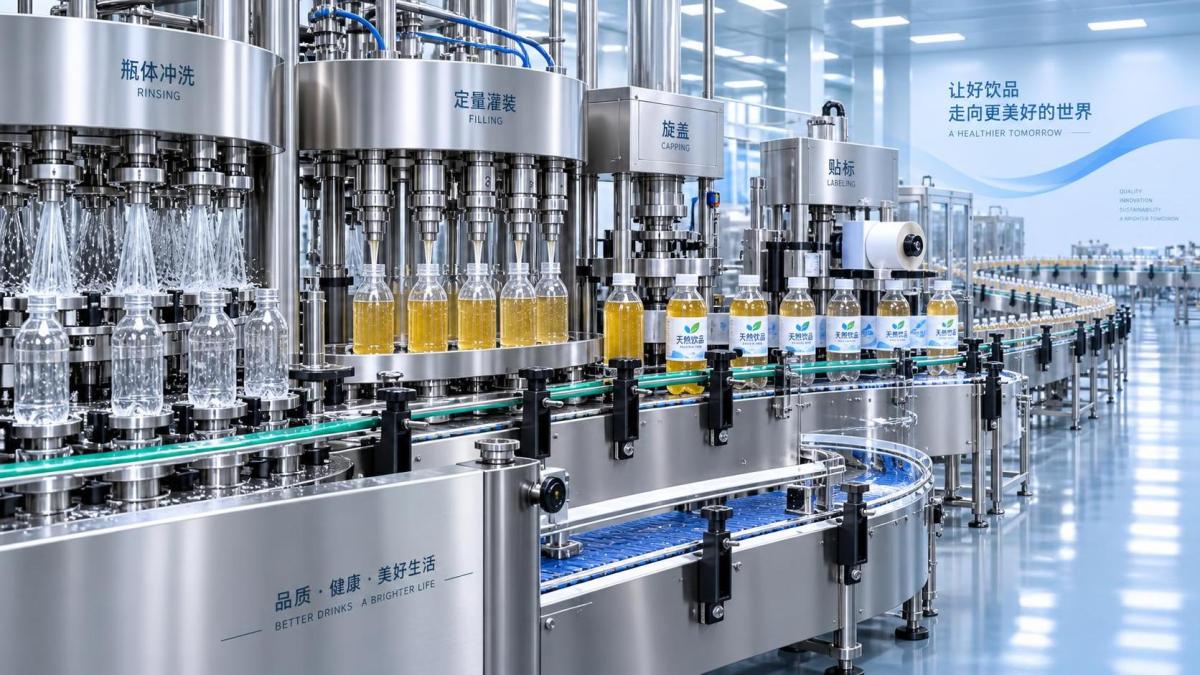
Liquid bottling equipment is a process line, not an isolated machine. The filler receives containers from upstream handling and sends them to closing, labeling, inspection, and packaging. A restriction in any of these stages reduces the value of a high-output filling unit.
Container preparation is one area that should be assessed early. For returnable bottles, dusty storage conditions, or processes that require rinsing before filling, the rinsing stage must match the intended line flow and bottle handling method. A single-row chain-track design may be relevant where the packaging layout and container path support that arrangement. Buyers evaluating this part of the line can review the CP-6 Six-Wheel Single-Row Chain Track Bottle Rinsing Machine as an example of equipment to assess alongside filling capacity, while confirming its compatibility with the actual bottle range and line layout.
Downstream equipment often becomes visible as the true constraint only after installation. If labels wrinkle at higher conveyor speed, if a carton packer pauses during material replenishment, or if too little accumulation causes every small stop to halt the filler, the rated filling speed becomes largely irrelevant. During supplier discussions, request a line-layout review that shows transfer points, buffer sections, operator access, and material-loading positions.
Changeover time can matter more than an extra speed increment
For a single-SKU operation running long batches, changeover time has limited influence. For a plant that switches bottles, caps, labels, or beverages regularly, it can be one of the largest determinants of weekly output.
Buyers should ask how each change is performed: which parts are exchanged, whether adjustment points are repeatable, how recipes are stored, how long cleaning takes between products, and whether settings can be verified before production resumes. The issue is not merely how quickly a changeover can be demonstrated. It is whether the procedure can be repeated reliably by the available operating team without causing filling errors, damaged bottles, or extended restart losses.
It is often better to select a line with adequate speed and controlled, predictable changeovers than a faster line that loses substantial time each time the production plan changes. This distinction is especially important where multiple brands or package sizes share the same equipment.
Use a line-speed brief when requesting quotations
A clear purchasing brief produces more comparable proposals and reduces the risk of receiving an attractive but poorly matched speed claim. Include the following information in every request:
- Required finished output by SKU and by production period.
- Expected run length for each SKU and expected changeover frequency.
- Full bottle drawings or physical samples, together with closure and label details.
- Product characteristics that affect filling, cleaning, or handling.
- Planned operating hours, shift pattern, and anticipated demand growth.
- Equipment already in place that must connect with the new line.
- Space limits, utility availability, operator access, and maintenance access.
- The expected acceptance basis: product, bottle, speed, fill tolerance, and line configuration.
This brief changes the conversation from “What is your fastest machine?” to “What output can this configuration deliver on our actual products?” That is the comparison that supports a defensible capital decision.
Questions that reveal whether a throughput claim is useful
When reviewing a proposal, ask what product and bottle were used to establish the stated speed. Confirm whether the speed applies to the filling machine alone or to the complete line. Ask what short stops are assumed, how containers are accumulated between modules, and which station is expected to govern output. For a multi-format operation, request the expected running speed for each priority format.
It is also useful to clarify what happens when the line slows down. A well-matched system should allow upstream and downstream modules to coordinate without creating excessive bottle pressure, unnecessary product loss, or repeated operator intervention. The answer will often reveal more about real usability than the top-line speed figure.
Choose throughput as an operating decision
The best throughput for a bottling line is the level that meets required saleable output on the products that matter, within the available operating time, while leaving deliberate room for expected change. It should account for the full process: container preparation, filling, capping, labeling, inspection, packing, and the stops that happen during normal work.
Before approving equipment, establish the net output requirement by SKU, identify the slowest or most difficult format, and test every supplier proposal against that basis. A line that is balanced, maintainable, and suited to the production schedule will usually deliver more commercial value than one selected solely for its highest quoted speed.
Leave A Message
If you are interested in our products and want to know more details, please leave a message here, we will reply you as soon as we can.