
How hot filling changes juice filling line requirements
Time : Oct 25, 2026
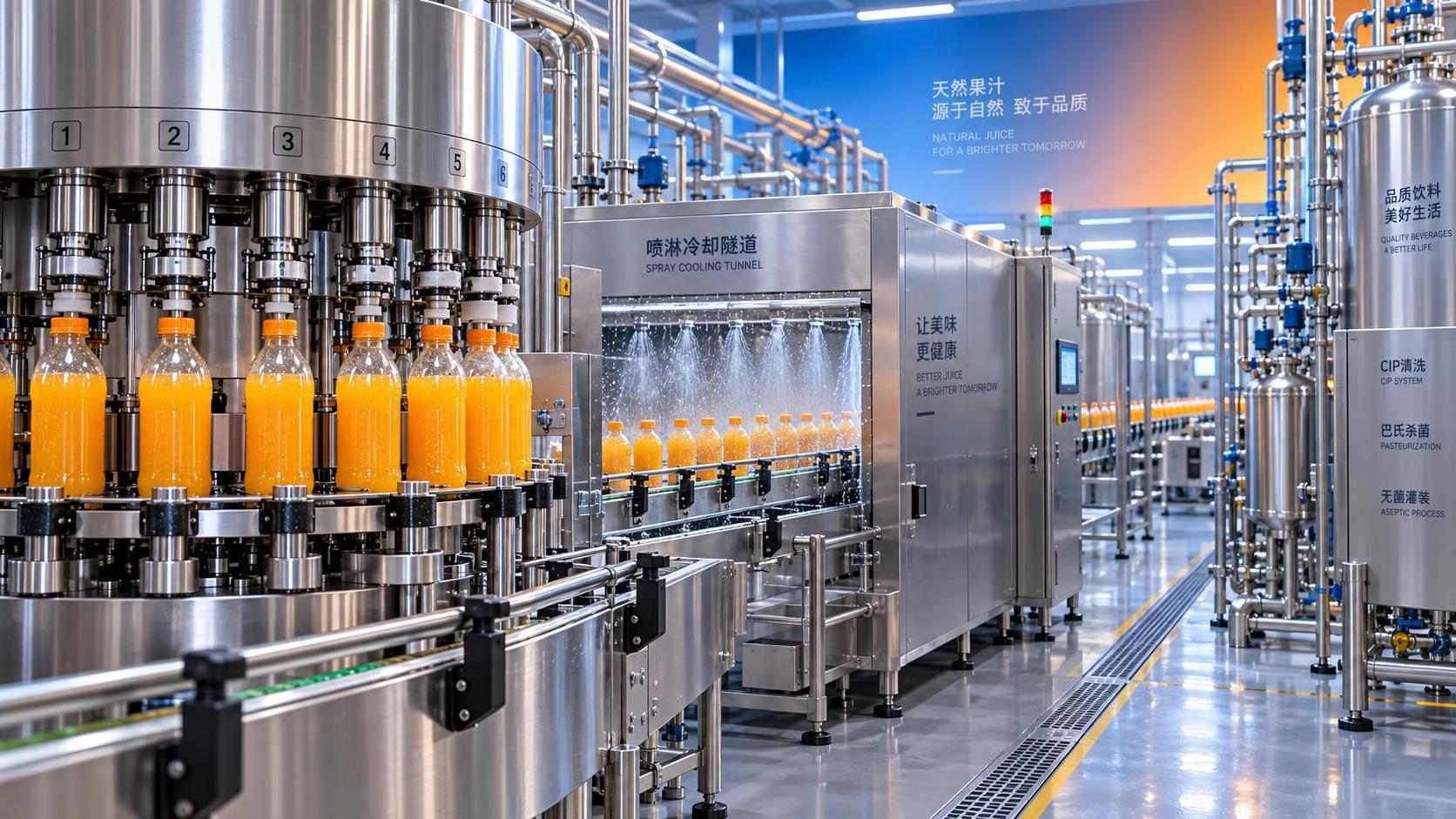
When a juice product moves from ambient filling to hot filling, the change is not limited to raising the product temperature at the filler inlet. The entire packaging path is exposed to different thermal, hygienic, and mechanical conditions. A line that performs well with chilled or cold-filled juice may show unstable fill levels, bottle deformation, cap leakage, excessive vacuum, or poor downstream handling once hot product is introduced.
The central engineering judgment is straightforward: a hot-fill Juice Filling Line must be designed as a temperature-controlled packaging system, not simply a conventional filler fitted with hotter product piping. Product-contact components, bottle and closure specifications, rinsing conditions, CIP circuits, filling valve behavior, conveyor layout, holding time, and cooling capacity all need to be reviewed together. A weak point anywhere in that chain can compromise either product safety or package integrity.
Why elevated filling temperature changes the line
Hot filling generally relies on filling a beverage at an elevated temperature, closing the container promptly, and using heat exposure to help control microorganisms in the package and selected contact areas. The exact temperature and holding requirements depend on the formulation, acidity, particulate content, process design, and packaging format. The important point for equipment assessment is that temperature becomes an active process variable from the product tank through to package cooling.
Under cold-fill conditions, a bottle is mainly required to withstand filling pressure, cap application force, transportation loads, and possible carbonation pressure where applicable. Under hot-fill conditions, the bottle must also tolerate thermal softening during filling and the vacuum that can develop as the sealed product cools. The closure liner, tamper band, neck finish, label adhesive, shrink sleeve, and secondary packaging may all face conditions they were not originally selected to handle.
Heat also changes the behavior of juice itself. Viscosity may decrease, foam behavior may shift, dissolved gases may be released more readily, and fruit solids can settle or circulate differently. These changes affect filling accuracy and the ability of valves to close cleanly. A line review should therefore begin with the actual hot product characteristics, not with the nameplate capability of the filler alone.
Start with the thermal process window
Before selecting or modifying machinery, define the intended operating window. This should include the target temperature at the filler, the lowest acceptable temperature at the last filling valve, the maximum residence time after heating, the expected start-up and shutdown behavior, and the temperature at which bottles enter downstream cooling. A nominal hot-fill temperature is not enough. Temperature loss through transfer piping, balance tanks, manifolds, and pauses in operation can produce a meaningful difference between the first and last bottle in a run.
One recurring problem appears during intermittent production. Product is heated correctly at the upstream process stage, but production pauses while the filler, valve manifold, or long product line cools. When filling resumes, the first containers may receive product outside the validated temperature range. The response should not be limited to restarting the conveyor. The line needs a defined recirculation, diversion, or reheat approach that prevents inadequately conditioned product from reaching containers.
Thermal mapping should consider:
- Product temperature at heater outlet, buffer vessel, filler manifold, and valve discharge.
- Temperature variation between filling heads, especially on multi-valve rotary equipment.
- Heat loss from uninsulated piping, valves, pumps, and product holding sections.
- Cooling-water temperature and flow stability during extended operation.
- How changeovers, short stops, and CIP transitions affect the thermal state of the line.
Instrumentation is part of this evaluation. Sensors need to be located where they represent the process decision, rather than only where installation is convenient. A single probe upstream of a long filler manifold may not reveal a temperature drop at the filling point. Alarm logic should also distinguish between a brief measured fluctuation and a condition requiring product diversion or line stoppage.
Filling valves and product-contact design
Filling valves used for hot juice must remain hygienic, repeatable, and mechanically stable at operating temperature. Seal materials, valve seats, diaphragms, O-rings, and lubricants need compatibility with both hot product and cleaning chemicals. Material selection should account for repeated thermal cycling, not merely one-time exposure. A gasket that appears acceptable during initial commissioning may harden, swell, lose elasticity, or begin to leak after repeated hot-fill and CIP cycles.
Valve design also influences product quality and housekeeping. Juice with pulp, fibers, or suspended solids may require larger flow paths and careful attention to dead zones. Small internal pockets can retain residues after production, becoming difficult to clean and potentially causing carryover into the next run. Where particulate juice is involved, assess whether the valve geometry allows unrestricted product circulation during CIP and whether the process can maintain homogeneous solids distribution at the filler bowl or manifold.
At higher temperatures, filling dynamics can change enough to alter the original settings for venting, bottle lifting, snift control, and valve closure. Faster flow may improve throughput but can increase splashing, foaming, or neck contamination. Slower flow may protect the package but reduce capacity and raise dwell time upstream. The practical target is not the highest possible filling speed; it is stable fill height with minimal product contact on the sealing surface.
Headspace and closure sealing must be evaluated together
Hot product cools after capping, creating internal vacuum. That vacuum can be beneficial when the bottle and closure system are designed for it, but it can also pull panels inward, distort lightweight containers, or expose weak cap seals. Fill volume, headspace volume, closure application torque, liner performance, and cooling profile are linked. Changing only one variable often moves the defect elsewhere.
A useful assessment sequence is to first verify actual net content and headspace at fill temperature, then measure the package condition after cooling, and finally inspect the seal area for product residue or thread damage. Trying to correct bottle paneling by changing cap torque without confirming hot fill level may conceal the original cause. Likewise, increasing bottle weight may help package stability but does not solve inconsistent vacuum caused by fluctuating product temperature.
Container handling is no longer a simple conveyor task
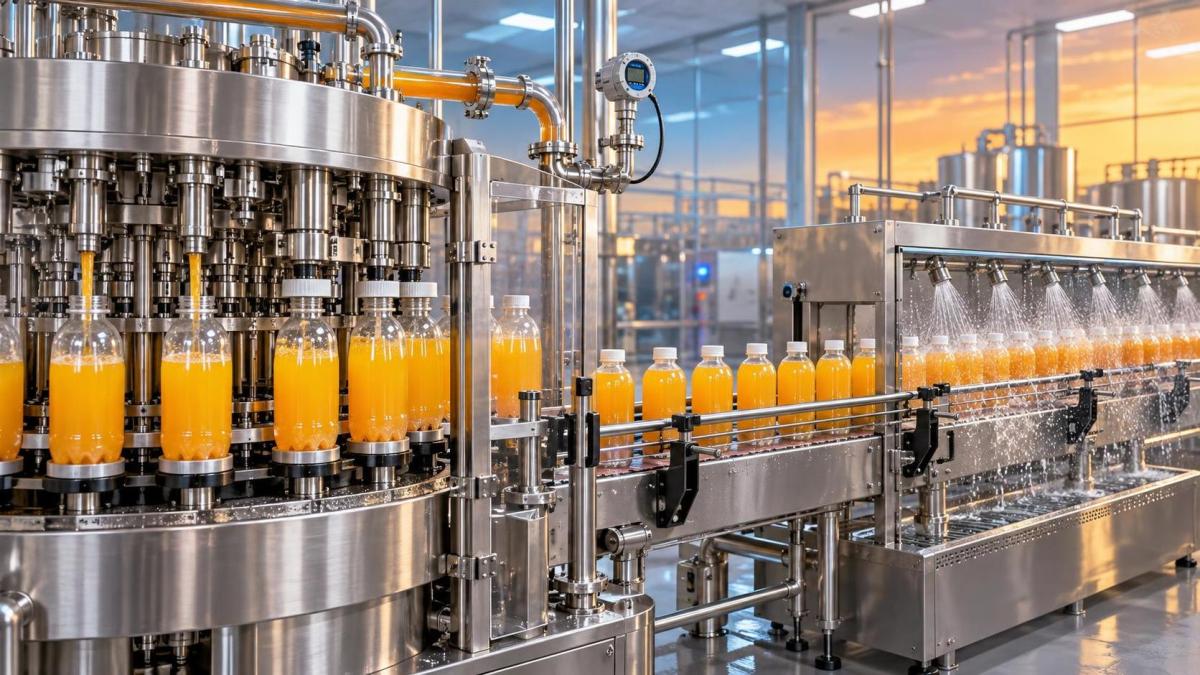
Bottles emerging from a hot filler are warmer, less rigid, and more susceptible to scuffing or deformation than bottles handled in ambient conditions. Guide rails, transfer stars, neck guides, side belts, and accumulation zones need to support containers without pinching softened panels. This is especially important where bottle geometry includes vacuum panels, thin shoulders, or non-round shapes that can rotate unpredictably under side pressure.
Conveyor speed matching becomes more sensitive as well. A small speed mismatch between the filler discharge and downstream transfer can create bottle collisions that would be harmless with rigid, cold containers but damaging with hot ones. Engineers should inspect transfers under normal speed, reduced speed, and restart conditions. The most visible bottle damage often occurs after a brief stop, when accumulated hot containers enter a compressed downstream zone.
Cooling is often treated as a downstream utility, but it directly determines package behavior and line efficiency. Insufficient cooling capacity can leave bottles too warm for labeling, packing, or palletizing. Overly aggressive cooling, on the other hand, may create thermal shock in sensitive packages or cause unstable condensation conditions before labeling. The cooling section should be reviewed for water distribution, zone control, drainage, access for cleaning, and the ability to avoid stagnant areas.
Rinsing and empty-bottle hygiene before hot filling
Hot filling can contribute to package sanitation, but it should not be used as a substitute for controlled empty-container preparation. Bottles may arrive with dust, loose particles, or moisture from storage and conveying. Rinsing requirements depend on bottle supply conditions, package design, product sensitivity, and the overall hygienic strategy. The objective is to deliver containers to the filler in a condition that does not add avoidable contamination or interfere with closure sealing.
For single-row bottle transport systems, a rinsing unit may be useful where the line needs a controlled bottle inversion and internal rinse before filling. Equipment such as the CP-30 Single-Row Chain-Track Bottle Rinsing Machine can be considered as part of the pre-filling section when bottle orientation, track compatibility, rinse media management, and drainage can be integrated with the rest of the process. Its role should be evaluated alongside bottle handling and sanitation requirements rather than treated as an isolated add-on.
Rinsing media and residual moisture also deserve attention. If bottles are rinsed with water, the process must control drainage so that excess liquid does not dilute the first portion of product or create inconsistent conditions at the filler. Nozzle alignment, bottle inversion angle, rinse pressure, and drain time should be confirmed with the actual bottle rather than an empty format drawing. Deep-base bottles, narrow-mouth designs, and lightweight containers can retain water in places that are not obvious during dry trials.
CIP capability must cover the real hot-fill circuit
A hot-fill line has more components exposed to elevated product temperatures, and those components must be demonstrably cleanable. The CIP boundary should include heating interfaces, transfer lines, pumps, balance vessels, filler bowls, valves, return circuits, and any product recovery paths that are used in production. A common design weakness is a branch line that is included mechanically but receives insufficient cleaning flow because it is too short, too long, poorly oriented, or protected by a valve arrangement that does not open during CIP.
Temperature, chemical concentration, flow, and time need to reach the intended surfaces. Simply observing a CIP supply temperature at the skid does not prove that all filling valves and remote points achieve the required conditions. The assessment should identify likely cold spots: long dead legs, high points that trap air, low points that do not drain, and components with restricted internal passages.
Drainability is particularly important because standing water after cleaning can dilute product or support unwanted microbial growth in a later production period. Pipe slopes, valve orientation, filler bowl drainage, and the capability to blow out or recover residual liquid should be reviewed early. Retrofitting drainability after installation is usually more disruptive than addressing it during line design.
Utilities and controls determine whether the line stays stable
Hot filling increases demand on utilities even when the filler itself has adequate mechanical capacity. The heating system must keep product within its operating window through changes in flow rate. Cooling water must remove heat at a rate compatible with package handling. Compressed air, where used for valve actuation or bottle handling, should remain dry and reliable in a warm, wet environment. Poor drainage around the filler and cooler can turn routine cleaning into a recurring source of operational problems.
Control strategy should make abnormal conditions visible before they become packaging defects. Useful interlocks may include low product temperature at the filler, loss of cooling-water flow, low rinse-media pressure where applicable, abnormal filler-bowl level, or prolonged stoppage that triggers a recirculation requirement. The appropriate response depends on the process design, but the principle is consistent: operators should not need to infer food-safety status from bottle appearance alone.
How to assess an existing line before conversion
A conversion review is most effective when performed from package discharge backward to product heating, then repeated from heating forward through the full process. Start with the package: confirm bottle resin, geometry, neck finish, cap, liner, label, and secondary pack suitability for the planned thermal cycle. Then inspect the filler, product path, container transfers, cooling equipment, and controls.
Trial runs should be planned to expose transitions, not just steady-state output. Include start-up, normal production, temporary stop, restart, end-of-run recovery, and cleaning changeover. Inspect packages both immediately after filling and after they have completed the intended cooling profile. A line can appear stable at the filler while defects emerge later at the labeler, packer, or after packages have fully cooled.
The most reliable hot-fill Juice Filling Line is one in which product temperature, hygienic condition, package response, and downstream handling are treated as connected design decisions. Evaluating those links before installation or conversion prevents the familiar cycle of correcting fill settings, then cap torque, then conveyor pressure, while the underlying thermal and package interaction remains unresolved.
Leave A Message
If you are interested in our products and want to know more details, please leave a message here, we will reply you as soon as we can.