
Which filling method works best for edible oil filling machines?
Time : Nov 08, 2026
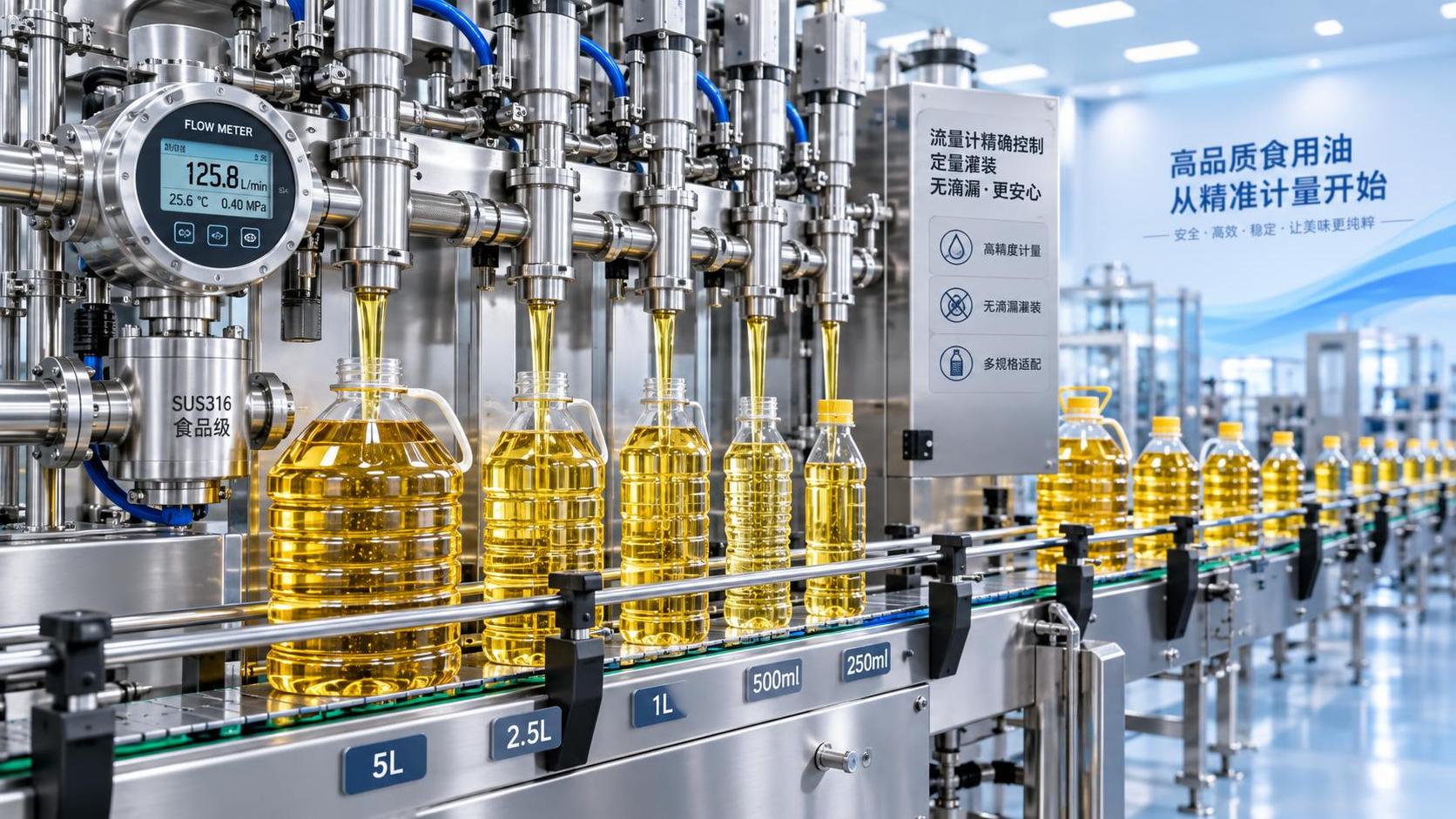
For most edible oil applications, a flowmeter-based system is the strongest all-round choice when the line must handle repeatable volumes, changing bottle sizes, and moderate-to-high production speeds. It is not automatically the best choice for every product, however. Gravity filling can be the practical answer for simple, low-viscosity oils and stable bottle formats; piston filling is useful when viscosity varies or the product range includes thicker oils; and net-weight filling is usually the better fit for larger packs or operations where fill mass matters more than liquid volume.
The right choice for an Edible Oil Filling Machine should therefore begin with the product and package, not with a generic speed target. Oil temperature, viscosity, foam behavior, container geometry, required fill tolerance, cleaning method, and downstream handling all affect whether a filling principle performs consistently after installation.
Start with the decision that affects every other choice
Technical evaluations often begin by comparing nominal output rates. That is useful, but it can hide the main risk: a filler that runs quickly during a short acceptance test may not hold its fill level through normal changes in oil temperature, bottle supply, cap torque, or product changeover.
Define the packaging requirement in the same units used to release finished product. If the declared content is volume-based and the product density is stable enough for the intended process, volumetric filling may be appropriate. If the pack is sold or controlled by mass, or if density changes materially with temperature, a weight-based method may remove a source of correction and verification.
Then establish the real operating envelope. “Edible oil” is not one filling condition. Refined sunflower oil, olive oil, blended cooking oils, cold-pressed products, and flavored oils can differ in viscosity, entrained air, filtration condition, and temperature sensitivity. A system selected for a warm, free-flowing oil may behave differently when a cooler batch arrives or when a premium oil is processed at a lower temperature.
How the main filling methods compare
Gravity filling: simple only when the process is simple
Gravity fillers rely on liquid flow driven by the product head above the nozzle. Their appeal is clear: the product path can be uncomplicated, and the method is often suitable for free-flowing oils in a relatively narrow operating range. For a dedicated line filling one oil type into one or two similar bottle designs, gravity filling can be a sensible, maintainable solution.
The limitation is that the fill is influenced by conditions outside the nozzle. Changes in tank level, oil temperature, viscosity, or supply pressure can alter flow behavior. Bottle neck dimensions and how consistently containers locate under the filling valves also matter. A gravity machine may be technically capable of filling a broad range of products, yet require more adjustment and verification as those conditions move.
Gravity filling deserves serious consideration when the operation values mechanical simplicity, product conditions are well controlled, and the tolerance requirement is realistic for the package. It is less attractive for a line that must frequently switch between light and heavier oils, run many bottle formats, or maintain tightly controlled fill results at high speed.
Why flowmeter filling is often the default for flexible bottled-oil lines
Flowmeter filling measures the amount of liquid passing through the filling circuit, then closes the valve when the programmed target is reached. This makes it well suited to production environments where several bottle sizes share one line and repeatable volume filling is needed without relying solely on a timed fill.
For an Edible Oil Filling Machine used across retail packs, flowmeters can offer a useful balance between precision, line speed, and recipe control. Bottle changeovers are generally easier to manage when the fill target is controlled electronically, provided that bottle handling and nozzle positioning are also designed for the format range.
That advantage depends on choosing the meter and control architecture for the application. The useful question is not simply whether the machine has flowmeters. Evaluators should ask how the selected meter behaves at the planned fill rate, whether it remains reliable at lower speeds or small fill volumes, how the system compensates for product-temperature changes, and how calibration is managed during routine operation.
Flowmeter systems also need good product delivery conditions. Pulsation from pumps, air in the product, unstable supply pressure, or poorly designed recirculation can create inconsistent valve closure and apparent volume variation. These are not reasons to reject the method; they are reasons to assess the complete filling system rather than treating the meter as an isolated component.
Piston filling is valuable when positive displacement solves a real problem
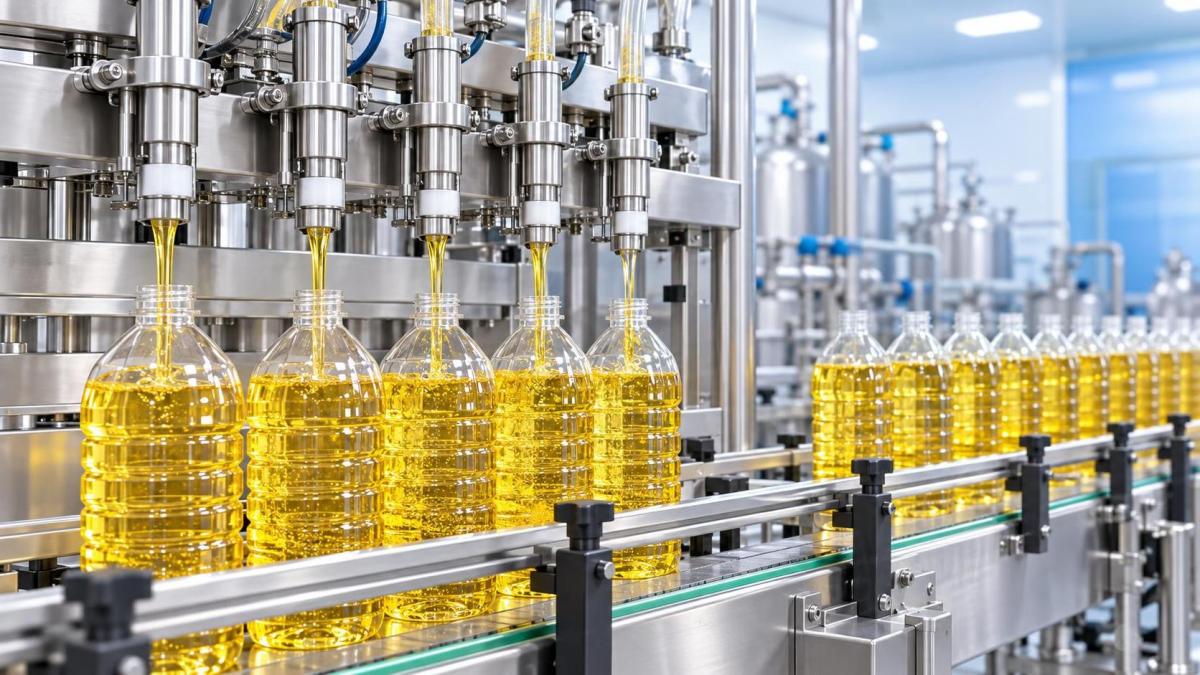
Piston filling delivers a defined volume through a mechanical stroke. It can be effective for oils that are more viscous, products with variable flow behavior, or lines where controlled positive displacement is preferred over gravity-driven flow. It is also a workable approach for lower-speed production where flexibility matters more than maximum output.
The tradeoff is hygienic and maintenance complexity. Pistons, seals, valves, and associated product-contact spaces must be compatible with the oil and accessible for cleaning. When the line handles multiple oils, especially products with distinct flavor profiles or added ingredients, changeover validation becomes more important than the basic filling principle.
A piston system should not be selected merely because it appears more “accurate.” Its value is strongest where viscosity or product behavior makes a simpler method unstable. For a clean, low-viscosity refined oil at high throughput, a well-designed flowmeter filler may be easier to scale and control. For thicker or more variable products, the piston’s controlled displacement can justify its added mechanical burden.
Use net-weight filling when mass is the governing requirement
Net-weight filling measures the filled mass, usually by weighing the container during or immediately after the filling operation. It is particularly relevant for larger jerrycans, pails, tins, and other packs where product value, shipping weight, or declared net content makes mass control the more direct measurement.
This method avoids relying on density conversion to infer mass from volume. That can be useful because oil density shifts with temperature. In a volumetric system, the delivered volume may be consistent while pack mass changes as product temperature changes. A weight-based system addresses the outcome directly, though it introduces its own control demands.
Reliable net-weight filling requires a stable weighing environment. Conveyor vibration, container movement, product oscillation after filling, and inadequate settling time can interfere with the signal. The best weight-filling design is not necessarily the one with the fastest theoretical cycle; it is the one that reaches a stable measurement without creating an impractical bottleneck.
Container handling can decide whether a good filler performs well
Filling technology cannot compensate for inconsistent containers. Lightweight PET bottles can flex, narrow-neck bottles can trap product at the nozzle, and wide-mouth containers may require different anti-splash control. Neck support, bottle centering, nozzle dive depth, fill height, and conveyor transfer stability should be reviewed with the actual container rather than a dimensional drawing alone.
Packaging hygiene also begins before filling. When empty bottles require rinsing or air cleaning, that equipment must match the line’s container orientation, transfer method, and intended speed. For example, a CP-6A Six-Wheel Double-Row Chain Track Bottle Rinser can be assessed as part of the upstream bottle-preparation section, but its suitability should be evaluated alongside the bottle format and the filler’s infeed arrangement rather than as a separate purchase.
Pay particular attention to the handoff between rinser, filler, capper, and checkweigher. A filler may meet its expected performance when containers are perfectly spaced, but unstable transfers can cause mis-centering, splashes, drips, and intermittent rejects. Those faults are often misdiagnosed as filling-valve problems.
Questions that expose the better option during technical evaluation
A useful evaluation asks suppliers to demonstrate the proposed method under representative conditions, not only to state an accuracy claim. The following questions usually reveal more than a brochure comparison:
- Which oils, temperatures, and viscosities form the design basis for the filler?
- How is the fill target controlled, and what process changes can cause it to drift?
- What is the method for preventing tailing, nozzle drips, and oil on the bottle finish?
- Can the same filling valves cover the smallest and largest planned packs without compromising control?
- How are recipes, calibration records, rejects, and underfill/overfill trends handled?
- Which parts are changed for a new bottle, cap, or fill volume, and how much access is required?
- How are product-contact areas drained and cleaned between oil types?
The answer should include physical details, not just software features. For example, “automatic adjustment” has limited value if the line still needs manual nozzle-height changes, guide-rail repositioning, or extensive cleaning before every product switch.
A practical recommendation by operating profile
Choose gravity filling for a dedicated, controlled operation with low-viscosity oil and limited container variation. It remains a rational choice where simplicity and ease of maintenance outweigh the need for broad product flexibility.
Choose flowmeter filling when the line must fill several retail bottle sizes, maintain repeatable volumetric targets, and support a more automated recipe-driven process. It is often the most balanced route for a flexible bottled-oil line, provided the product supply system and meter selection are properly engineered.
Choose piston filling when viscosity, variable flow behavior, or lower-volume production makes positive displacement more dependable than gravity or continuous flow measurement. Include cleaning and seal maintenance in the decision from the beginning.
Choose net-weight filling when large packs or mass-based control justify the added weighing integration. Its strength is direct control of the delivered mass, not simply a claim of higher precision.
The final selection should be made after confirming the product range, filling temperature, package family, target output, tolerance basis, cleaning regime, and downstream inspection method together. The filling method that works best is the one that remains stable across those conditions, not the one that looks strongest when evaluated in isolation.
Leave A Message
If you are interested in our products and want to know more details, please leave a message here, we will reply you as soon as we can.