
How a honey filling machine prevents stringing at the nozzle
Time : Sep 25, 2026
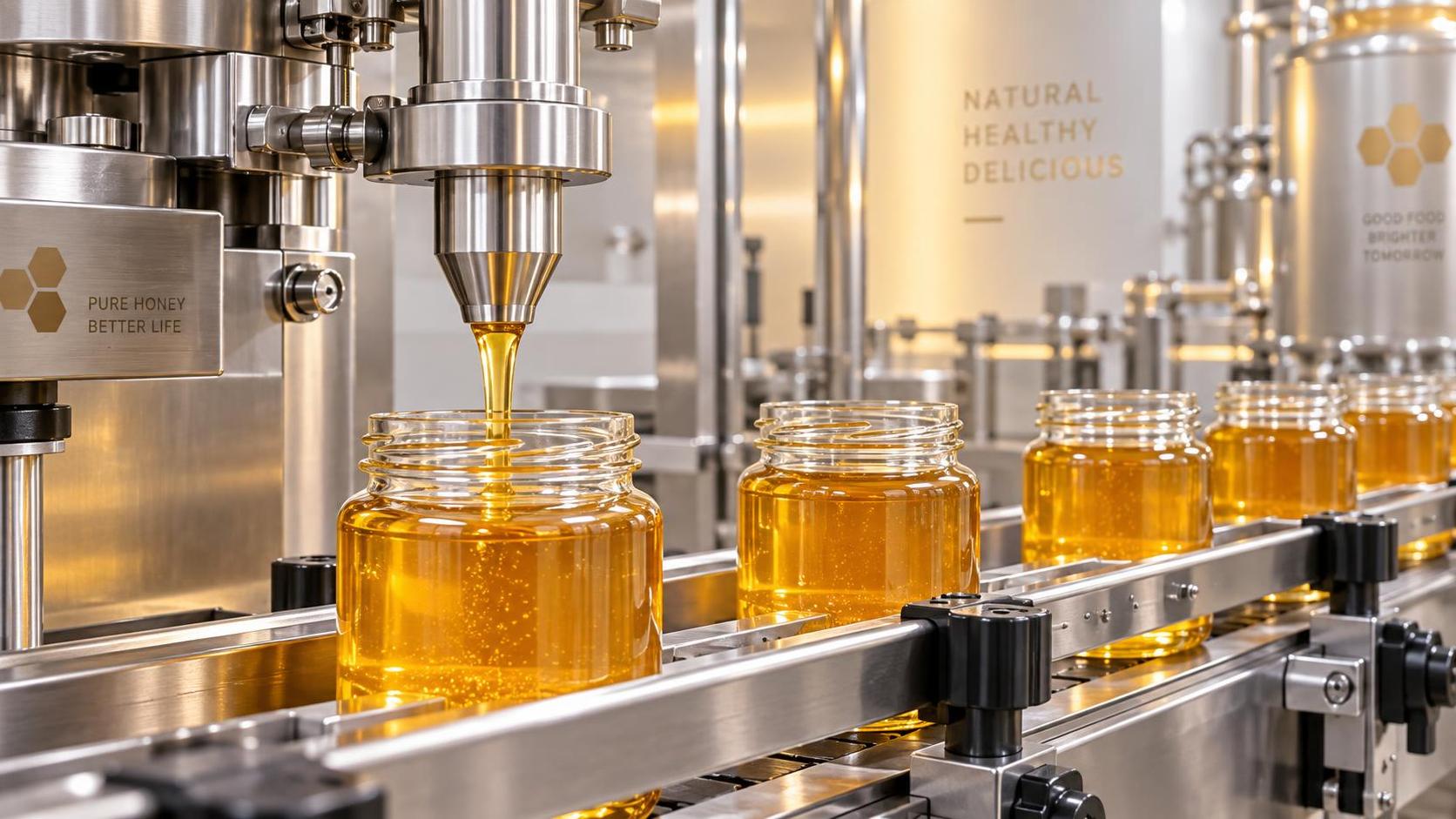
Sticky honey has a habit of revealing small weaknesses in a filling line. The fill may look correct at the moment the valve closes, yet a thin thread stretches from the nozzle to the container. It can land on the bottle shoulder, trail across a conveyor, or snap back onto the nozzle. Within a short run, that one small defect becomes a cleanup problem, a weight-control concern, and an operator frustration.
A properly configured Honey Filling Machine prevents stringing by treating honey as the slow-moving, elastic product it is. Clean shut-off depends on more than simply stopping the pump. Nozzle geometry, product temperature, pressure stability, fill speed, anti-drip motion, and timing must work together. When they do, the honey separates cleanly from the nozzle and lands where it should: inside the package.
For beverage and food processing operators, the practical question is not whether honey can be filled. It is how to fill it repeatedly without sticky threads, inconsistent deposits, or a nozzle that needs wiping after every few cycles.
Why honey strings when the nozzle closes
Honey is viscous, but viscosity alone does not explain stringing. Its behavior changes with temperature, formulation, moisture content, crystal level, and even the amount of air introduced during pumping. As the filling valve begins to close, product still sitting in the nozzle outlet may continue moving because of residual pressure. Instead of separating sharply, it stretches into a filament.
Several conditions often occur at the same time:
- The product is too cool, so it flows reluctantly and clings to the nozzle tip.
- Filling pressure remains high after the target volume has been delivered.
- The valve closes slowly or does not seal consistently.
- The nozzle is positioned too far above the container opening.
- The dispensing tip has a blunt, worn, or poorly matched outlet shape.
- The nozzle rises or retracts at the wrong point in the filling cycle.
Operators sometimes respond by increasing speed, assuming that a faster fill will “break” the string. This may work briefly, but it can also introduce splashing, foam in lighter syrups, or excess pressure at shut-off. In most cases, clean filling comes from a controlled end-of-fill sequence rather than brute-force speed.
The nozzle is where the problem becomes visible
A honey filling nozzle needs to do two jobs that can seem contradictory: allow a stable product stream during filling and stop that stream decisively at the end. The shape and mechanical condition of the tip matter more than many teams expect.
A narrow outlet may give a tidy-looking stream, but it can increase flow resistance and leave a long strand attached after closure. An outlet that is too large can discharge too aggressively, creating turbulence and making precise cutoff harder. The best diameter depends on honey viscosity, target fill weight, container neck size, and desired line speed.
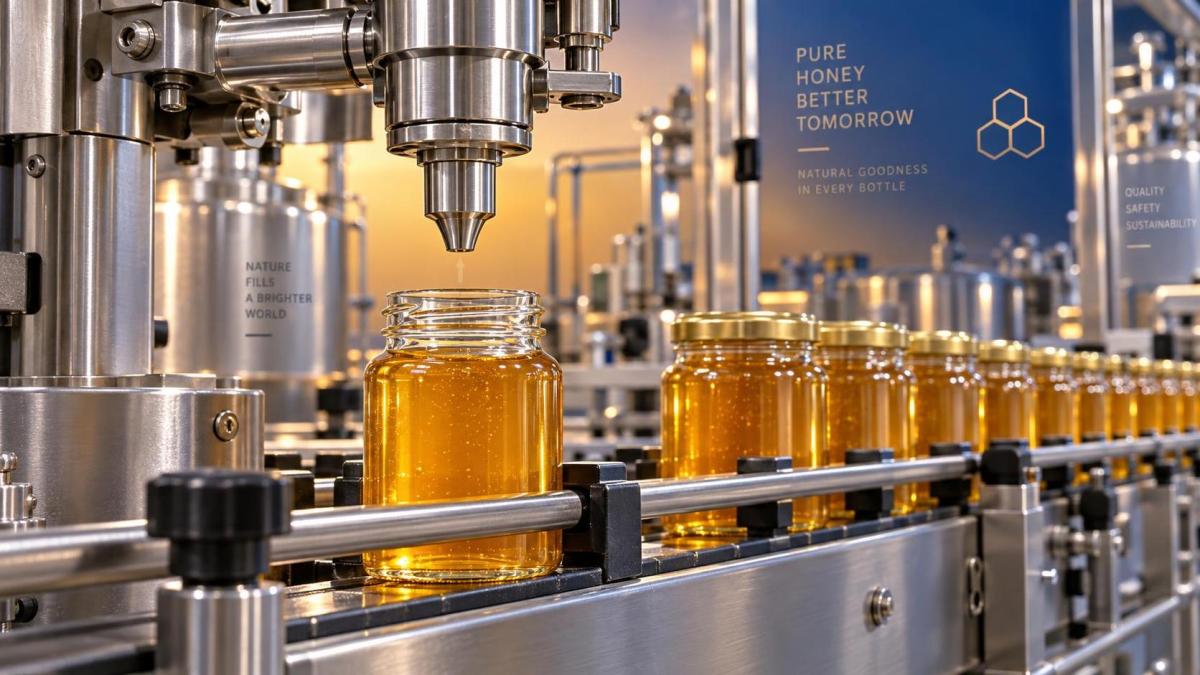
For bottles, jars, sachets, or single-serve beverage additives, the nozzle should be centered over the opening and positioned close enough to reduce the distance the honey can stretch. If the package design permits, a diving nozzle can begin lower in the container and rise in coordination with the fill. This reduces air entrapment and gives the stream less opportunity to form a string outside the package.
Tip condition is equally important. Dried product, crystallized residue, scratches, and small dents create irregular surfaces where honey can cling. A nozzle that was clean at startup may become a stringing source after a long production period, especially in a warm room where product dries around the outlet. Inspection should therefore be part of normal operating checks, not just sanitation changeover.
Clean cut-off starts with stable product temperature
Honey that is too cold becomes difficult to meter and reluctant to release from metal surfaces. Honey that is overheated may flow more easily, but excessive heat can affect product quality, aroma, color, or process requirements. The aim is not to make the product as thin as possible; it is to hold it at a consistent, approved filling temperature where viscosity remains predictable.
Temperature variation is especially troublesome. A hopper may be warm while product in a transfer line cools between runs. The first containers after a pause may fill differently from the containers filled during steady production. A heated hopper, insulated transfer path, jacketed piping, or controlled recirculation can help maintain a uniform condition, provided the process is suitable for the specific honey product.
Before changing mechanical settings, check whether stringing occurs only at startup, after breaks, or throughout the shift. If it appears mainly after idle time, the underlying issue may be temperature loss or product settling around the nozzle rather than an incorrect fill parameter.
The last fraction of a second matters most
In a well-tuned Honey Filling Machine, the end of the cycle is deliberate. The system reaches the target volume, reduces or releases product pressure, closes the dispensing valve, and may apply a brief suck-back or nozzle retraction action. Each motion has to happen in the right order.
Valve closure
A fast, repeatable shut-off is essential. If seals are worn, pneumatic pressure fluctuates, or the valve actuator responds sluggishly, the nozzle may continue to weep after the command to stop. This produces not only strings but also gradual fill-weight drift. A valve should be inspected for product buildup, seal wear, sticking movement, and inconsistent closure response.
Suck-back or anti-drip control
Suck-back creates a slight reverse movement after filling, drawing the product away from the outlet. It is often one of the most effective tools for preventing strings, but it must be adjusted with care. Too little suck-back leaves a tail. Too much can pull air into the nozzle, create bubbles, or cause the next fill to start unevenly.
Make small adjustments and observe several cycles rather than judging one bottle. The correct setting produces a clean break without visible recoil, dripping, or air pockets in the product stream.
Nozzle lift and container handling
If the nozzle rises too early, it pulls a string upward. If it rises too late, honey can smear against the container rim or neck. The ideal motion depends on package geometry. Wide-mouth jars may tolerate a different nozzle height than narrow-neck bottles used for honey beverages, syrups, or functional drink ingredients.
Container stability matters as well. A bottle that shifts beneath the nozzle can turn a clean cut-off into a messy deposit. Guides, nest fixtures, and consistent conveyor indexing are not peripheral details; they directly influence nozzle cleanliness.
A practical adjustment sequence for operators
When strings appear, avoid changing every setting at once. That makes it difficult to identify the cause and can create a new problem elsewhere. A controlled sequence saves time and gives maintenance staff clearer evidence if a mechanical fault is involved.
- Confirm the product condition. Verify that honey is at the approved and stable filling temperature. Check for visible crystallization, unusual thickness, or batch-to-batch differences.
- Clean and inspect the nozzle tip. Remove residue safely, then look for buildup, damage, misalignment, or a partially blocked outlet.
- Watch the end of the fill closely. Is the string forming before valve closure, immediately after closure, or when the nozzle moves away? The timing points to different causes.
- Check shut-off repeatability. Run several test fills at the same setting. Irregular drips may indicate valve, seal, or actuator issues rather than a process adjustment.
- Fine-tune anti-drip action. Adjust suck-back in small increments and inspect the result over a meaningful sample, not only one cycle.
- Review nozzle height and movement. Bring the tip closer to the fill point where possible, then synchronize lift or retraction with the actual moment of product separation.
- Reconfirm fill accuracy. Any change to speed, pressure, or suck-back should be followed by a weight or volume check.
Documenting the final settings for each honey grade is worthwhile. A light floral honey, a creamed honey blend, and a honey-based beverage syrup may require different parameters even when they run through the same equipment.
What a good filling setup looks like on the line
The best indication of control is not simply a clean nozzle after one fill. It is a stable pattern over time: containers arrive consistently, fills reach target weight, the stream stops cleanly, and the nozzle remains free of accumulating residue. Operators should be able to walk the line without seeing honey trails on guide rails, container shoulders, or machine guards.
Hygiene also improves when stringing is controlled. Honey residue can attract dust, create sticky contact points, and make routine cleaning longer than necessary. In food and beverage environments, reducing exposed product at the filling point supports a tidier process and makes visual inspections more meaningful.
Where a line includes a closure stage after filling, the transfer between these stations deserves attention. A clean bottle neck helps downstream closure equipment maintain consistent handling. On integrated packaging lines, equipment such as the DZ-1 Fully Automatic Enclosed Stoppering Machine can be considered as part of the wider packaging flow, particularly where protected closure handling and orderly container movement are important after a controlled filling operation.
Common fixes that do not solve the root cause
Wiping the nozzle more often keeps the line presentable, but it does not correct an unstable shut-off. If operators need to wipe continuously, investigate the valve action, tip condition, and product temperature.
Running the product hotter without limits may reduce viscosity, but it should never be the default answer. Stay within the product’s approved processing window and address pressure or nozzle timing separately.
Increasing pump speed can shorten the total filling time but may worsen the final surge. The last part of the fill often benefits from a controlled slower phase, particularly for high-viscosity products.
Replacing the nozzle without checking alignment can waste time. A new tip will not solve stringing if the container is off-center, the nozzle lifts too soon, or residual pressure remains in the product path.
When maintenance should be involved
Call for maintenance support when settings that previously worked no longer produce a clean cutoff, when strings occur randomly from cycle to cycle, or when the nozzle continues dripping after the system is stopped. These signs can point to worn seals, damaged valve seats, air-supply instability, sensor timing issues, or a pump that is not responding consistently.
It is useful to give maintenance more than a general report of “the nozzle is messy.” Note the product temperature, fill speed, container type, time of occurrence, and whether the string forms during dispensing, shut-off, or nozzle lift. A short video of several cycles can be especially helpful because it shows the sequence that static inspection may miss.
Keeping clean deposits repeatable
Stringing is rarely caused by one dramatic failure. More often, it is the result of small variations that accumulate: slightly cooler product, a little residue at the tip, a valve beginning to wear, or a timing setting altered during a changeover. The operator’s advantage is that these factors are visible and manageable when checked in a logical order.
A well-set Honey Filling Machine combines appropriate nozzle design, consistent product conditioning, reliable valve closure, measured suck-back, and synchronized movement. Once those elements are balanced, filling honey becomes far less of a sticky compromise. The result is cleaner packaging, more dependable fill control, and a line that spends more time producing rather than being wiped down.
Leave A Message
If you are interested in our products and want to know more details, please leave a message here, we will reply you as soon as we can.