

What makes ROPP capping machines suitable for wine bottles?
Time : Oct 18, 2026
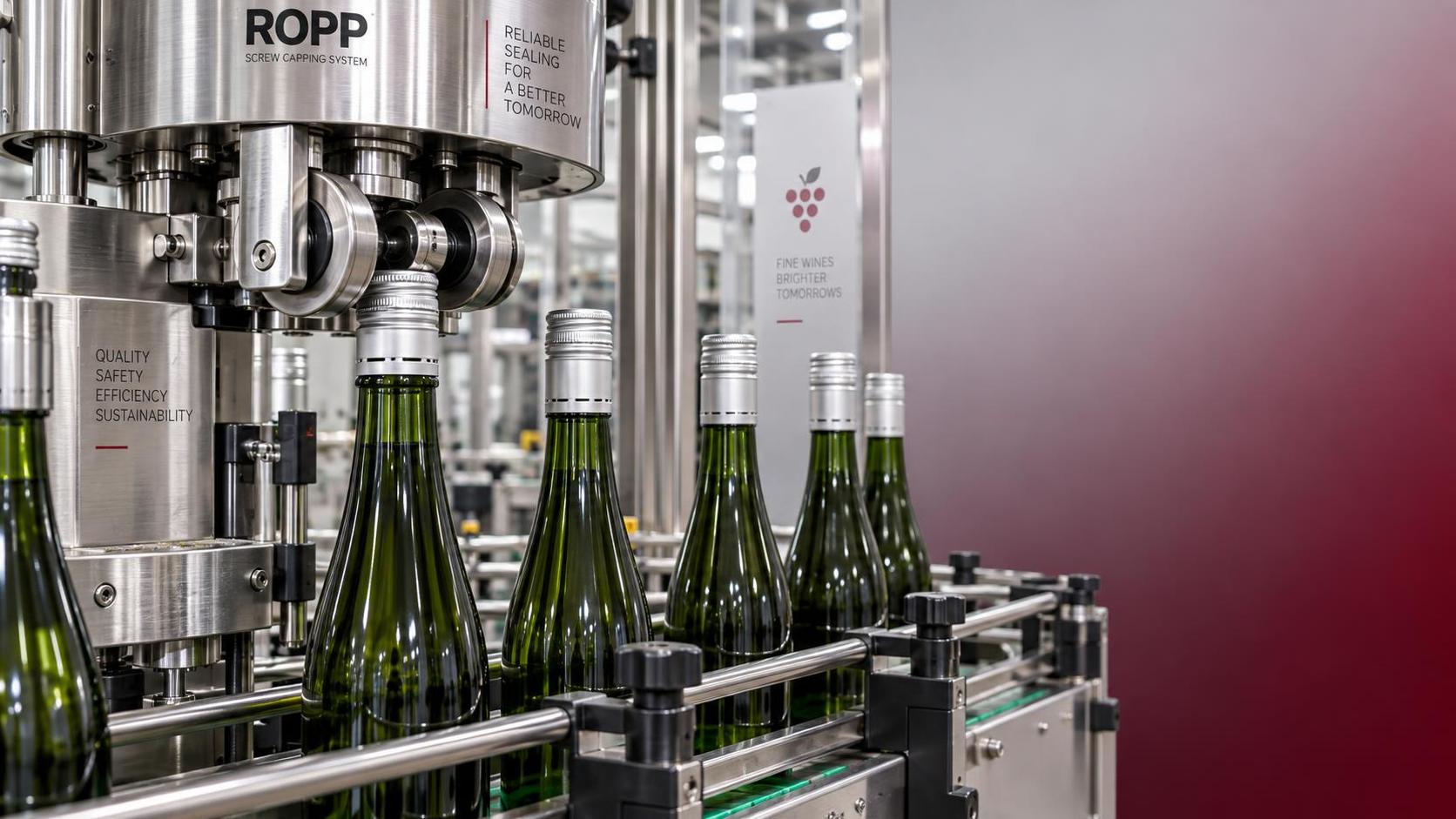
At the bottling line, a wine bottle can look perfectly finished yet still create trouble later: a cap may loosen in transit, the tamper band may tear unevenly, or the closure may fail to sit squarely on the neck. These issues affect more than appearance. They can lead to leaks, poor opening experience, inconsistent seal performance, and a product that does not look appropriate for a premium retail shelf.
A ROPP Capping Machine is suitable for wine bottles because it forms an aluminum roll-on pilfer-proof cap directly around a compatible threaded bottle neck. Rather than simply pressing a pre-formed thread into place, the machine uses controlled pressure and rotating rollers to shape the cap’s thread and tamper-evident skirt to the glass finish. This gives wine producers a practical combination of secure closure, repeatable application, clean presentation, and visible evidence if the bottle has been opened.
It creates a closure that matches the wine bottle neck
Wine bottles intended for screw-cap packaging are made with a specific neck finish. The glass contains the thread profile and retaining ring needed for the cap to engage correctly. A ROPP closure starts as an aluminum shell with a liner inside. During capping, the shell is positioned over the bottle finish, compressed downward, and rolled by forming rollers.
The rollers create two critical features:
- The upper thread section is shaped around the bottle’s threaded glass finish.
- The lower skirt is formed beneath the retaining ring, creating the tamper-evident band.
This is why the process is called “roll-on pilfer-proof.” The cap is rolled onto the bottle rather than merely screwed on, and the lower band shows whether the closure has been removed. For wine packaged for retail, restaurants, travel, or home consumption, that visible opening indication is often as important as the seal itself.
The fit also looks more integrated than a loosely applied screw cap. A correctly formed aluminum closure follows the contour of the neck, helping create the neat, compact finish commonly associated with screw-cap wine bottles.
Consistent capping pressure supports reliable sealing
Wine is sensitive to packaging conditions. A closure must help prevent leakage and manage the transfer of air and moisture over the intended storage period. The cap alone does not determine wine preservation; the liner material, bottle finish, filling conditions, headspace, closure specification, and handling all matter. Still, a machine that applies caps consistently is essential because uneven forming can compromise the work done elsewhere in the packaging process.
ROPP equipment is designed to repeat the same mechanical sequence across a run: cap placement, downward pressure, thread forming, and tamper-band forming. Once the head height, roller geometry, pressure, and bottle handling are correctly set, each bottle can receive a similar application profile.
That repeatability matters when a line is running more than a few bottles. Hand-applied caps may feel tight but can vary in seating depth or skirt formation. A cap that appears acceptable from above may have an incomplete thread impression, poor liner compression, or a tamper band that is too tight or too loose. Mechanical roll-on capping gives operators defined settings to inspect and adjust rather than relying primarily on feel.
Why aluminum ROPP caps work well with wine presentation
Wine packaging is judged quickly. Shoppers often notice the bottle silhouette, capsule area, label alignment, and cap finish before reading details about the wine itself. Aluminum ROPP caps are available in a range of colors, finishes, embossing options, and print treatments, but their practical value begins with their clean, low-profile shape.
Unlike a cork closure covered by a separate decorative capsule, a screw-cap bottle can leave the capping station with its primary closure and tamper evidence already in place. The cap can cover the neck finish neatly without adding a separate finishing operation. This may simplify the closure area of the line, although label application, foil use, bottle inspection, and other packaging steps still depend on the product design.
For wines intended to be opened without a corkscrew, the consumer benefit is straightforward. A well-formed ROPP cap gives a familiar twist-open action and a distinct break when the tamper band separates. It can then be reclosed after serving, which is useful where the bottle may not be consumed in one occasion.

The tamper band is formed during the same capping operation
A strong reason to choose ROPP technology for wine is that closure security and tamper evidence are created together. The cap’s lower skirt is rolled beneath the bottle’s retaining ring. When the consumer twists the cap open, the bridge connections between the cap and band break, leaving the band behind on the bottle.
Proper tamper-band performance depends on more than whether a band is visible. It must be formed at the correct diameter and position. A band that is too tight may be difficult to separate or may distort the cap. One that is too loose may not provide a clear opening indication. Uneven forming can also produce a skirt that looks wrinkled, tilted, or incomplete.
Before deciding that a machine problem exists, check the interaction among the three physical parts involved:
- The bottle finish: thread dimensions, retaining ring shape, glass variation, and neck cleanliness.
- The cap: shell dimensions, skirt length, liner type, bridge design, and coating condition.
- The capping head: chuck condition, roller setting, roller wear, centering, and downward pressure.
These elements are designed to work as a set. A ROPP cap that performs well on one bottle finish may not form correctly on another, even if both bottles appear similar at a glance.
Cap torque is useful, but it is not the only quality indicator
People evaluating wine capping equipment often focus immediately on torque. Torque is important because it relates to removal effort and closure retention, but ROPP application is not identical to applying a pre-threaded plastic screw cap. The cap thread is being formed around the glass during the operation, so quality also depends on thread definition, cap seating, liner compression, band formation, and visual symmetry.
A bottle can show an acceptable opening torque while still having a poorly formed skirt. Conversely, changing pressure or roller adjustment only to achieve a target torque can create other defects. The more reliable approach is to inspect the entire closure result.
Bottle control is especially important with tall wine bottles
Wine bottles are often taller and more slender than many beverage containers. Their height can make stable handling important during filling, cap placement, and roll-on forming. A bottle that is not properly supported can shift slightly as the capping head engages. Even a small movement may lead to a cap that is off-center or unevenly rolled.
Inline systems should keep the bottle moving in a controlled path and provide appropriate support beneath the base during the capping cycle. Guide rails should be set to stabilize the bottle without squeezing it hard enough to cause scuffing or interrupt flow. The cap-delivery path should present each cap squarely to the bottle neck; a tilted cap can create defects that no roller adjustment will fully correct.
This is particularly relevant in small wineries, pilot lines, specialty packaging operations, or lower-speed production environments where bottle changes may occur more frequently. Equipment that allows practical adjustment and clear access for inspection can be easier to manage than a system optimized only for continuous high-output operation.
For operations using an inline pneumatic approach, the ZFG-1 Single-Head Pneumatic Cap Screwing Machine (Inline Type) may be relevant where the bottle format, closure type, and required operating method are compatible. A single-head arrangement can be useful when the emphasis is on controlled handling, changeover flexibility, or modest production flow rather than maximum multi-head throughput. Compatibility should be confirmed against the actual wine bottle neck finish and aluminum cap specification before selection.
The liner has a separate role from the metal shell
The aluminum shell provides the formed outer structure, while the liner inside the cap contacts the bottle opening and contributes to the seal. Wine closures may use liners selected for the intended packaging performance, product characteristics, and storage expectations. A capping machine must apply the closure with enough controlled force to allow the liner to seat correctly without damaging the cap or bottle finish.
This distinction prevents a common misunderstanding: choosing a ROPP Capping Machine does not automatically establish the wine’s oxygen-management performance. The machine applies the selected closure; it does not replace closure specification work. Producers should align the bottle finish, cap shell, liner, filling process, and expected distribution conditions before finalizing settings.
For example, a line may show no immediate leaks after capping but still require inspection of seating consistency and closure integrity. Short-term visual checks are useful, yet they should not be treated as the only confirmation that the chosen bottle-cap system is appropriate for the product.
Setup decisions that affect wine-bottle results
Initial setup should begin with the actual production materials, not only sample bottles or a visually similar cap. Glass dimensions can vary, and closures from different specifications may require different forming conditions. A practical setup sequence is to establish stable bottle positioning first, then verify cap placement, then adjust the capping head and rollers in small steps.
- Confirm that the bottle neck finish is designed for the selected ROPP cap.
- Inspect caps for dents, contamination, liner displacement, or feed damage before loading them into the machine.
- Set bottle guides and base support so each bottle reaches the capping point upright and centered.
- Adjust the capping-head height so the cap seats properly before the rollers begin forming it.
- Set thread-forming and tamper-band rollers according to the closure and bottle combination.
- Run a small number of bottles and inspect cap height, thread definition, band shape, surface condition, and opening behavior.
- Change one setting at a time when correcting a defect, then recheck the full closure result.
Changing several settings together can make troubleshooting difficult. If a cap begins to sit too high after an adjustment, the cause may be head height, bottle support, cap dimensions, or cap-feed alignment. Altering roller pressure at the same time may hide the original cause while creating a second problem.
When ROPP is the right choice—and when it is not
ROPP capping is a strong fit when wine is packaged in bottles with screw-cap finishes and aluminum roll-on pilfer-proof closures. It is especially appropriate where producers want reclosability, visible tamper evidence, a consistent neck finish, and a capping process that can be monitored through clear mechanical settings.
It is not a substitute for corking equipment when the selected package uses natural cork, technical cork, or other stopper formats. It also should not be assumed that any aluminum-looking cap can run on any wine bottle. The closure must be specifically matched to the glass finish, and the capping head must be capable of forming that closure correctly.
The best indication of suitability is not simply that the cap can be placed on the bottle. It is whether the finished closure seats evenly, forms clear threads, creates a functional tamper band, protects the liner interface, and opens with the intended consumer experience. When those conditions are met, ROPP technology provides a practical and well-established method for closing wine bottles with aluminum screw caps.
Leave A Message
If you are interested in our products and want to know more details, please leave a message here, we will reply you as soon as we can.