
What should be included in liquid packaging machinery commissioning?
Time : Oct 28, 2026
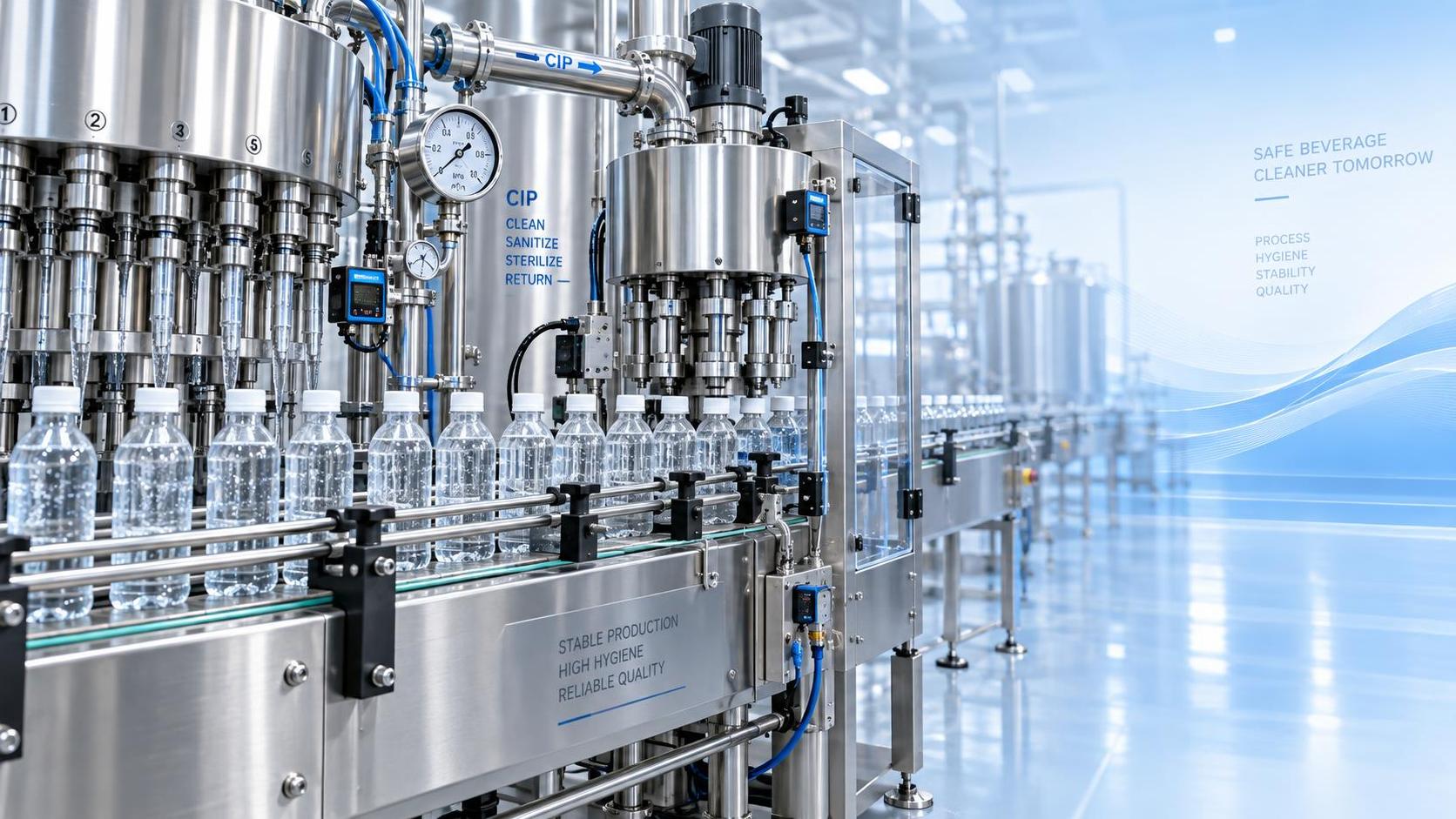
Commissioning Liquid Packaging Machinery is the point where a beverage project moves from installation on paper to real production on the floor. It is also the phase where small oversights can become expensive: a filling valve that drifts after warm-up, a CIP sequence that does not reach a critical branch, a capper that performs well at low speed but loses torque consistency at production rate, or an operator who has never been shown how to recover safely from a jam.
For project managers and engineering leaders, commissioning is not simply a final power-on test. It is a controlled verification process that confirms the equipment, utilities, controls, product, people, and acceptance criteria are ready to work together. A well-managed program reduces startup uncertainty and gives the plant a clearer path toward stable commercial output.
Start with a commissioning boundary, not a machine start button
Before equipment is energized, the project team should agree on what “commissioned” means for the line. This boundary needs to be more precise than “the machine runs.” For beverage filling and packaging systems, it should cover mechanical completion, electrical completion, utility readiness, dry operation, wet trials, product trials, cleaning validation, safety verification, operator readiness, and documented performance acceptance.
The commissioning plan should identify who owns each activity. Mechanical contractors may be responsible for installation corrections, while the controls team manages PLC and HMI checks. Quality personnel may lead sanitation and product-contact verification. Production supervisors need to be involved before the formal handover, not after it. When responsibilities are vague, issues tend to remain open because every party assumes someone else is closing them.
A practical approach is to maintain a live punch list divided into three categories: items that prevent safe energization, items that prevent product trials, and non-critical items that can be closed after startup. This prevents cosmetic issues from distracting the team while also ensuring that genuine production risks are not deferred.
Verify installation against the approved layout and process design
Mechanical installation checks should begin with the line as a whole, rather than examining each machine in isolation. A filler may be correctly installed, yet still perform poorly if the infeed conveyor creates unstable bottle spacing or if downstream accumulation applies intermittent back pressure. Packaging equipment operates as a connected system, and commissioning needs to reflect that reality.
Key installation checks commonly include:
- Machine position, level, anchoring, and access clearance for operation and maintenance.
- Conveyor elevation, transfer alignment, guide rail adjustment, and bottle or container stability.
- Correct orientation of pumps, valves, filters, flow meters, and product piping.
- Hygienic pipework quality, including slopes, drainability, dead-leg control, support spacing, and weld condition where applicable.
- Availability of guarding, platforms, emergency exits, lighting, drainage, and service access.
- Correct installation of change parts, cap elevators, labelers, coding systems, inspection devices, and reject stations.
For carbonated beverages, juice, dairy alternatives, teas, water, or functional drinks, product characteristics should influence the review. Viscosity, foaming tendency, particulates, temperature, carbonation level, and container geometry all affect filling behavior. The project team should not assume that a dry conveyor trial proves the line is ready for the intended beverage.
Utilities are part of process performance
Many commissioning delays are blamed on the packaging machine when the root cause lies upstream in utilities. Liquid Packaging Machinery depends on stable services to maintain repeatable filling, capping, rinsing, cleaning, and control performance. A utility connection that is technically present but unstable under load is not a completed utility.
Confirm the required electrical supply, grounding, voltage stability, compressed air pressure and quality, water supply, drainage capacity, product supply conditions, and any steam, chilled water, glycol, vacuum, nitrogen, or CO2 services used by the process. Air quality deserves particular attention: oil, moisture, and pressure fluctuations can affect pneumatic actuators, valve response, and cap handling.
Utility verification should be performed at realistic operating demand. For example, pressure may appear adequate when one actuator cycles slowly, then fall when the filler, capper, reject system, and auxiliary equipment operate together. Similarly, drain flow should be checked during actual rinsing and CIP discharge, not merely by visual inspection of a floor drain.
Bring controls online in a disciplined sequence
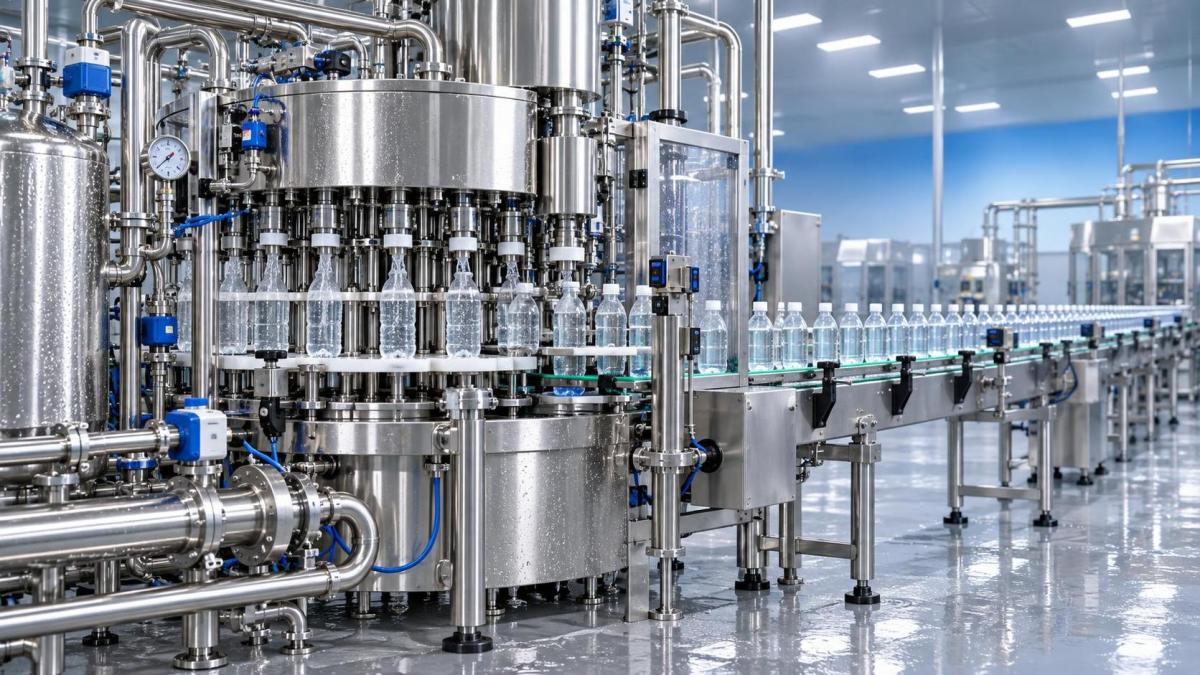
Electrical and automation commissioning should progress from safe energization to individual device checks, then to machine functions and integrated line sequences. This sequence matters. Jumping directly into high-speed trials can mask basic faults and make troubleshooting unnecessarily difficult.
Inspect control panels, cable terminations, motor rotation, sensor mounting, encoder feedback, communication networks, and remote I/O status. Every photoeye, level sensor, pressure transmitter, temperature probe, safety switch, and actuator should be tested against the approved input/output list. HMI screens should show meaningful alarms and clear machine states rather than generic fault messages that force operators to search through manuals.
The PLC logic should also be reviewed for realistic operating conditions: no-container/no-fill functions, low-cap alarms, bottle jams, downstream backup, product starvation, CIP mode, manual mode, automatic recovery, and controlled shutdown. Interlocks must protect both equipment and product. A line that restarts automatically after a minor interruption may be convenient in theory, but it can create quality or safety concerns if the restart conditions have not been carefully defined.
Test the hygienic design and CIP sequence before commercial product runs
In beverage production, cleaning validation is not an administrative checkpoint. It is a production readiness requirement. Product-contact surfaces, tanks, fillers, manifolds, hoses, pumps, and transfer lines must be cleaned and rinsed according to the process requirements for the beverage being packed.
Commissioning should verify that the CIP system achieves the required route, flow, temperature, concentration, and contact time. Review valve matrices and routing logic to ensure that every intended circuit is reached and that no unintended path creates cross-contamination risk. Confirm that return lines flow correctly, conductivity or other relevant verification signals work as intended, and the system can distinguish cleaning phases from production phases.
Where the line handles multiple products, the team should also examine changeover and flushing procedures. A flavor transition, allergen-related control, or color change may require more than the default rinse. The goal is to establish a repeatable cleaning process that operators can execute without relying on tribal knowledge from the commissioning engineer.
Prove filling and closure quality with the actual package format
Dry runs are useful for checking transport and synchronization, but they do not prove package quality. Wet commissioning should use the intended container, closure, product or a suitable validated surrogate, and target production conditions whenever possible.
Filling tests should confirm target fill volume or level, repeatability between filling heads, product loss, splash, foam management, and performance during line stops and restarts. For weight-based control, sampling plans should be established across multiple heads and throughout the run. For level filling, visual consistency and controlled headspace should be reviewed alongside process measurements.
Closure verification is equally important. Check cap feeding, cap orientation, cap application, torque or closure integrity as relevant, thread engagement, tamper-evident band performance, and rejection of missing or defective closures. A capper can look stable from a distance while producing a small percentage of closures that fail later in distribution. Commissioning is the time to find that pattern.
On compact filling-and-capping applications, an integrated monoblock may simplify synchronization between the two operations. For example, the GCP24-6 Fully Automatic High-Precision Filling and Capping Monoblock Machine should be commissioned as a combined product-handling system: container infeed timing, filling settings, cap delivery, torque performance, and discharge transfer all need to be evaluated together rather than as separate checkboxes.
Run safety validation as an operational exercise
A safety check is incomplete if it only confirms that emergency-stop buttons exist. The commissioning team should test how the line behaves when guards open, a safety circuit is interrupted, a conveyor jams, air pressure is lost, or an operator requests manual movement. Stop categories, safe torque off functions, controlled deceleration, and restart permissions should be aligned with the plant’s safety procedures.
Operators and maintenance staff should participate in these tests. They are often the first to notice whether a safety recovery sequence is understandable in real working conditions. If clearing a routine jam requires bypassing a guard, reaching into an awkward area, or calling a controls technician every time, the design is not yet operationally mature.
Use staged performance trials instead of one dramatic acceptance run
Performance acceptance is often treated as a single final event. In practice, it is more useful to build confidence through staged trials. Start with low-speed operation, then progress to normal production speed, planned stops, unplanned-stop recovery, extended runs, format changes, and product transitions. Each stage reveals different weaknesses.
Define acceptance metrics in advance. Depending on the project, these may include sustained output rate, fill accuracy, reject rate, closure quality, product loss, line efficiency, package damage, CIP completion, and utility consumption trends. The test should specify the package format, product conditions, operator involvement, run duration, sampling method, and what constitutes an excused stop. Without this definition, acceptance discussions can become subjective at the moment when schedule pressure is highest.
It is also wise to separate machine rate from line rate. A filler may achieve its nominal speed, while the complete line falls short because of accumulation settings, labeler interruptions, coding faults, or unstable case packing. The commercial line must meet the agreed outcome as a system.
Train for recovery, adjustment, and documentation—not only normal operation
Commissioning frequently produces a misleading sense of readiness because vendor specialists are present to make adjustments quickly. Once they leave, production teams must handle routine faults, changeovers, cleaning, and preventive checks themselves. Training should therefore include normal startup and shutdown, but also abnormal conditions: missed caps, low product supply, sensor faults, minor jams, incorrect container orientation, emergency stops, and post-CIP restart.
Good handover documentation includes operating instructions, electrical drawings, pneumatic diagrams, P&IDs where relevant, spare parts lists, lubrication schedules, calibration requirements, backup files for PLC/HMI systems, alarm lists, cleaning procedures, and approved parameter records. Capture the final “as-commissioned” settings rather than relying on temporary notes from the startup period.
A short daily commissioning review can be especially valuable. The agenda does not need to be complicated: what was tested, what failed, what was corrected, what remains open, who owns it, and what could block tomorrow’s plan. This rhythm keeps engineering, quality, operations, and suppliers aligned when time pressure is unavoidable.
Common mistakes that delay beverage line startup
One common mistake is treating product trials as the first opportunity to identify installation problems. Another is accepting equipment based on brief demonstration runs with no defined sampling or recovery testing. Teams also underestimate the time required for container and closure adjustments, especially when multiple bottle formats are involved.
Equally risky is postponing operator involvement until the final day. The people who will run the line should be present during functional testing, because their questions often expose gaps in access, alarms, cleaning methods, and changeover design. Finally, do not close the commissioning phase without a clear list of residual actions, deadlines, owners, and an agreed process for changes after handover.
A commissioning record becomes a startup asset
The strongest commissioning programs leave behind more than a signed acceptance sheet. They create a usable baseline for future troubleshooting, maintenance planning, quality investigations, and capacity improvement. When production performance shifts months later, documented fill settings, utility readings, torque checks, sensor calibrations, and trial results provide a valuable reference point.
For project leaders, that is the real purpose of commissioning Liquid Packaging Machinery: not merely proving that equipment can operate once, but establishing the conditions under which the beverage line can run safely, cleanly, and predictably after the project team has moved on.
Leave A Message
If you are interested in our products and want to know more details, please leave a message here, we will reply you as soon as we can.