
Choosing a spirit filling machine for premium glass bottles
Time : Sep 23, 2026
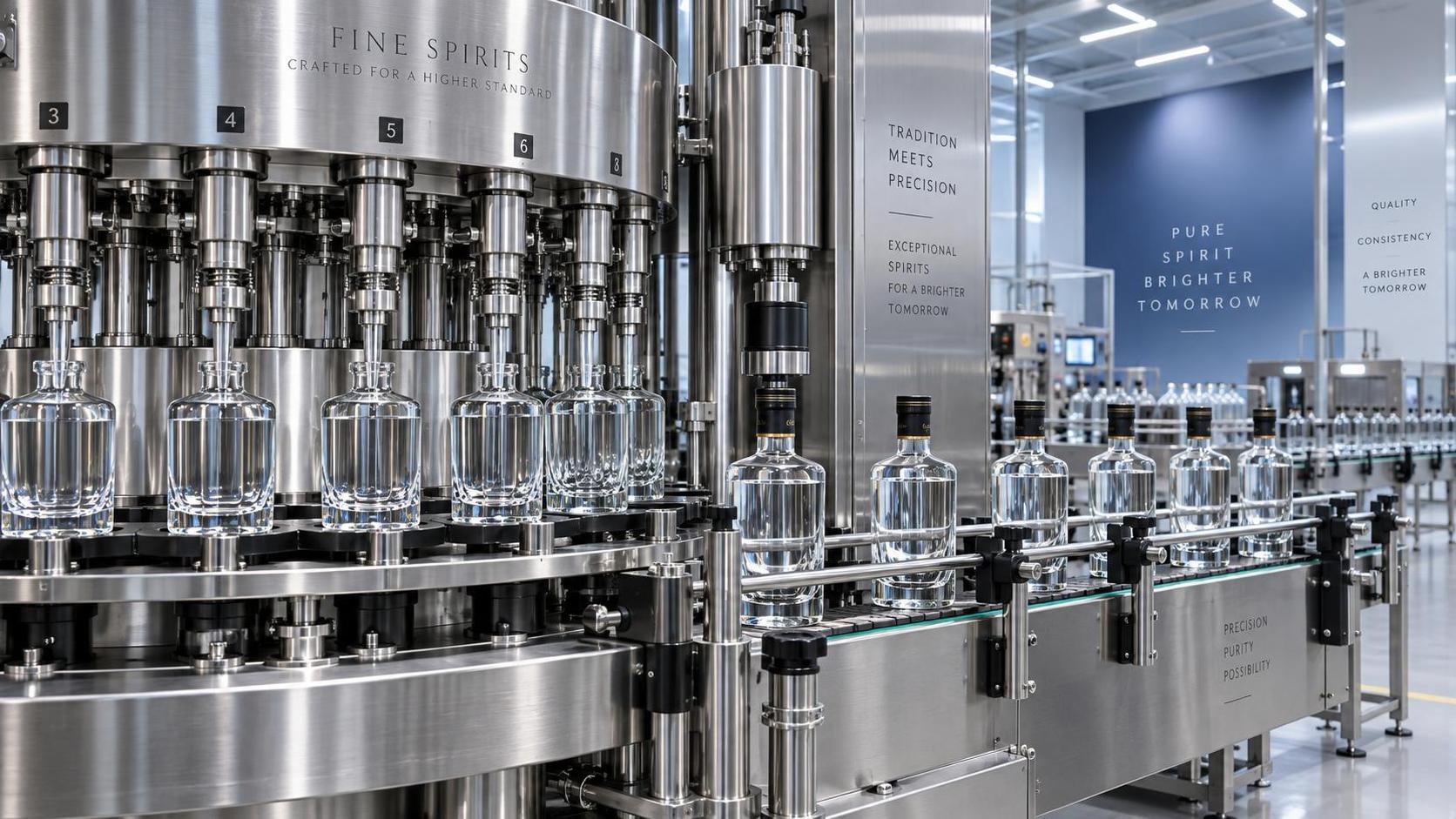
A premium spirit can be damaged by a poor filling decision long before the bottle reaches the shelf. A visible fill-level variation, a scuffed decorative bottle, a leaking closure, or a small amount of product loss can undermine the presentation of a high-value brand. The right Spirit Filling Machine is therefore not simply the fastest unit within budget. It must suit the spirit, the glass bottle range, the closure process, the cleaning regime, and the production plan as one system.
For most premium glass bottle applications, the best choice is a filling system that prioritizes gentle bottle handling, repeatable fill accuracy, low oxygen pickup where relevant, and practical changeovers. Maximum nominal speed should be treated as a secondary criterion unless the operating line can consistently support it with bottle supply, capping, inspection, labeling, and downstream packing.
Begin with the bottle and product, not the machine catalogue
It is tempting to begin with a target output rate and ask suppliers to quote a machine that can achieve it. That approach often creates problems later because premium spirit lines are constrained by more than bottles per hour. The shape and finish of the bottle, the spirit's alcohol content, the desired fill presentation, the closure type, and the number of SKUs can all change which filling principle is appropriate.
Glass bottles used for premium spirits may be tall, heavy, embossed, square, oval, unusually shaped, or fitted with thick bases. These features affect how bottles enter, index, support, and exit the filler. A machine that performs well with a standard round bottle may need different guides, star wheels, neck handling parts, or bottle supports for a distinctive decanter-style package. If the brand uses several bottle formats, the cost and time required to change between them should be examined before choosing a high-speed configuration.
The liquid itself also matters. Clear vodka, gin, whisky, rum, cream-based products, liqueurs, and spirit-based beverages do not all behave the same way in a filling valve. Differences in viscosity, foaming tendency, temperature sensitivity, suspended ingredients, and cleaning requirements affect filling consistency. A system selected for a low-viscosity clear spirit may not be a sensible choice for a thicker liqueur, even when the nominal bottle size is identical.
Before requesting quotations, prepare a product-and-package brief that includes the full bottle drawings or physical samples, neck finish details, closure samples, target fill volumes, expected temperature at filling, product characteristics, output expectations, and the future SKU range. This gives suppliers a workable basis for proposing a filling method instead of making assumptions from a single bottle photo.
Choose the filling principle based on the quality risk
Different filling technologies can produce acceptable results, but they manage product flow and fill level differently. The decision should be tied to the quality risk that matters most for the product and package.
A common error is to describe a requirement only as “accurate filling.” Accuracy can mean different things. A brand may care about legal net content, a visually uniform shoulder level, low overfill, low drips on the exterior, or all of these at once. These outcomes are related but not identical. A supplier should demonstrate how the proposed machine controls each one for the actual bottle and product combination.
For premium glass packaging, evaluate fill accuracy under normal production conditions rather than only in a short demonstration. Product temperature, tank level, line pressure, bottle stability, and valve condition can affect performance. Ask how the machine detects or compensates for conditions that cause gradual fill variation during a run. Just as important, ask what an operator must adjust manually and how often.
Bottle handling deserves the same scrutiny as filling accuracy
Premium bottles are expensive, and breakage is not only a material loss. Broken glass stops the line, creates a sanitation and safety event, and may require product disposition depending on where it occurs. The path through the filler should be reviewed as a complete transfer system: infeed conveyor, spacing device, star wheel, bottle lift or support, filling zone, discharge, capper interface, and reject handling.
Look for controlled movement rather than aggressive acceleration. Bottle guides must support the actual shape without rubbing labels, embossing, or decorative coatings. Bottles should remain stable when transferred between machines, especially if the package has a high center of gravity or a narrow base. A neck-handling design can be useful for certain bottle formats, while base support may be more suitable for others. Neither is automatically superior; compatibility with the bottle finish, weight distribution, and decoration process decides the issue.
Request a review of the change parts required for every planned SKU. The quotation should make clear which items are included, which are optional, and whether tools are needed for changeover. A line that appears economical for one bottle may become costly and slow when multiple specialty formats are introduced.
Do not separate filling from capping and closure presentation
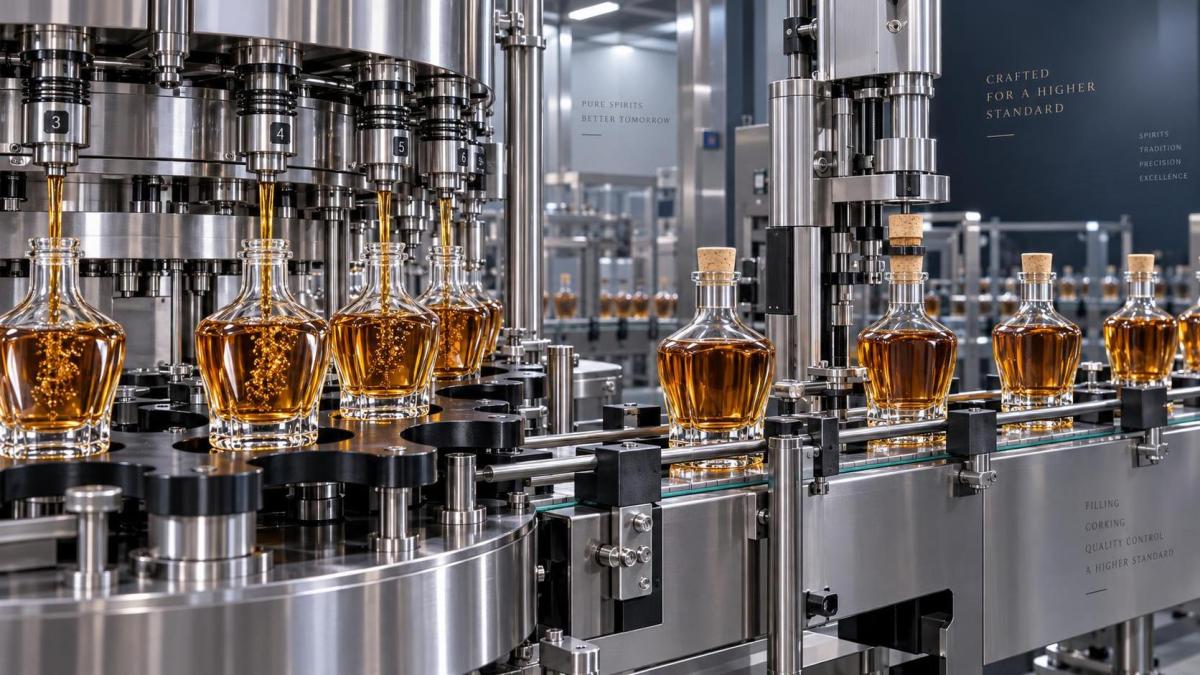
The filler's discharge conditions influence the capper. If bottles leave the filling zone wet, unstable, or with residual product around the neck, closure quality can suffer. This is especially important for premium corks, bar-top closures, screw caps, tamper-evident components, and decorative capsules. A clean neck finish helps prevent cap slippage, leakage, contamination on the closure, and inconsistent final appearance.
Consider the complete closure sequence during evaluation. Confirm bottle pitch, conveyor height, accumulation requirements, and how bottles transfer from filling to capping. If the product requires inert gas management, controlled headspace, or a specific handling sequence before closure, that should be incorporated into the line design rather than treated as an afterthought.
Leak testing and inspection are also part of the decision. Some premium applications require stronger assurance that the correct fill level, closure presence, code, and package integrity are maintained. The appropriate inspection equipment depends on the packaging risk and operating requirements, but its footprint and reject logic must be compatible with the filler and downstream equipment.
Hygienic design must be practical to clean, not just easy to describe
Spirits are often considered less demanding than some other beverages because of their alcohol content, but this does not remove the need for disciplined sanitary design. Product residues, flavor carryover, exterior spills, dust, lubricant exposure, and improper cleaning can still compromise quality and create avoidable downtime. Liqueurs and products containing sugars, flavors, or cream components require even closer attention to cleaning and product-contact construction.
Review product-contact materials, seals, hoses, valve design, and drainability. Areas that trap liquid are difficult to clean and can make product changeover slower. The best design for a single clear spirit may differ from the best design for a portfolio with frequent flavor changes. Where cleaning-in-place is proposed, ask how the circuit reaches valves, manifolds, product piping, and the product tank interface. Where manual disassembly is required, examine whether parts can be removed, inspected, and reassembled consistently without excessive downtime.
Cleaning should be evaluated together with changeover planning. A machine that fills accurately but takes too long to switch from one product or bottle format can restrict the whole production schedule. A practical assessment accounts for the work required between runs, not just the time the machine spends filling.
Set a realistic output target and protect usable capacity
Rated speed is a useful reference point, but it is not the same as sustained output. Actual line performance depends on bottle supply, product feed, cap delivery, machine stops, inspection rejects, operator interventions, changeovers, and downstream accumulation. A filler should have enough capacity margin to meet the production requirement without being forced to operate at its limit throughout every shift.
Oversizing can be just as problematic as undersizing. A very fast rotary filler may require more complex change parts, a larger footprint, higher utility demand, and more extensive maintenance than a lower-speed inline arrangement. If batch sizes are modest and bottle variety is high, a flexible machine with faster format changes may provide more useful output over a week than a larger system optimized for one standard bottle.
Match the machine layout to the production pattern
- High-volume, stable formats: A rotary filling machine may be justified when the bottle, fill volume, and closure remain consistent for long production runs.
- Frequent SKU changes: An inline arrangement or a simpler modular system can be easier to adapt, particularly when bottles vary significantly in diameter or shape.
- Premium limited runs: Prioritize handling quality, cleaning access, and repeatability over maximum speed. A slower line that protects the bottle and reduces adjustment work can be the stronger commercial choice.
- Future portfolio expansion: Specify the likely next bottle formats and products early. Retrofitting for an unplanned closure or unusual bottle can be more difficult than including provisions in the original design.
Compare lifecycle cost, not only the purchase price
The quoted machine price is only one part of the decision. A lower initial-cost system can become expensive if it needs frequent manual adjustment, consumes large quantities of change parts, causes repeated drips, or depends on specialist support for routine service. Conversely, complex automation is not automatically valuable when the line runs a narrow product range and local staff can maintain a simpler design effectively.
Ask for clarity on wear parts, valve seals, lubrication requirements, recommended service intervals, fault diagnostics, spare-parts availability, and remote support options. The aim is not to eliminate maintenance; every filling machine requires it. The aim is to understand whether routine tasks are predictable, accessible, and manageable without extended line stoppages.
Utilities should also be included in the comparison. Confirm requirements for electrical supply, compressed air, water, cleaning connections, product transfer, ventilation, drainage, and any product-specific safety measures. Equipment that fits the floor plan but requires major site modifications may alter the real project cost and installation timeline.
Use a factory acceptance test to answer the questions that brochures cannot
A factory acceptance test is most useful when it is built around the intended application. Send representative bottles, closures, and product where feasible, or use a suitably matched liquid for preliminary mechanical trials. The test should demonstrate filling, bottle transfer, discharge condition, changeover steps, fault recovery, and integration points with adjacent equipment.
Do not limit acceptance to a brief run at a favorable setting. Ask to see normal operating conditions, start-up behavior, short stops, and recovery after a bottle issue. Observe whether bottles remain stable, whether the outside of the neck stays clean, whether fill presentation is consistent, and whether operators can access the components that require routine attention.
The acceptance criteria should be written in operational language. For example: acceptable fill consistency for the agreed product and bottle; no avoidable bottle damage; clean transfer to closure application; practical format-change procedure; and completion of the agreed safety and control functions. This is more useful than relying on broad claims about performance.
Make the final choice from the production reality
Select the Spirit Filling Machine that can maintain the intended fill presentation and package condition across the full operating routine, not merely during an ideal demonstration. Start with the bottle and closure, then validate the filling method against the product. After that, assess bottle handling, cleaning, realistic operating capacity, format change effort, and maintenance support as connected decisions.
The final supplier discussion should be based on a clear list of non-negotiables: the bottle range, product range, closure interface, quality expectations, line output requirement, cleaning approach, available footprint, and anticipated expansion. When those details are defined early, the equipment decision becomes a controlled comparison rather than a choice based on speed claims or a headline price.
Leave A Message
If you are interested in our products and want to know more details, please leave a message here, we will reply you as soon as we can.