
When is a rinsing filling and stoppering machine the right fit?
Time : Sep 16, 2026
When Is a Rinsing, Filling and Stoppering Machine the Right Fit?
Choosing beverage packaging equipment is rarely a matter of simply comparing output figures. A line that looks efficient on a supplier layout can become awkward in daily production if the bottles arrive dusty, the product foams during filling, the closure is sensitive to placement, or operators need to switch formats several times per shift. The right machine is the one that controls the risks that actually exist in the plant—not the one with the longest feature list.
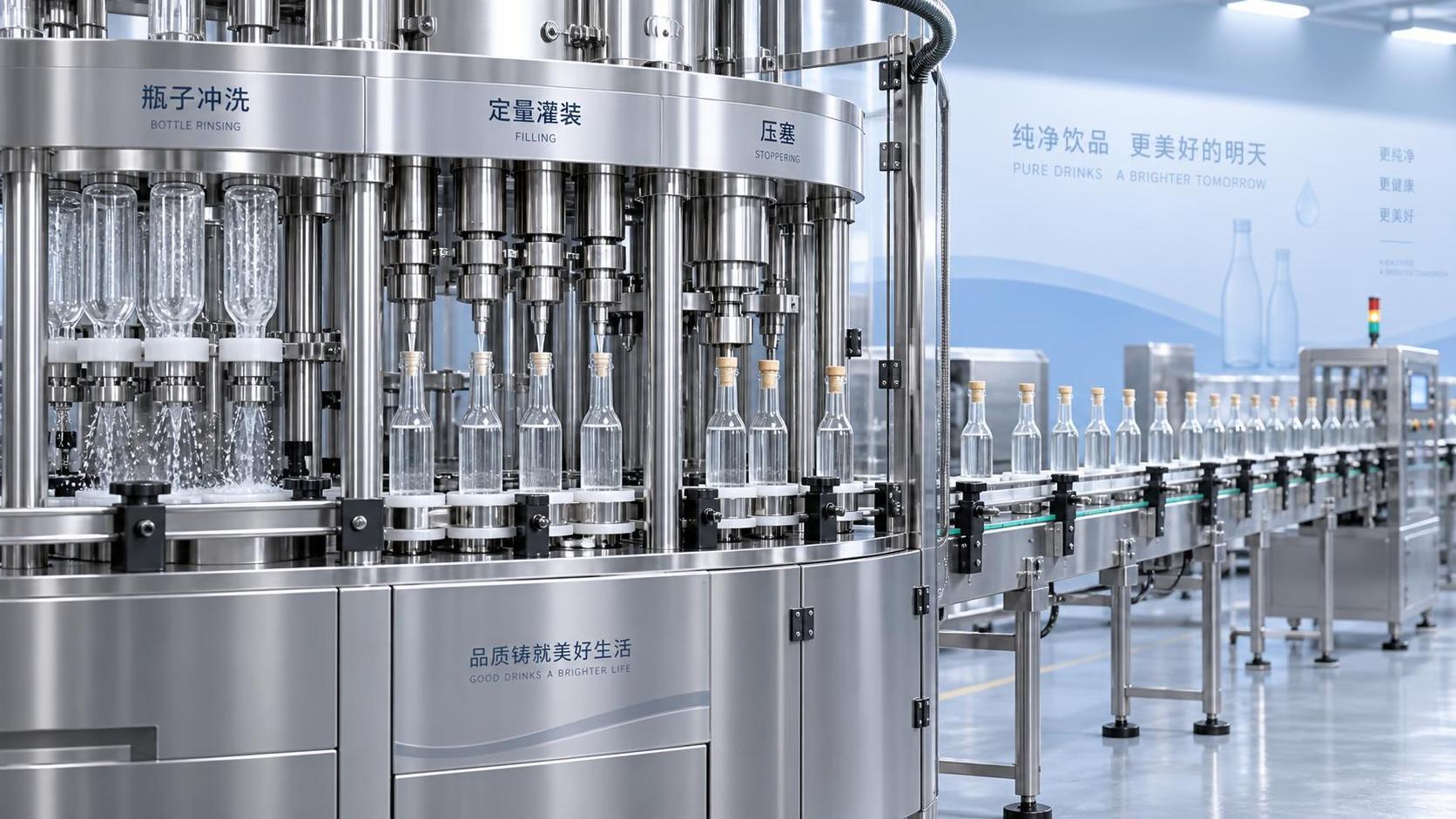
A Bottle Rinsing Filling and Stoppering Machine is usually a strong fit when a producer needs three operations to work as one controlled sequence: prepare the container, dose the beverage consistently, and apply a stopper or plug-type closure with dependable seating. It is particularly relevant where bottles are not supplied in a fully protected, ready-to-fill condition, where handling between stations would add contamination risk, or where the closure process needs more control than a simple cap placement operation.
For technical evaluation, the central question is not “Can this machine fill our bottle?” Most machines can, within limits. The more useful question is: What process failures does the integrated layout prevent, and what new constraints does it introduce? That distinction often determines whether an integrated rinsing, filling, and stoppering system is a practical investment or an unnecessarily complicated choice.
The Best Fit: Products and Bottles That Need Process Discipline
Integrated equipment tends to make the most sense for still beverages, concentrates, syrups, functional drinks, extracts, and similar products packed in glass or rigid plastic containers with stopper-style closures. Depending on the application, “stoppering” may refer to a push-in stopper, a plug, a fitment, or a closure component that must be inserted before a later overcap or tamper-evident finish is applied. It should not automatically be treated as interchangeable with screw capping or crown sealing.
That detail matters. A conventional screw cap can tolerate a different handling sequence from a stopper that must be aligned, pressed to a controlled depth, and checked for proper seating. If the closure protects product integrity, supports dispensing, or acts as part of a secondary seal, inconsistent insertion can create problems that are not obvious at the end of the line. A bottle may look acceptable but later leak, dispense poorly, or fail a downstream inspection.
Rinsing is equally application-specific. In some beverage operations, bottles are delivered in sealed packaging and move directly into a hygienic filling zone. In that case, a separate rinse step may offer limited value and may introduce water-management work that was not previously needed. In other plants, bottles are depalletized, stored near open production areas, or returned from internal handling. There, a controlled rinse can remove loose particles and reduce the uncertainty that comes with container exposure.
The machine is therefore not “better” because it includes a rinser. It is better when the rinse addresses a real container-preparation risk and when the facility can manage the rinse medium, drainage, changeover, and sanitation procedures properly.
Where Integration Solves a Real Production Problem
The main advantage of combining rinsing, filling, and stoppering is control over handoffs. Every transfer between standalone machines creates a small but meaningful opportunity for bottle instability, product exposure, timing variation, or operator intervention. On a modest production line, these issues are often more costly than the theoretical difference in rated speed.
Consider a beverage packed in narrow-neck bottles with a stopper that must enter squarely. If rinsed bottles are manually moved or accumulate on an open conveyor before filling, they can pick up water droplets, tip over, or lose the orientation needed for smooth closure application. An integrated machine reduces that travel distance and coordinates the timing of each station. In practice, this can make cleaning routines and troubleshooting easier because the process boundary is clearer.
It is also useful when labor availability is inconsistent. A semi-automatic or compact inline configuration does not eliminate the need for trained operators, but it can reduce the number of repetitive handling points. The benefit is not merely headcount. Fewer manual transfers generally mean fewer opportunities for mixed bottle lots, missed rinses, crooked stoppers, or unrecorded adjustments made during a busy shift.
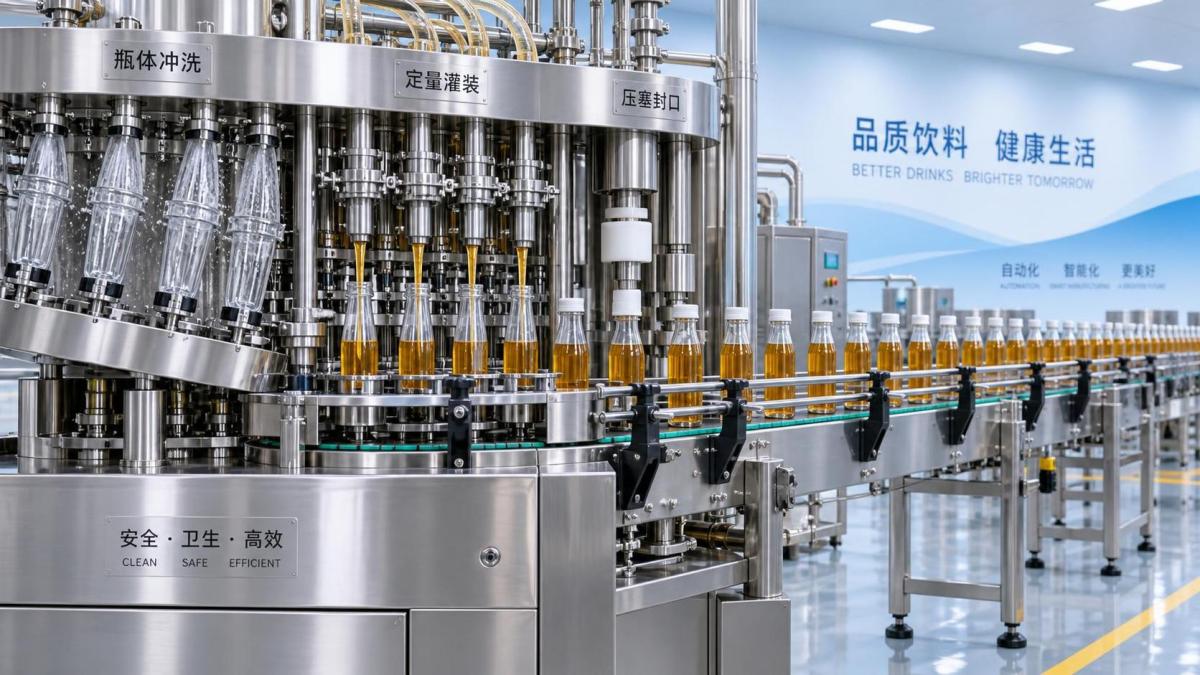
Still, integration has a trade-off: when one section stops, the entire sequence may stop. A rinse nozzle blockage, a filling issue, or a closure feed interruption can affect overall availability. This is why maintainability deserves as much attention as output. Ask whether operators can access rinse nozzles, filling valves, product-contact parts, and the stoppering head without excessive disassembly. A compact footprint is valuable only if routine service remains realistic.
Start With the Beverage, Not the Machine Layout
The filling principle should be matched to product behavior before the line configuration is finalized. Low-viscosity still beverages may be suitable for one approach, while thicker syrups, pulpy formulations, or products containing suspended ingredients may require another. Foaming is a common source of poor decisions: a line can perform well in a water test and become unstable once carbonation, protein, juice solids, or surfactant-like ingredients are introduced.
Technical teams should evaluate the product under its actual filling conditions. Product temperature, viscosity range, particle size where relevant, foam tendency, and cleaning chemistry all influence machine selection. A filling system that is easy to rinse with water may not be easy to clean after a sticky concentrate. Likewise, a product that fills consistently at one temperature may become difficult to dose after a long production hold.
The rinse medium needs the same level of thought. Water rinsing, air rinsing, or another approved container-preparation method may be appropriate depending on the bottle supply condition and the process plan. If water is used, evaluators should establish how residual liquid is handled. Water left in a bottle can affect product concentration, appearance, or microbiological control, especially in small-volume packs. The correct approach depends on the beverage, the bottle geometry, and the site’s hygiene program; it should be confirmed through trials rather than assumed from a generic machine description.
Bottle and Stopper Compatibility Is Often the Deciding Factor
Bottle compatibility is not limited to height and diameter. The base profile determines how the container travels. The neck finish controls stopper alignment. Shoulder shape can affect guide-rail contact. Lightweight bottles may deform under side pressure or during closure insertion, while tall narrow bottles can be less stable at transfer points. These are the practical details that turn a promising layout into a difficult line.
Stopper material and geometry also deserve early testing. Compression behavior, friction, flange shape, storage condition, and feeder orientation can all change insertion performance. Some closures tolerate normal variation well; others need tightly controlled positioning and force. If a stopper is fed in bulk, ask how the system rejects incorrectly oriented parts and how accessible the feed path is when jams occur. A closure system that works during a short demonstration may behave differently after extended production, especially if components vary across incoming lots.
Capacity Should Be Judged by Usable Output
Published output is a starting point, not a production promise. Technical evaluators should ask what assumptions sit behind the stated rate: bottle size, fill volume, product properties, closure type, operator involvement, and the length of uninterrupted operation. A line that reaches an attractive speed with water and one bottle format may not maintain that speed with the actual beverage and regular changeovers.
For low-to-medium volume operations, a semi-automatic inline machine can be the more rational choice. It leaves room for operator oversight, product development work, and frequent format changes without the capital and integration burden of a fully automated rotary system. For example, a Four-Head Semi-Automatic Inline Filling Machine may be worth considering where filling throughput is needed but the operation still benefits from hands-on control of bottle presentation, closure checks, or short production campaigns.
That does not mean semi-automatic equipment is automatically flexible. The real question is where the operator is required to intervene and whether that intervention is repeatable. If an operator must constantly correct bottle alignment or manually rescue closures, the machine may be masking a compatibility problem rather than offering useful flexibility.
Sanitation Design Can Outweigh Speed
In beverage plants, cleaning access is often the point where a technically capable machine proves either practical or frustrating. Product-contact surfaces should be identifiable, reachable, and compatible with the intended cleaning process. Dead legs, difficult-to-drain product paths, hidden residue traps, and components that require frequent removal can add more operational burden than expected.
Do not evaluate sanitation only through polished surfaces or broad claims about hygienic construction. Request a clear understanding of the product path, the rinse circuit, drain points, seal materials, and the steps needed between products. If the machine will be used for allergen-containing, strongly colored, acidic, or sticky beverages, cleaning validation and changeover procedures need particular attention. Local food-contact expectations and the facility’s internal quality requirements should guide the final specification.
It is also sensible to separate the question of container cleanliness from product sterilization. A rinsing station can prepare containers, but it does not by itself define the microbiological safety of the full packaging process. Product treatment, filling environment, closure handling, cleaning protocols, and post-fill controls all remain part of the wider system.
Questions That Reveal Whether the Machine Will Work After Installation
Before approving a Bottle Rinsing Filling and Stoppering Machine, it is useful to walk through an ordinary production day rather than a perfect demonstration. Where are empty bottles staged? What happens if the closure feeder runs low? How is an underfilled or improperly stoppered bottle detected and removed? Which adjustments can an operator make without compromising settings? How long does it take to move from one bottle to another, including cleaning and verification rather than only mechanical change parts?
Utilities should be checked early as well. Water quality and drainage matter for rinsing. Compressed air quality and pressure stability may matter for actuators, nozzles, or closure handling. Electrical supply, floor drainage, available headroom, and upstream/downstream conveyor interfaces are easy to overlook during early discussions and expensive to correct later.
A good supplier review should include actual bottles, actual stoppers, and, where feasible, representative product. If full product trials are not possible, the limitations of a water trial should be documented rather than ignored. The goal is not to eliminate every uncertainty before purchase. It is to identify the uncertainties that could affect hygiene, fill quality, closure reliability, or daily uptime.
The Practical Decision
An integrated rinsing, filling, and stoppering solution is the right fit when container preparation, accurate filling, and controlled closure insertion need to happen with minimal exposure and repeatable timing. It is especially compelling for operations with sensitive bottle handling, stopper-dependent package performance, limited labor for manual transfers, or a clear need to tighten hygiene control between empty-bottle receipt and final closure.
It is less compelling when bottles are already protected and ready to fill, when the product requires a fundamentally different closure method, or when frequent SKU changes would make the integrated setup difficult to operate. The most reliable selection process begins with bottles, beverage behavior, closure samples, cleaning expectations, and realistic shift conditions. If those elements are proven compatible, the machine layout becomes a solution rather than another source of line complexity.
Leave A Message
If you are interested in our products and want to know more details, please leave a message here, we will reply you as soon as we can.