
How to plan output for a beverage filling line expansion
Time : Sep 27, 2026
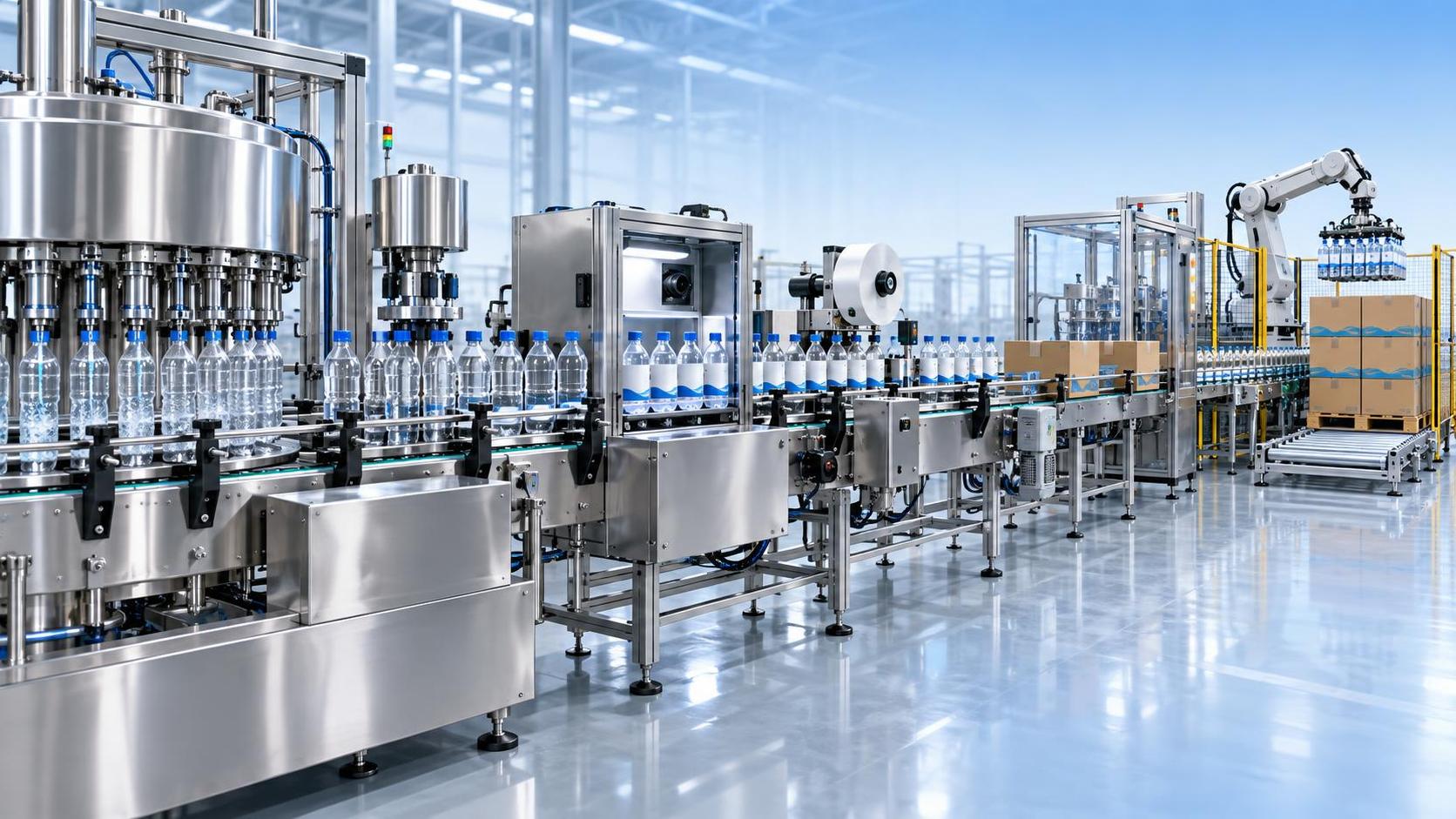
The output target for a beverage filling line expansion should be defined as a sustained, saleable output by package format—not as the nameplate speed of a new filler. A line rated at 24,000 bottles per hour can still miss a required daily volume if changeovers, cap supply interruptions, downstream accumulation, CIP windows, rejects, and end-of-line constraints were not included in the capacity model.
The practical decision is not “how much faster should the filler be?” It is “what volume must leave the line in shippable condition during the available production window, under the SKU mix the business actually plans to run?” That distinction prevents two expensive outcomes: buying a high-speed machine that waits on existing equipment, or expanding only the visible bottleneck while shifting the constraint to another point on the line.
Start with the required saleable volume
Output planning begins with demand translated into production requirements. Annual forecast volume is useful for investment justification, but it is not sufficient for engineering design. The expansion team needs a planning basis that separates package types, pack configurations, production periods, and the capacity reserve required for real operating conditions.
A workable requirement should identify:
- Forecast volume by SKU, container size, closure type, and secondary pack;
- The planning horizon, including the point at which the added capacity must be available;
- Expected operating days, shifts, and net production hours per shift;
- Planned sanitation, CIP, preventive maintenance, and product changeover time;
- Expected waste and quality rejection allowances;
- Required service level during peak demand periods, rather than average annual demand alone.
For example, a business may require 40 million saleable bottles per year. That figure means very different things if the site can run 250 days on two shifts versus 300 days with a third shift available during seasonal peaks. It also changes materially if half the volume is concentrated in small-format bottles that require frequent changeovers, or if a large share is produced in multipacks that constrain the case packer and palletizer.
The core calculation is simple:
Required sustained line rate = required saleable units ÷ available net production hours
The difficulty lies in defining “available net production hours” honestly. Scheduled shift hours are not net hours. Net hours exclude planned stoppages and should reflect the operating model the factory can realistically maintain. If the calculation relies on no lost time, no minor stops, and no recovery period after changeovers, it is a budget assumption rather than an executable production plan.
Use a capacity model that distinguishes rated speed from delivered speed
A Beverage Filling Line is a connected system. Its output is determined by the interaction of rinsing or container preparation, filling, capping, inspection, labeling, coding, packing, and pallet handling. The filler may be the nominal pacing machine, but it is not automatically the system constraint.
Engineering teams often use OEE-related measures to convert rated speed into a more realistic production rate. The terminology and calculation conventions can differ by site, but the operating logic remains consistent:
Delivered saleable output = rated speed × availability × performance × quality yield
Availability captures time losses such as breakdowns, planned interventions, waiting for materials, and extended changeovers. Performance reflects operation below the intended speed, including brief stops and reduced-speed running. Quality yield accounts for rejected containers, underfilled or overfilled units, closure defects, label errors, coding failures, and damaged packs.
These factors should not be assigned as generic percentages copied from a vendor proposal or another plant. They should be based on the current line’s loss history where data exists, then adjusted only where the expansion changes the underlying cause of the loss. A new filler may reduce fill-valve-related stops, for instance, but it will not eliminate palletizer downtime or improve bottle supply from an unchanged depalletizer.
It is useful to create two output cases:
- Commissioning case: the rate likely to be achieved while operators, maintenance teams, and process settings are being stabilized;
- Steady-state planning case: the sustained rate required after the line has reached normal operation.
Separating these cases avoids treating acceptance-test performance as equivalent to long-term production capacity. Factory acceptance testing and site acceptance testing are essential, but they generally run under controlled conditions, with selected packaging materials and a limited number of formats. They demonstrate capability; they do not replace a full operational loss model.
Find the real constraint before selecting the expansion scope
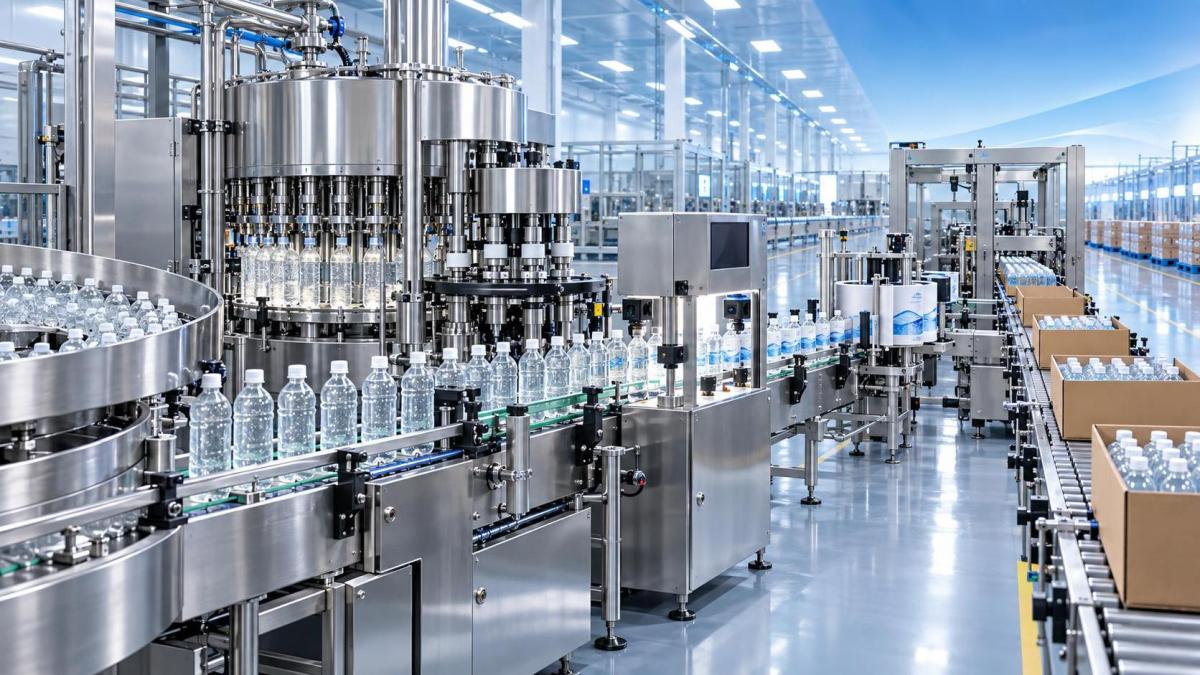
The current bottleneck should be identified using evidence from production records, line-stop logs, maintenance history, and physical observation of line behavior. The important question is not which machine stops most frequently in isolation. It is which condition most often limits the number of accepted units reaching the warehouse.
Common constraints in beverage projects include:
- Container infeed: depalletizer capacity, bottle unscrambling, rinsing, air conveying stability, or container damage before filling;
- Filling and closure: insufficient filling capacity, unstable product feed, cap elevator limitations, closure torque variation, or excessive rejects at inspection;
- Accumulation: too little buffer between equipment groups, causing minor stops upstream or downstream to propagate through the entire line;
- Labeling and coding: bottle handling instability, adhesive or sleeve process constraints, print verification rejects, and extended format changes;
- Secondary packaging: case packing, shrink wrapping, tray formation, carton supply, or pack pattern limitations;
- End-of-line logistics: palletizer throughput, pallet availability, stretch wrapping, warehouse handoff, or forklift access.
A line can appear filler-limited because the filler spends time stopped. Yet the cause may be a downstream packer that repeatedly fills its discharge conveyor, forcing the filler to stop. Conversely, increasing filler speed can reveal that an existing labeler only maintains quality at a lower rate. The scope should therefore be based on the system’s bottleneck map, not on equipment age or the most visible machine.
Short-duration stoppages deserve particular attention. They may be individually small but can consume a significant share of productive time when they occur repeatedly. A project model that counts only major failures tends to overstate delivered output. Stop categories should be granular enough to distinguish cap starvation, bottle jams, no-label conditions, inspection rejects, film changes, carton issues, and operator interventions.
Model the SKU mix rather than designing around one ideal bottle
Expansion capacity is frequently overstated when it is calculated using the easiest package at the highest stable speed. Beverage lines rarely operate one container continuously. Bottle geometry, fill volume, neck finish, cap type, label format, pack arrangement, and product characteristics can all change the achievable rate.
Small containers may increase unit throughput demands. Tall or lightweight bottles can reduce handling stability. Carbonated products may require different filling conditions than still beverages. Viscous or particulate products can affect filling behavior. Hot-fill, aseptic, and ambient-fill applications have different hygiene, temperature, and process-control implications. Even when the filler can accommodate several formats, the time needed to change guides, starwheels, filling settings, capping components, labeler parts, and packer tooling must be included in the output plan.
Use a weighted production mix. Estimate the annual or peak-period share of each meaningful format family, then assign a realistic line rate, yield, and changeover requirement to each one. Format families should be defined by what changes the equipment behavior, not merely by label artwork. Two bottles with different graphics may run identically; two bottles of the same nominal volume may require different handling parts and speeds because of their base diameter or shoulder shape.
The expansion should also be checked against the “difficult” SKU, not only the weighted average. If a strategically important format can run only at a significantly lower rate, there must be enough calendar capacity to protect its production schedule. Otherwise, the site may meet annual volume on paper while still failing to supply a key customer or channel during peak periods.
Set an appropriate capacity margin
Capacity margin is necessary, but excessive margin can create an unbalanced line and unnecessary capital cost. The purpose of margin is not to maximize machine speed. It is to absorb demand variation, product-mix changes, maintenance events, and recovery after routine disruptions without making delivery performance dependent on continuous overtime or unsustainable operating discipline.
The right margin depends on the production model. A dedicated line with one stable package family can operate with a different reserve than a line serving many formats, frequent promotional packs, and short runs. A site that can use additional shifts during peak periods has another flexibility option; a site constrained by labor availability, utility capacity, or local operating-hour limits cannot assume that option exists.
It is useful to test the plan against several operational conditions: the expected annual mix, the peak-month mix, a high-changeover week, and a period in which one critical downstream machine is unavailable for planned maintenance. If output is only achievable in the most favorable scenario, the expansion scope is too narrow or the production plan needs revision.
Check whether the plant infrastructure can support the new rate
Line expansion is often delayed not by the main equipment but by site interfaces. A faster filling block can increase demand for treated water, compressed air, electricity, cooling, steam, CO₂, product transfer capacity, clean-in-place services, drainage, and waste handling. The relevant question is not simply whether a utility exists; it is whether it can provide the required flow, pressure, temperature, quality, and continuity at the expanded operating load.
Product preparation is especially important. The filler cannot deliver its target speed if blending, syrup preparation, filtration, deaeration, pasteurization, or buffer tanks cannot supply product continuously. Product recovery and CIP sequencing should also be reviewed, because higher throughput may shorten available windows or increase the consequences of an extended cleaning cycle.
Space planning needs the same discipline. The layout must allow safe operator access, maintenance clearance, material replenishment, reject handling, and future service work. Accumulation conveyors require physical length, and that length is often reduced during layout revisions to save floor space. Removing needed buffer capacity may lower the initial footprint but raise the line’s sensitivity to ordinary stops.
Digital and electrical integration should be scoped early. Existing PLC architecture, safety circuits, SCADA or MES interfaces, batch reporting, quality data collection, and traceability requirements can affect both engineering effort and commissioning time. A machine that is mechanically compatible may still require substantial controls work before it can operate as part of the line.
Evaluate closure and post-capping operations as part of output assurance
Closure handling is a frequent source of hidden capacity loss because it combines material supply, orientation, application control, inspection, and package appearance. The expansion model should include cap feeding autonomy, replenishment access, torque or closure verification requirements, reject routing, and the impact of different cap designs on running stability.
Where the package design requires a separate cap-finishing or rubbing operation, its speed range, container guidance, adjustment method, and downstream accumulation should be evaluated against the line’s planned sustained rate. A machine such as the ZCG-4 Fully Automatic 4-Wheel Cap Rubbing Machine should not be selected simply because its nominal capacity appears to match the filler. The engineering review should establish whether it handles the relevant bottle and closure geometry, whether it introduces quality-sensitive contact points, how it is synchronized with upstream and downstream equipment, and how long format adjustments take.
This is also where responsibility boundaries must be explicit. If closure defects are detected downstream, the project specification should state whether the capping system, inspection unit, reject device, or line controls own the response. Ambiguous handoffs complicate commissioning and make output losses difficult to diagnose after startup.
Turn the capacity plan into a project basis of design
A robust output plan should become a controlled engineering document rather than remain a spreadsheet used only for budget approval. It should state the production assumptions, each equipment group’s required sustained rate, package matrix, reject assumptions, accumulation philosophy, utility loads, and acceptance criteria.
Acceptance criteria should cover more than instantaneous speed. They should define the test package, product conditions, minimum duration, allowable reject rate, expected line availability during the test, and the handling of planned interventions. If multiple formats are included in the investment case, at least the representative and technically demanding formats should be addressed in the validation plan.
Procurement packages should distinguish guaranteed performance from design intent. Vendors need clear information on bottle drawings, closures, labels, packaging materials, product properties, utility conditions, and interface responsibilities. Late changes to these inputs can alter throughput, quality performance, or the amount of change-part tooling required.
Commissioning capacity also needs to be planned. Installation may be complete while production readiness remains limited by operator training, spare parts, sanitation validation, control tuning, packaging-material trials, or unresolved interlocks. A realistic ramp-up schedule includes time to stabilize these items before the expansion is counted on to meet committed demand.
The decision test: can the expanded line meet demand under normal operating conditions?
The most reliable expansion plan is one that can explain, format by format, how required saleable output will be achieved without assuming ideal conditions. It identifies the actual constraint, sizes connected equipment around sustained throughput, preserves sufficient accumulation, verifies utilities and process supply, and defines testable performance responsibilities.
If the proposed scope only works at filler nameplate speed, with minimal changeovers and no allowance for normal losses, it is not yet an output strategy. If it still meets the required production plan after realistic availability, performance, quality, SKU mix, and infrastructure constraints are applied, it provides a credible basis for equipment selection, layout design, capital approval, and delivery commitments.
Leave A Message
If you are interested in our products and want to know more details, please leave a message here, we will reply you as soon as we can.