

When a piston filling machine outperforms gravity filling
Time : Oct 04, 2026
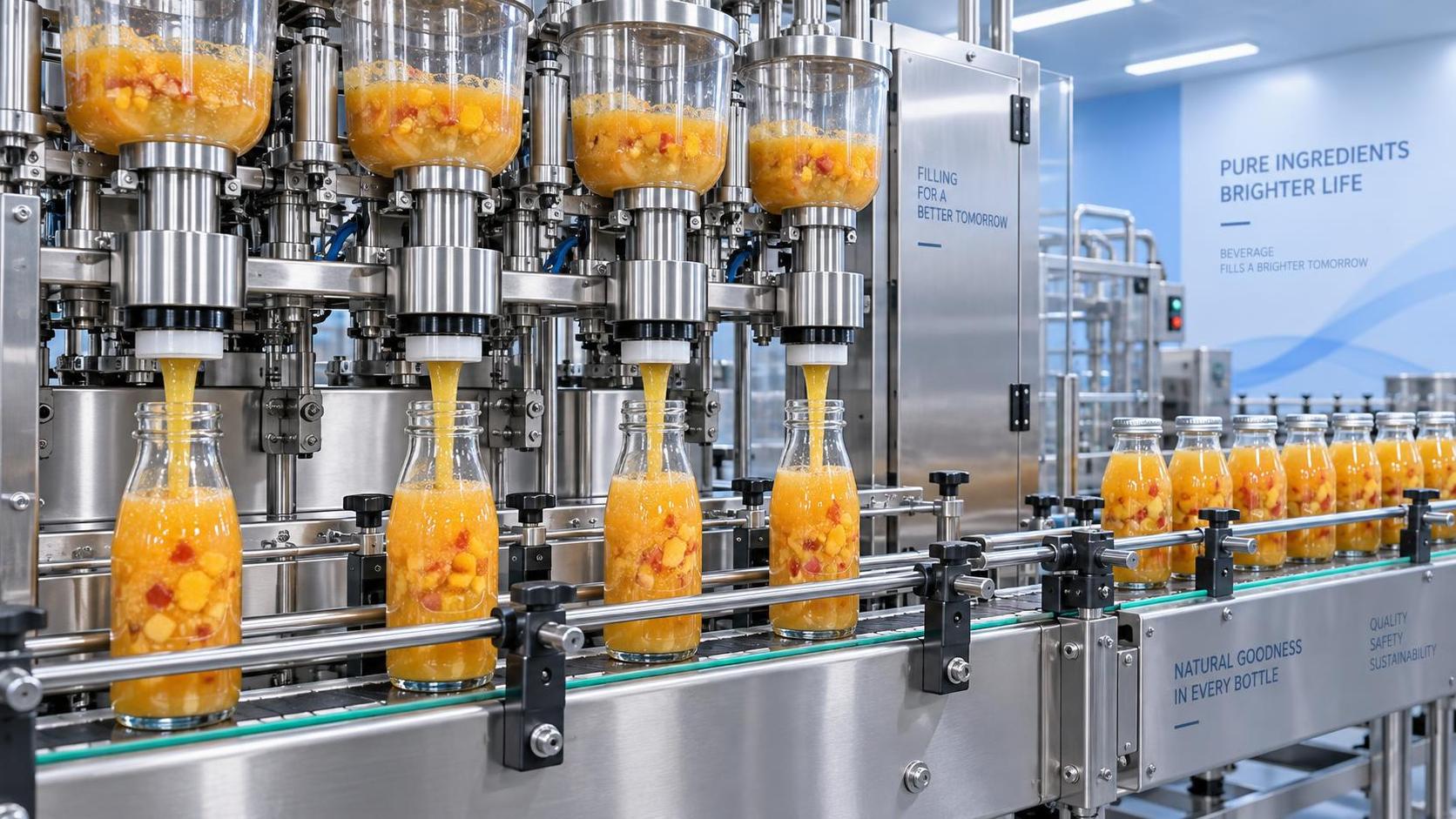
When a Piston Filling Machine Outperforms Gravity Filling
Choosing between piston and gravity filling technology can directly affect beverage quality, throughput, and total operating cost. A Piston Filling Machine is often the stronger option when products have higher viscosity, require precise volume control, or contain particulates that challenge gravity-fed systems. For technical evaluators, the question is not which technology is universally better. It is which filling principle remains stable when the real product, real containers, and real production conditions meet on the line.
Gravity fillers have earned their place in beverage production because their operating principle is simple: liquid flows from a tank into containers under hydrostatic head, usually controlled by timed filling, level sensing, or overflow mechanisms. With low-viscosity, free-flowing products such as still water or certain clear beverages, this simplicity can be attractive.
Yet many beverage formulations no longer behave like water. Syrups, concentrates, dairy-based drinks, nutraceutical shots, fruit beverages, cold-brew products, sauces positioned as drinkable condiments, and products containing pulp or suspended ingredients create a different engineering problem. In these situations, piston-based volumetric filling can offer a more predictable route to fill accuracy, cleaner changeovers, and dependable product handling.
The Decision Begins with Product Behavior, Not Machine Preference
A gravity filler relies on the product’s ability to flow consistently. That assumption is reasonable only when viscosity, temperature, density, foaming tendency, and suspended solids stay within a narrow and manageable range. If any of those variables shift during a run, fill performance may shift with them.
A piston filling system works differently. A piston draws a defined volume of product into a cylinder and then discharges that volume through the filling valve or nozzle. The basic concept is mechanical, but its value is significant: the target dose is governed primarily by piston displacement rather than by the changing flow characteristics of the beverage.
That distinction matters when a product cools slightly in the hopper, thickens during an extended production shift, or changes rheology from batch to batch. It also matters when the line is expected to fill several formats, from small functional shots to larger bottles, without accepting wide volume variation as normal.
For a technical team, the practical assessment should start with a product profile rather than a filling-speed target alone. Record viscosity across the expected temperature range, note whether the product is Newtonian or shear-sensitive, identify the size and concentration of particulates, and observe foam behavior at the intended filling temperature. A filler that appears suitable in a water trial may behave very differently with the actual commercial formulation.
Where Gravity Filling Starts to Lose Its Advantage
Gravity filling is not inherently inaccurate. Properly configured gravity or level filling equipment can perform well for compatible products. The concern arises when process conditions make consistent flow difficult to maintain.
Higher viscosity and slow-moving liquids
The most obvious dividing line is viscosity. Thick fruit bases, syrups, dairy blends, protein beverages, concentrated teas, honey-based drinks, and liquid supplements do not respond to gravity in the same way as water. Their flow can be slow, uneven, or highly dependent on product temperature.
With a gravity-fed design, slower flow may require longer fill times, larger flow paths, more head pressure, or adjustments that reduce line speed. If the product becomes more viscous as it cools, the filling cycle may gradually drift from the settings established during start-up. A piston filler is typically less sensitive to this change because it positively displaces the selected volume.
This does not eliminate the need for good product preparation. The hopper, manifold, transfer pump, and piping must still be sized for the formulation. But when the product reaches the filling station, the piston’s controlled stroke provides a level of repeatability that gravity flow alone may struggle to match.
Products with pulp, seeds, fibers, or inclusions
Many beverage producers want visible product character: citrus cells, aloe pieces, fruit pulp, basil seeds, chia, coconut particles, or nutritional inclusions. These features can make a beverage more appealing to consumers, but they complicate filling.
Restricted passages, narrow valves, and small nozzle orifices can cause bridging, blockage, or unequal distribution of suspended solids. Gravity does not solve those problems; in some applications, it can make them more visible because the product may separate or settle while waiting in the supply tank.
A piston filling machine can be configured with wider product pathways, appropriate valve geometry, and nozzles selected for the inclusion size. The piston’s suction and discharge action can also provide more controlled movement of a thick or particulate-containing product. The exact design still depends on particle dimensions, fragility, and concentration. A system intended for soft fruit pulp may not be suitable for larger, abrasive, or highly variable inclusions without further engineering review.
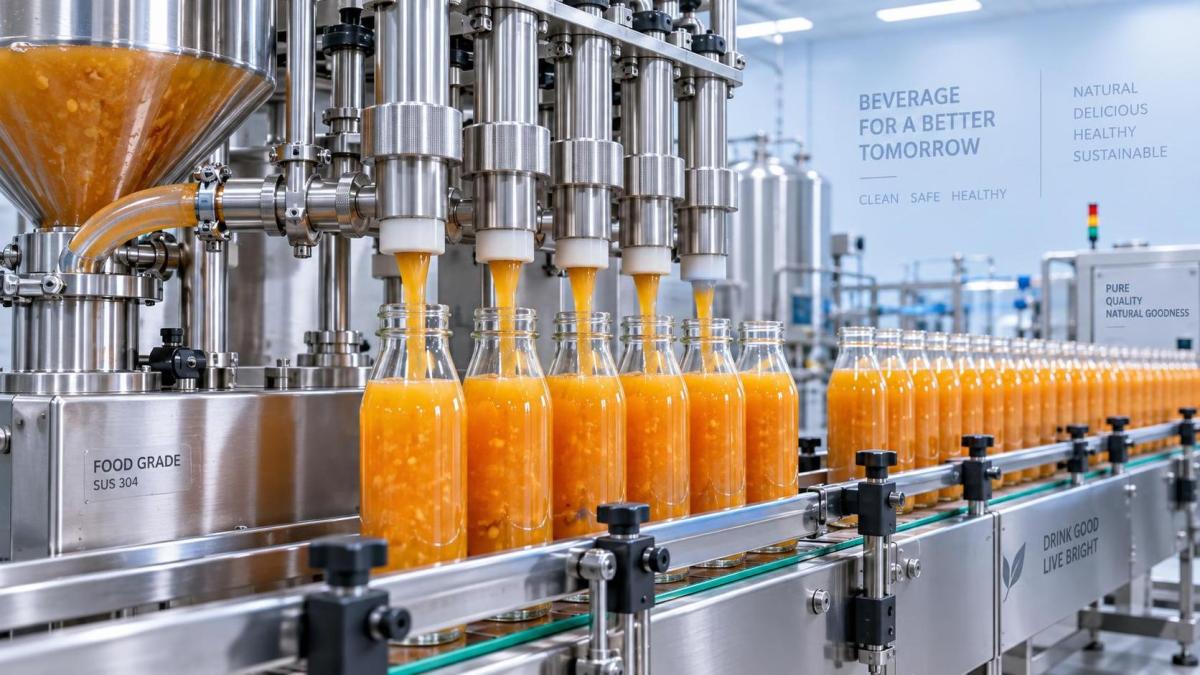
Fill-volume control where overfill is not an acceptable workaround
When gravity filling becomes inconsistent, operators may compensate with an intentional overfill margin. That approach can prevent underfilled packages, but it creates product giveaway. For high-value ingredients, functional beverages, concentrated products, or small-volume formats, even modest overfill can become a material cost issue over time.
Piston systems are often selected when the operation needs to control volume rather than merely achieve an approximate fill level. This is especially relevant for bottles where headspace must be managed for capping, hot filling, nitrogen dosing, or downstream handling. The ability to set and repeat a piston stroke gives engineering and quality teams a clearer basis for validation.
Of course, volumetric filling is not the same as net-weight filling. Changes in density can still affect the final package weight even when the dispensed volume is stable. Where legal metrology, very tight net-content control, or major density variation is involved, checkweighing or gravimetric verification may still be required. The piston advantage is that it reduces one major source of variation: unstable flow.
Why Foam Changes the Conversation
Foam is often treated as a nozzle issue, but it is usually a product-and-process issue. Carbonation, protein content, surfactants, temperature, agitation, filling height, and flow velocity can all contribute. In a gravity system, attempts to speed up filling may increase turbulence and make foam control harder. The result may be longer settling time, inconsistent headspace, sticky bottle exteriors, or cap application problems.
Piston filling can offer more direct control over the discharge phase. Depending on the machine configuration, the filling profile can be adjusted through piston speed, valve timing, nozzle travel, and bottom-up filling. A gentler initial flow followed by a faster completion phase may be appropriate for one product, while another may need a consistently low-turbulence discharge.
That said, a piston machine is not a cure for every foaming beverage. Highly carbonated products often require specialized counter-pressure technology rather than a standard piston or gravity filler. Technical evaluators should separate “foam generated by filling motion” from “foam created by dissolved gas release.” Those are different problems and require different equipment strategies.
Throughput Is More Than Bottles per Minute
Gravity fillers are sometimes assumed to be faster because several containers can fill simultaneously from a common tank. In high-volume, low-viscosity applications, that can be true. But rated speed alone does not reveal how often the line pauses for adjustments, rejects bottles because of fill variation, waits for foam to settle, or loses time cleaning product deposits from difficult areas.
A piston system may deliver better effective throughput when the product is challenging. If it achieves target volumes in a repeatable cycle, reduces rework, and avoids frequent intervention, the line can be more productive even if its nominal maximum speed is lower than a gravity-based alternative.
Evaluate throughput using the complete operating picture:
- Required output by bottle size and product type
- Actual filling time, including nozzle movement and settling time
- Reject rate caused by underfill, overfill, splashing, or contamination
- Changeover time between container formats and formulations
- Cleaning frequency and the labor needed to restore hygienic conditions
- Downtime related to clogging, inconsistent feeding, or valve maintenance
This approach prevents a common purchasing mistake: selecting the machine with the highest brochure speed rather than the one that provides the most stable production day.
Sanitation and Changeover Need a Closer Look
For beverage processing equipment, fill accuracy is only one part of the evaluation. The machine must also fit the plant’s sanitation philosophy. Products with sugar, dairy components, proteins, fruit residues, or botanical extracts can leave deposits in cylinders, valves, nozzles, manifolds, and hoses. A filler that is difficult to inspect or clean can quietly add risk and labor cost.
When reviewing a piston design, ask practical questions. Are product-contact components accessible? Can the piston cylinders, seals, and valves be disassembled without excessive tools? Is clean-in-place capability available and validated for the intended product? Are dead legs minimized? Can the machine handle both hot and ambient filling conditions if the product portfolio requires them?
Seal selection deserves particular attention. Compatibility with acidic beverages, oils, alcohol-containing formulations, dairy products, and cleaning chemicals should be confirmed rather than assumed. The same is true for elastomer wear. A replacement seal may be inexpensive, but unexpected seal failure during production is not.
Changeover requirements can further favor piston filling. If a producer runs multiple bottle volumes, the ability to adjust stroke length, recipe settings, nozzle positions, and guides in a controlled manner can be valuable. Still, “quick changeover” should be defined in detail. Ask which parts change, how settings are verified, and whether operators can repeat the setup without relying on memory or trial-and-error adjustments.
When Gravity Filling Is Still the Better Fit
A thoughtful comparison should acknowledge where gravity filling remains sensible. For free-flowing, non-viscous, non-particulate products with stable density and limited fill-accuracy demands, a gravity system may offer a straightforward and economical solution. It can be especially suitable when the operation is dedicated to one product type, container presentation depends on a consistent liquid level, and the filling process does not need positive displacement.
Level filling also has a visual advantage for transparent bottles. If containers vary slightly in internal volume, filling to a fixed visual level can produce a more uniform shelf appearance than filling by volume. This is important for some retail products, although it must be balanced against net-content requirements and packaging variation.
In other words, choosing a piston filler simply because it sounds more precise is not enough. The product must justify the additional mechanical complexity, maintenance requirements, and cleaning considerations.
A Practical Selection Test for Technical Evaluators
The most useful equipment demonstration is rarely a short water run. Request a trial using representative product, representative package formats, and realistic temperatures. Include the most demanding formulation in the portfolio, not only the easiest one. If the facility expects to run fruit pulp drinks at 10°C and syrup concentrates at ambient temperature, those conditions should be part of the test plan.
During the evaluation, observe more than fill volume. Watch the product path for separation, pulsing, dripping, stringing, or trapped air. Inspect bottle exteriors after filling. Measure headspace consistency. Confirm how the system responds when the hopper level changes. Ask to see cleaning access, not just a diagram. A technically attractive filling principle can still become a poor fit if the surrounding system is difficult to operate.
It is also wise to map the filler into the entire packaging line. Cap application, tamper-evident bands, labeling, inspection, and case packing all depend on stable container presentation. For beverage formats using heat-shrink capsules or neck bands, downstream equipment such as the RS-6 Automatic Capsule Heat Shrink Machine should be considered as part of the line design, particularly where fill height, bottle handling, and cap finish influence final package appearance.
The Bottom Line: Select the Filling Principle That Controls Your Main Risk
A Piston Filling Machine tends to outperform gravity filling when the beverage is too viscous, too variable, too valuable, or too complex to rely on passive flow. It is particularly compelling for products with pulpy textures, suspended ingredients, demanding volumetric targets, or process conditions that change during production.
Gravity filling remains a practical choice for simple, free-flowing liquids when level presentation and straightforward operation are the priority. But once product behavior begins to challenge gravity, the apparent simplicity can become a source of variation.
For technical evaluators, the strongest decision is built around evidence: product trials, sanitation review, package requirements, line integration, and realistic operating conditions. The right filler is not the one that performs best in an ideal demonstration. It is the one that continues to deliver stable, clean, controlled fills after the first long production shift has begun.
Leave A Message
If you are interested in our products and want to know more details, please leave a message here, we will reply you as soon as we can.