

When weighing filling machines improve fill accuracy
Time : Oct 07, 2026
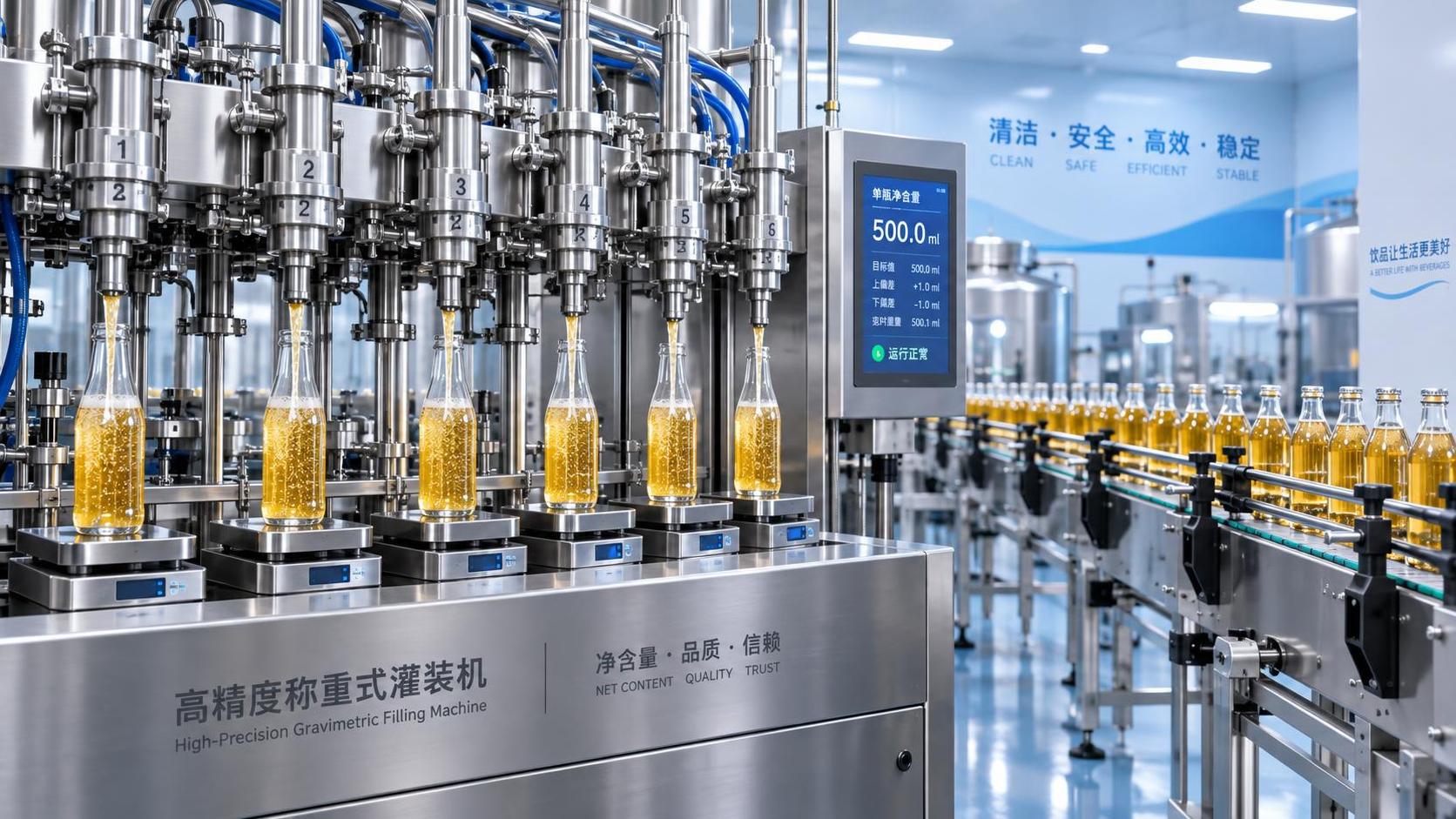
For beverage producers, consistent fill levels are essential to product quality, regulatory compliance, and cost control. A Weighing Filling Machine improves accuracy by measuring each container's actual weight.
For quality control and safety teams, this approach can reduce underfills, overfills, product waste, and batch inconsistencies while creating more reliable production and inspection records.
The strongest case for weighing-based filling occurs when ordinary volumetric controls cannot consistently manage product variation, packaging changes, strict legal tolerances, or costly ingredients.
For most facilities, the key question is not whether weight measurement is technically accurate. It is whether it solves a measurable quality, compliance, or waste problem.
When Is a Weighing Filling Machine the Right Choice?
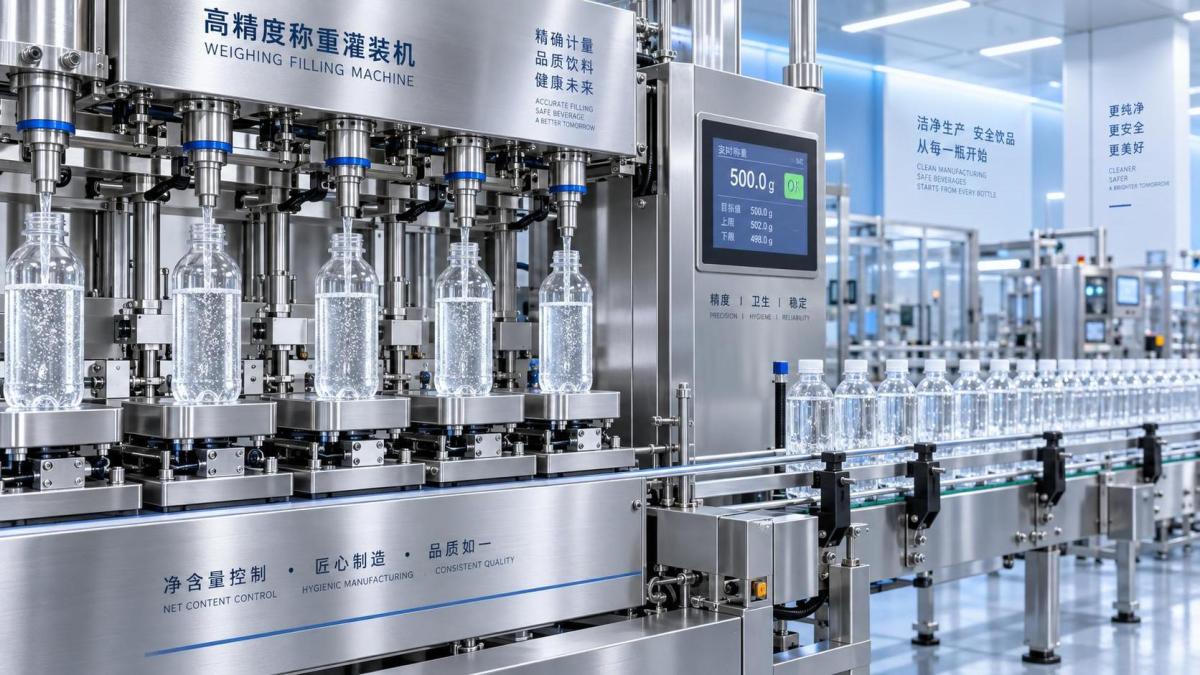
A Weighing Filling Machine is most valuable when actual net content matters more than approximate liquid volume. It verifies the product delivered into each individual container.
Time-based filling often assumes that every valve, bottle, product batch, and pressure condition behaves consistently. In real beverage production, those assumptions can quickly fail.
Weight-based systems are especially useful when beverage viscosity changes with temperature, ingredient concentration, carbonation, foaming, or holding time. These variables affect volumetric repeatability.
They also provide a practical advantage for products sold by declared mass, products with narrow tolerances, and beverages containing expensive ingredients or concentrated formulations.
Quality teams should consider weighing technology when routine sampling reveals recurring fill variation that cannot be explained or corrected through normal filler adjustments.
It is also appropriate when inspection staff must spend excessive time manually checking packages, investigating complaints, or sorting production lots after filling problems occur.
The investment case becomes clearer where overfill is a hidden daily cost. A small excess across thousands of containers can create substantial annual product loss.
Underfill creates a different risk. It may lead to noncompliance, customer disputes, retailer penalties, rejected shipments, or corrective actions following a market complaint.
Weight feedback helps balance these concerns by keeping fills closer to target rather than depending on a broad safety margin intended to prevent underfills.
Why Actual Weight Delivers More Reliable Fill Control
Volumetric filling measures a target volume, while weighing filling measures a target mass. The distinction matters because volume can change without changing the amount of product.
Temperature is a common example. A beverage may expand or contract as its temperature changes, causing the same physical volume to contain different product mass.
Density changes can create similar issues. Fruit content, sugar concentration, suspended particles, alcohol percentage, and syrup ratios may vary between batches or production conditions.
A weighing filler responds to the amount actually delivered, which makes it particularly useful where density cannot be treated as permanently stable during production.
The system typically uses load cells or an integrated weighing platform to track the container's increasing weight as product enters the package.
Once the target value is reached, the machine closes or slows the filling valve according to its programmed control logic and compensation settings.
Many high-precision systems use coarse and fine filling stages. Fast filling delivers most of the product, while slower final dosing improves final accuracy.
This staged approach matters because product continues moving after a valve begins closing. That residual flow, often called dribble, must be anticipated and controlled.
Reliable performance therefore depends on more than the scale itself. Valve response, nozzle design, product flow behavior, conveyor stability, and software settings all matter.
For quality personnel, the main advantage is traceable confirmation that each package reached an acceptable fill range instead of merely receiving a timed fill command.
Which Beverage Conditions Create the Biggest Accuracy Problems?
Products with variable viscosity are a leading reason to evaluate gravimetric filling. Thick smoothies, dairy beverages, syrups, protein drinks, and functional beverages can flow unpredictably.
Even moderate viscosity variation can change how quickly liquid leaves a nozzle. A timing-based filler may therefore produce different results during the same production shift.
Temperature-sensitive beverages create another challenge. Cold-filled products, hot-filled drinks, and liquids transferred from holding tanks may not maintain identical process temperatures.
Carbonated products require careful assessment because foam can distort apparent fill height and interfere with methods based primarily on container level or filling time.
Foam does not necessarily mean weighing is unsuitable. Instead, the filling sequence, settling time, nozzle placement, and tare process must be properly validated.
Beverages containing pulp, particulates, seeds, or nutritional additives may show changing density and flow characteristics. These products frequently require more robust filling verification.
Short production runs and frequent recipe changes also strengthen the case. Operators have less time to optimize timing settings for every product and package combination.
A Weighing Filling Machine can reduce the dependency on repeated manual fine-tuning, provided product-specific recipes and validation limits are configured correctly.
However, weighing control cannot compensate for severe upstream instability. Inconsistent mixing, air entrainment, pressure fluctuations, or poor product transfer still require process correction.
How Quality Teams Should Define an Acceptable Fill Target
Before selecting equipment, quality teams should distinguish between nominal fill, legal minimum content, internal action limits, and the actual operating target used by production.
The nominal fill is the declared package quantity. It should not automatically become the only control target because normal process variation must be considered.
Legal requirements vary by market, product category, package declaration, and measurement method. Regulatory teams should confirm applicable average-system and tolerance requirements early.
Internal limits should be tighter than the absolute legal boundary. This creates time to correct drift before a production lot becomes a compliance concern.
An operating target may sit slightly above nominal to account for normal variation, but excessive target offsets increase giveaway and should be quantified.
Quality staff should calculate the cost of average overfill using product cost, daily output, annual operating days, and the expected improvement in fill control.
They should also identify the cost of underfill events, including held inventory, reinspection labor, corrective actions, customer claims, freight disruption, and reputational impact.
These calculations make equipment discussions more objective. They shift decisions away from general claims about precision and toward documented site-specific production risk.
For new lines, establish the target during factory acceptance testing and confirm it again during site acceptance testing with actual containers and production conditions.
What Should Be Measured During Performance Validation?
Machine accuracy should never be evaluated only by a supplier demonstration using a small number of containers. Quality teams need a defined validation protocol.
Start by confirming scale calibration and traceability. Reference weights should be controlled, documented, suitable for the operating range, and checked at scheduled intervals.
Then collect sufficient fill-weight samples across the full production condition, including startup, steady operation, product changeover, planned stops, and end-of-run conditions.
Sampling should cover every filling head. Averages can hide a poorly performing nozzle, uneven valve response, damaged seal, or head-specific mechanical problem.
Review both mean fill weight and variation. A line can meet its average target while still producing individual packages that approach or exceed tolerance limits.
Standard deviation, range, minimum value, maximum value, and capability indicators can help teams understand whether the process is consistently controlled or merely acceptable today.
Examine trends over time rather than isolated samples. Gradual drift may indicate nozzle wear, load-cell instability, changing product characteristics, or incorrect compensation values.
Challenge the system under realistic line speeds. Accuracy at a reduced commissioning speed does not prove accuracy when the filler operates at planned commercial output.
Document container tare weight variation as well. Lightweight packaging, wet bottles, label changes, or inconsistent closures can affect net-weight calculations if not controlled.
A clear validation file should connect machine settings, product lot details, calibration evidence, sample results, deviations, corrective actions, and final release decisions.
How Weighing Filling Supports Food Safety and Compliance Controls
Fill accuracy is primarily a quality and commercial issue, but it also supports broader food safety and regulatory control by improving process visibility and record reliability.
Consistent net content verification helps demonstrate that a controlled filling process is operating as intended. This is important during internal audits, customer audits, and inspections.
Electronic records can provide useful evidence when linked to batch information, product recipe, operator access, alarm history, calibration status, and production timestamps.
Quality managers should confirm what data the machine records automatically and what data operators must enter manually. Manual records remain vulnerable to omissions and transcription errors.
Audit trails are particularly valuable when critical settings change. Teams should know who changed a target weight, why it changed, and when the change occurred.
Access control matters as well. Operators may need recipe selection permissions, while quality or engineering personnel should manage protected tolerances and calibration parameters.
For allergen-sensitive or high-care products, the filler must also fit the facility's sanitation design. Accuracy cannot be separated from hygienic construction and cleanability.
Assess product-contact materials, cleaning access, drainage, seals, dead zones, and compatibility with clean-in-place or manual cleaning procedures before equipment approval.
Safety personnel should review guarding, emergency stops, lockout points, pinch hazards, electrical enclosure ratings, and safe access for routine cleaning and maintenance.
What Equipment Features Matter Most for Quality Control?
The most important feature is not simply a quoted accuracy figure. Quality teams need to understand the operating conditions under which that accuracy can be achieved.
Ask whether the stated performance applies to water, the intended beverage, actual container sizes, planned line speed, and realistic temperature and viscosity conditions.
Load-cell capacity and resolution should match the package range. A scale selected for very large containers may not provide the desired sensitivity for small bottles.
Stable mechanical design is essential. Conveyor vibration, container movement, unstable indexing, and poor platform isolation can introduce noise into weight measurements.
Recipe management should allow approved settings for each beverage and package format. Useful parameters may include target weight, coarse-fill point, fine-fill point, and tolerance bands.
Alarm functions should identify underweight, overweight, missed-fill, scale fault, container positioning, and abnormal process conditions before large quantities are affected.
Automatic reject integration is valuable when it is properly verified. Rejected containers must be positively separated, counted, and prevented from re-entering finished goods.
Consider whether the machine supports statistical reporting. Head-by-head data, trend charts, production summaries, and exportable records can reduce manual quality review effort.
For facilities requiring multi-head output and detailed fill control, the GCP-12B Fully Automatic 12-Head High-Precision Filling Machine can be evaluated against the site's actual product, throughput, validation, and sanitation requirements.
When a Weighing System May Not Be the Best First Fix
Weight-based filling is not automatically the best solution for every beverage line. Some stable, low-cost products may achieve acceptable results with well-maintained volumetric equipment.
If product density is tightly controlled, package requirements are forgiving, and giveaway is minimal, a simpler system may deliver sufficient performance at lower complexity.
Facilities should avoid treating weighing equipment as a cure for upstream process failures. Poor tank mixing or unstable transfer pressure should be corrected first.
Very high-speed production may require careful engineering to preserve weighing stability. The necessary settling time, conveyor design, and control response must support throughput targets.
Packaging variability can also limit results. Bottles with large tare-weight differences may require additional controls, tare management, or container quality improvements.
Integration constraints deserve early attention. Existing conveyors, star wheels, capper timing, inspection systems, floor conditions, and available maintenance access affect installation success.
Maintenance capability is another practical factor. Load cells, pneumatic components, valves, software, and calibration procedures require trained personnel and spare-parts planning.
The right decision is therefore based on a risk assessment, not a generic preference for one filling technology over another.
How to Build a Practical Selection and Implementation Plan
Begin with production data. Gather current fill-weight samples by product, container, filling head, shift, and speed before defining the required improvement.
Calculate baseline overfill, underfill frequency, variation, product waste, rework, inspection labor, customer complaints, and estimated compliance exposure for each priority product.
Next, define the required operating range. Include product viscosity, density, temperature, carbonation, fill sizes, container materials, cap styles, and maximum throughput.
Request a product trial using representative beverage and packaging materials. Water-only demonstrations should not be accepted as proof of production performance for challenging products.
During the trial, observe startup behavior, stabilization time, head-to-head consistency, changeover requirements, reject operation, cleaning access, and recovery after interruptions.
Ask suppliers to state assumptions clearly. Required accuracy, test conditions, product properties, acceptable speed, calibration procedure, and maintenance tasks should be documented.
Develop a written acceptance criterion before purchase. It should specify sample size, target weights, tolerance limits, performance duration, documentation, and responsibilities for failures.
Include quality, engineering, production, sanitation, maintenance, and safety representatives in the review. Each function sees risks that a single department may overlook.
After commissioning, continue intensified verification until the process is proven stable. Initial settings often need refinement once real operating variation is encountered.
Conclusion: Choose Weighing Control Where It Reduces Real Risk
A Weighing Filling Machine improves fill accuracy most effectively when beverage properties, packaging conditions, legal limits, or product cost make volumetric variation difficult to manage.
For quality control and safety teams, its value lies in repeatable net-content verification, better process records, reduced giveaway, earlier detection of drift, and stronger release confidence.
The most successful projects begin with measured baseline losses and clear acceptance criteria. Equipment should be selected for actual beverage conditions, not idealized demonstration results.
When integrated with calibration discipline, validated recipes, sanitation controls, and meaningful production data, weighing-based filling becomes a practical tool for consistent beverage quality.
Leave A Message
If you are interested in our products and want to know more details, please leave a message here, we will reply you as soon as we can.