

How to Calculate the Investment for a Beverage Filling Line: A Checklist of Costs Beyond the Equipment
Time : Oct 20, 2026
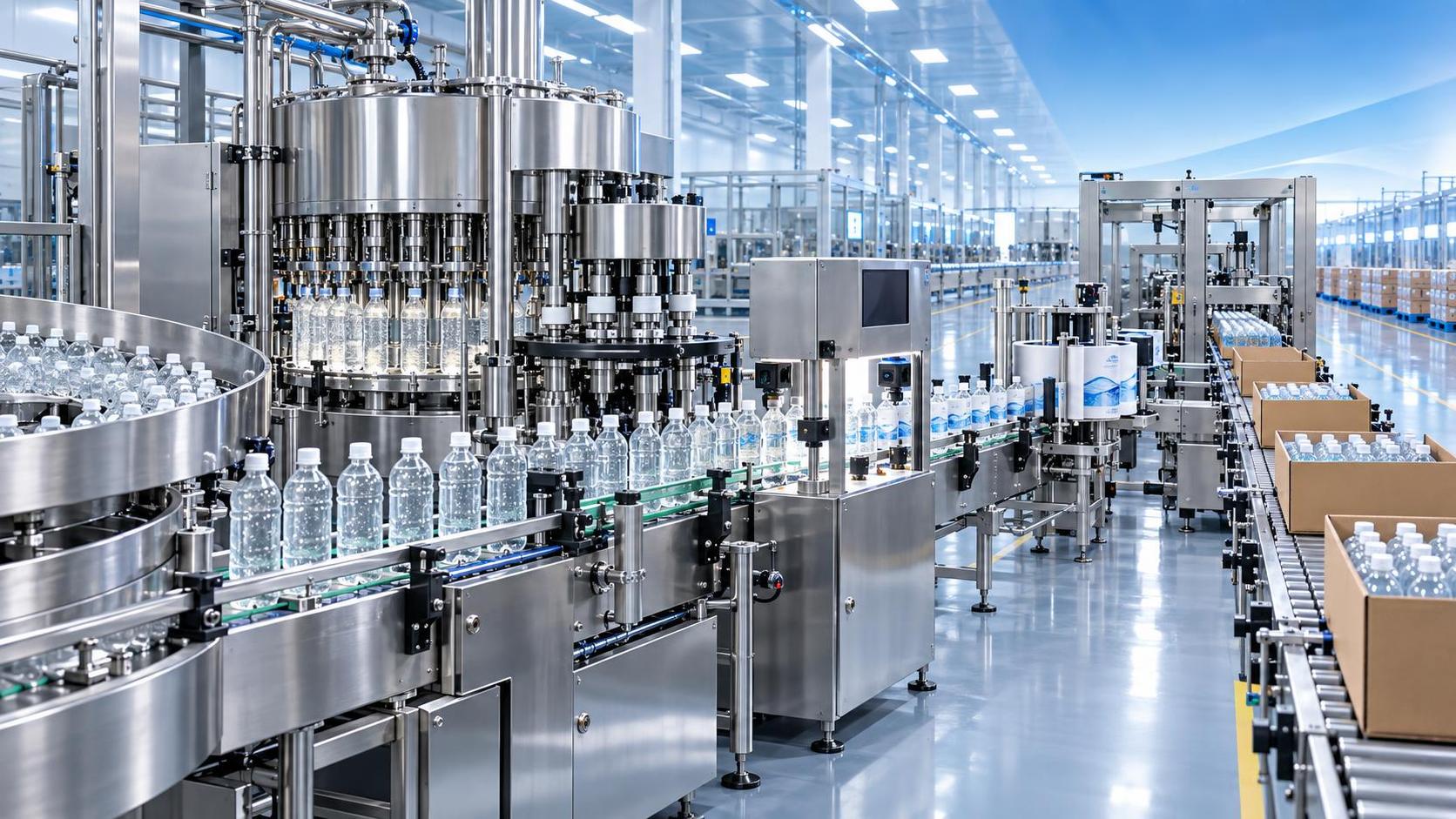
Once you have a quote for a beverage filling line, the investment budget is often still incomplete. Whether the facility is ready for equipment installation, whether the power supply and water treatment capacity are sufficient, how much packaging material will be consumed during trial production, and how much inventory must be maintained after launch all affect project funding. For business decision-makers, the real question is not “How much does it cost to buy a line?” but “How much funding is needed from contract signing through to stable product delivery?”
We recommend dividing the budget into three accounts: capital investment, working capital for startup, and ongoing operating expenses. Calculating these separately and then consolidating the cash requirements helps prevent a situation where all the equipment has been purchased but the project is held up by supporting construction or raw material procurement.
Define the scope of the production line before comparing quotes
Although they may all be called beverage filling lines, some quotes cover only rinsing, filling, and capping, while others include conveying, labeling, coding, and case packing. Confirm each item individually to determine whether water treatment, blending, sterilization, and cleaning systems are included. Comparing total prices without aligning the supply scope can easily lead to misleading conclusions.
Before requesting a quote, clarify the beverage type, bottle shape and capacity, packaging materials, planned shifts, and the output of saleable products required to meet sales targets. Carbonated beverages, juice, packaged drinking water, and wine have different requirements for filling methods, temperature control, and hygiene conditions, so budgets should not be based solely on the number of bottles filled per hour.
Production capacity must also be measured consistently: the machine’s rated speed does not equal the daily volume available for sale. Changeovers, cleaning, downtime, and rejected products all take up time, and insufficient capacity in downstream packaging can also limit the output of the entire line.
Six costs beyond the equipment that are easiest to overlook
1. Facility modifications and equipment delivery and installation
Check floor load capacity, drainage gradients, doorway dimensions, equipment layout, and logistics routes. Zoning for food production, wall and floor finishes, ventilation, and pest protection may also incur modification costs. If the facility is leased, confirm whether construction work is permitted and who is responsible for restoring the premises to their original condition.
Transportation, unloading, hoisting, equipment positioning, and temporary power during construction may not be included in the equipment quote. If large storage tanks or long conveyor sections cannot fit through the entrance, on-site disassembly and reassembly may add to the cost.
2. Supporting utilities for water, electricity, air, cooling, and cleaning
Do not look only at the installed power rating; also verify the simultaneous operating load, power supply capacity, and distribution distances. The equipment supplier should provide requirements for compressed air pressure, flow rate, and quality; production water quality and peak consumption; and cooling, hot water, or steam. The relevant supporting-system providers can then calculate the required capacity.
In addition to the cleaning system itself, costs include the storage, recovery, and treatment of cleaning solutions. Confirm early whether wastewater can be discharged into the existing system and whether pretreatment is required, to avoid having to add works before production begins.
3. Process integration and hygiene control
Connections between pretreatment, storage tanks, piping, valves, and the filling machine may seem like supporting details, but they directly affect cleaning effectiveness and product losses. Different processes require suitable hygienic design and validation. It should not be assumed that all beverages require the same level of cleanroom conditions.
For wine projects, the negative-pressure automatic wine filling line can be quoted as a dedicated item. At the same time, confirm bottle compatibility, closure method, cleaning connections, and integration with upstream and downstream equipment. The product name is not a substitute for a complete configuration list; confirm in writing whether auxiliary systems are included.
4. Installation, commissioning, trial production, and acceptance
Clarify who is responsible for installation staff travel expenses, on-site piping and wiring, training, materials for test runs, and inspection costs. Beverages, bottles, caps, labels, and cartons consumed during trial production, as well as losses from machine adjustments, are also real expenses.
Acceptance criteria should not simply state that “the equipment can operate.” Specify the materials and bottle types to be used, continuous operating conditions, saleable output, filling accuracy, and closure quality, as well as the corrective actions and reinspection arrangements if the criteria are not met.
5. Staffing, inspection, and pre-production approvals
Automation does not mean that no staff are needed. Personnel are still required for loading, inspections, quality control, cleaning, maintenance, and warehousing. Recruitment and training, inspection instruments, third-party testing, and investments related to local food production licensing and environmental requirements should be verified for each project. Do not assume these are automatically covered by the equipment supplier.
6. Spare parts and initial inventory
It is advisable to prepare an initial list of seals, wear parts, lubricants, and essential tools for the project. Packaging materials such as caps and labels may have minimum order quantities, and payment may not be received immediately after finished products are shipped. These items tie up working capital and should not all be treated as one-time equipment costs.
Turn the checklist into a decision-ready budget
We recommend organizing the budget using the following categories to avoid double counting:
- Capital investment: Equipment contract value, facility modifications, utilities, transportation and installation, commissioning and validation, and necessary supporting systems.
- Startup working capital: Funds tied up in raw and auxiliary materials, packaging materials, work in progress, finished goods inventory, and accounts receivable, less reasonable supplier credit.
- Operating expenses: Labor, energy, cleaning consumables, maintenance, inspection, rent, and other costs; raw and packaging materials should be included in product costs based on actual consumption.
Project funding requirements should also take payment milestones into account. Equipment deposits, pre-shipment payments, construction progress payments, and initial inventory purchases may fall due around the same time, so do not look only at the annual total. Contingency funds should be allocated to specific risks such as design changes or omitted supporting items rather than set by mechanically applying a standard percentage.
To compare options, estimate unit manufacturing cost using “annual related costs ÷ annual saleable output,” and assess depreciation separately from cash outlays. Then model low, planned, and peak-season capacity utilization. When sales are still ramping up, fixed costs such as labor and rent will not fall at the same rate, so the cost per bottle may rise significantly.
Ask these three questions before signing
First, which items are explicitly excluded? Ask the supplier to list the scope of supply and site requirements instead of relying on a vague promise of a “turnkey project.” Second, what parts and time are required to change bottle shapes, capacities, or labels? Third, how will after-sales response times, spare parts supply, and interfaces for future expansion be specified? These factors affect downtime losses and future investment.
A practical beverage filling line budget should answer three questions: where the money will be spent, when payments will be made, and under what conditions saleable output can be achieved. Putting equipment, supporting systems, and operations on the same budget makes it possible to determine whether a low quote is cheaper only at the procurement stage or across the project as a whole.
Leave A Message
If you are interested in our products and want to know more details, please leave a message here, we will reply you as soon as we can.