
Which liquids require an explosion proof filling machine?
Time : Sep 18, 2026
Which Liquids Require an Explosion Proof Filling Machine?
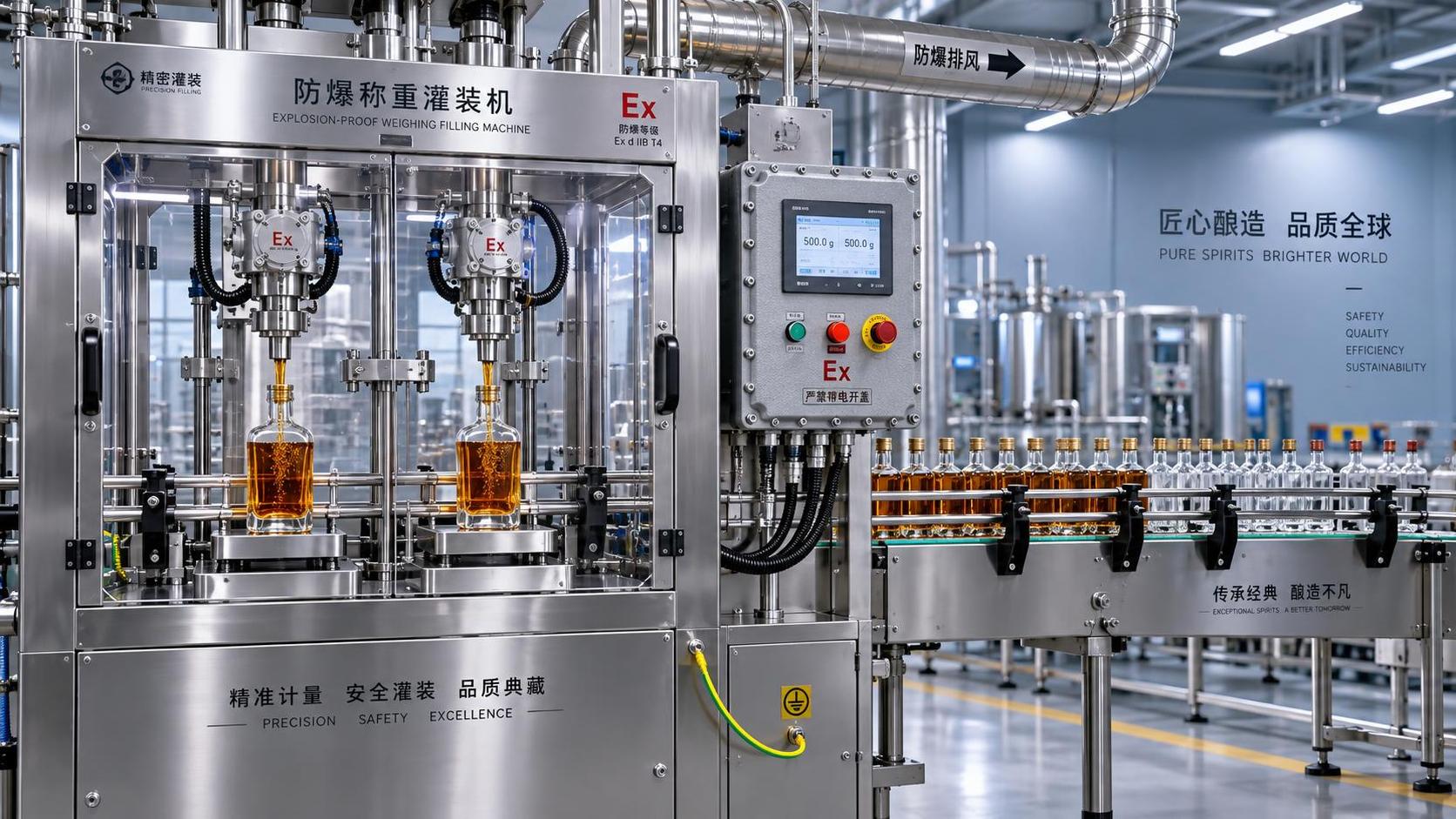
Not every beverage liquid requires the same level of filling safety. Products containing alcohol, flammable flavor extracts, solvents, or volatile ingredients can create ignition risks during production. An Explosion Proof Filling Machine is designed to help manufacturers handle these liquids safely while supporting efficient, compliant filling operations. The question is not simply whether a product is “liquid” or “alcoholic.” It is whether the product, its vapors, its cleaning materials, and the way it is filled can create a hazardous atmosphere around the equipment.
That distinction matters because many beverage producers begin with the wrong assumption. A high-proof spirit may clearly need a hazardous-area review, while a low-alcohol beverage might not create the same risk under normal conditions. At the same time, an apparently non-flammable drink can still introduce risk if concentrated flavor compounds, alcohol-based extracts, or flammable maintenance chemicals are handled near the filler.
Selecting the right filling system therefore starts with the liquid and continues through the whole operating environment: receiving, blending, transfer, filling, capping, cleaning, ventilation, and spill management.
The key issue is vapor, not just the product label
Explosion risk usually arises when a flammable vapor or mist mixes with air and encounters an ignition source. During filling, that source may be electrical equipment, a motor, a switch, a static discharge, a hot surface, or even a damaged cable connection. The liquid itself does not need to be burning visibly for a problem to exist. What matters is whether vapor can form at a concentration capable of igniting in the surrounding air.
This is why product temperature is often overlooked. A liquid that is relatively stable in a cool storage tank may release substantially more vapor when it is warmed, agitated, sprayed, recirculated, or exposed across an open filling nozzle. Headspace in bottles, open container mouths, leakage points, and conveyor-level spills can all affect the local atmosphere around a filling line.
An Explosion Proof Filling Machine is not a single universal specification. Depending on the project, it can involve protected electrical components, suitable motors and controls, grounded product-contact assemblies, enclosure selection, ventilation considerations, and layout decisions that reduce the likelihood of vapor accumulation. The required approach depends on the area classification and the applicable rules in the installation location.
Beverage liquids that commonly trigger a hazard review
The following categories do not automatically receive the same equipment specification in every facility. They do, however, commonly justify a closer engineering assessment before a standard filler is selected.
High-proof spirits and concentrated alcoholic products
Distilled spirits, alcohol concentrates, liqueur bases, and other products with a substantial ethanol content are among the most familiar applications. Ethanol vapor can be flammable, particularly where containers are open and filling is frequent. The risk can increase around small-neck bottles, fast filling cycles, warm product, poor extraction, or repeated line stoppages that leave liquid exposed.
A bottled spirit at retail strength and a high-strength blending ingredient should not be treated as identical applications. The concentration, temperature, container format, and process arrangement all affect the practical assessment. Producers should provide the actual product safety information rather than relying only on a marketing description such as “whisky,” “rum,” or “botanical spirit.”
Alcohol-based flavor extracts and essences
Flavor systems are often a hidden source of risk. Vanilla extracts, botanical tinctures, essential-oil carriers, citrus extracts, herbal ingredients, and concentrated aroma compounds may use alcohol or another volatile carrier. The final beverage may contain only a small dose, but the ingredient handling stage can involve much more concentrated material.
This creates an important boundary question: does the filling machine itself need hazardous-area protection, or is the greater concern in a separate flavor dosing or blending area? In some projects, the answer is different for each section of the line. Treating the entire factory as one uniform environment can result in unnecessary cost; treating all equipment as ordinary-duty can leave a real gap in safety planning.
Ready-to-drink cocktails and mixed alcoholic beverages
Canned cocktails, premixed beverages, wine-based drinks, and flavored alcoholic refreshment products vary widely in alcohol level. It is tempting to assume that a lower-proof finished drink is automatically outside any explosion concern. That may be true in some installations, but it should not be decided by alcohol percentage alone. Filling temperature, line speed, foam behavior, open transfer points, and the possibility of concentrated ingredients upstream all deserve consideration.
Carbonation adds another operational layer. Carbon dioxide is not flammable, but pressure management, foam control, and frequent adjustments can influence how much product is exposed during filling. It does not eliminate the need to understand the properties of the alcohol-containing liquid.
Solvent-containing beverage ingredients and processing aids
Some beverage operations use volatile solvents outside the final product itself. They may be associated with flavor preparation, extraction, laboratory-scale development, cleaning, adhesive application, printing, or maintenance. These materials should not be ignored simply because they are not filled into consumer packages.
The machinery review should include what can reasonably be present during normal operation, cleaning, troubleshooting, and spill response. A filler installed next to a solvent handling point may face a different environmental requirement than the same filler installed in a segregated packaging room.
Liquids that are often misunderstood
Water, juice, tea, coffee drinks, syrups, dairy beverages, and most conventional soft drinks are generally not treated as flammable filling products. Their ordinary filling process does not normally produce ignitable vapor in the way that volatile alcohol or solvent systems can. Yet “non-flammable product” does not always mean “no safety design questions.”
For example, a fruit drink may use a small amount of an alcohol-based flavor concentrate. A syrup line may be cleaned with chemicals that require special handling. A packaging hall may share air with a nearby spirit blending room. These factors do not prove that explosion-proof equipment is required, but they show why the decision should be based on the process rather than the name of the finished beverage.
Another misconception is that stainless steel construction alone makes a machine explosion-proof. Stainless steel can be valuable for hygiene, corrosion resistance, and cleaning, but it does not by itself address electrical protection, static control, component temperature, or hazardous-area compatibility.
What changes during filling?
The filling point is often the most relevant location because it combines liquid movement, open containers, mechanical motion, and electrical equipment. A risk review should look beyond the nozzle. Product pumps, load cells, control panels, sensors, capper drives, conveyor motors, and nearby junction boxes may all fall within the area being assessed.
Static electricity also deserves practical attention. Flowing liquids, flexible hoses, plastic containers, and rapid movement can contribute to charge buildup. Grounding and bonding are therefore part of the discussion in many flammable-liquid applications. The details should be reviewed by qualified personnel familiar with the product properties and local installation requirements; it is not a feature that should be assumed from a generic machine quotation.
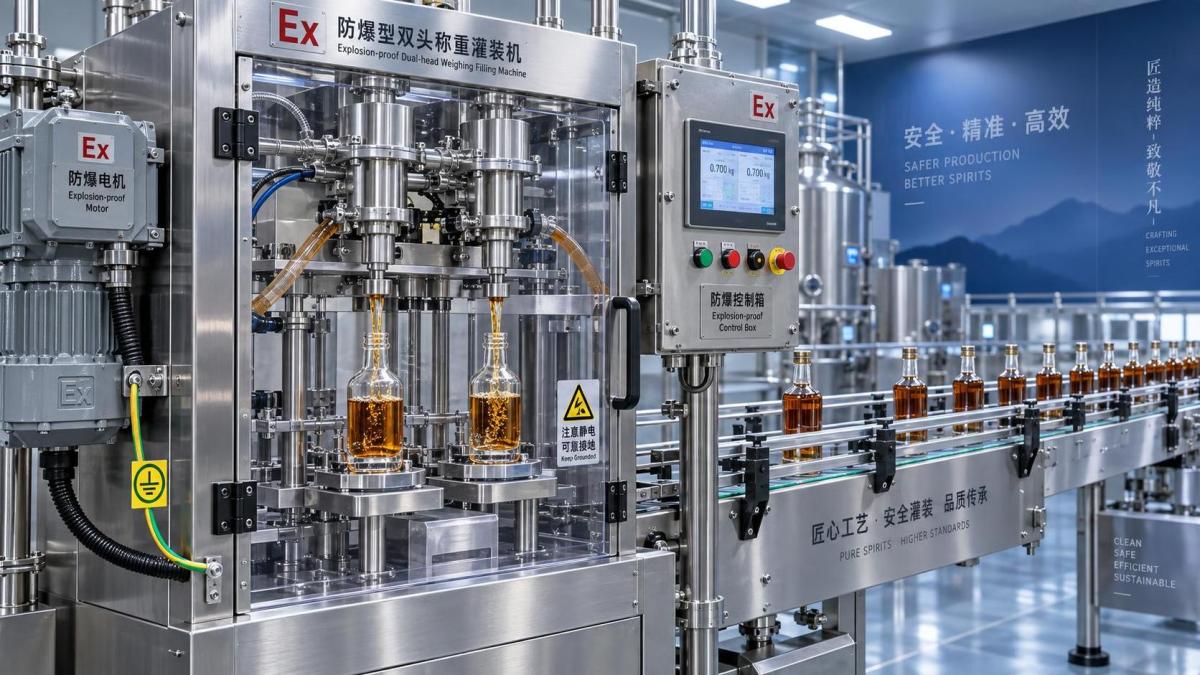
Weighing-based filling can be particularly useful where fill accuracy matters for higher-value liquids or variable container sizes. When evaluating a Dual-Head Weighing Filling Machine, the useful question is not only how many containers it can fill. Ask which electrical and control components are installed near the filling zone, how product transfer is arranged, how grounding is handled, and whether the configuration can be matched to the classified area established for the facility.
How to decide whether explosion-proof equipment is needed
The most reliable path is to gather process facts before discussing machine options. A safety data sheet for every relevant liquid is a sensible starting point, including finished product, concentrates, flavor bases, cleaning agents, and solvents used nearby. It should be reviewed alongside the actual production conditions rather than filed away as a purchasing document.
The following questions usually make the initial conversation more productive:
- What is the liquid composition, including alcohol content and volatile carriers?
- What temperatures occur during storage, blending, transfer, filling, and cleaning?
- Is filling open, enclosed, bottom-up, vacuum-assisted, pressure-based, or otherwise designed to reduce splashing and vapor release?
- Are containers glass, metal, or plastic, and do they create static-management concerns?
- Where are pumps, drives, sensors, controls, and cable connections located relative to possible vapor release?
- Which local regulations, insurance requirements, customer specifications, or site classification documents govern the installation?
In North American projects, discussions may refer to hazardous locations under the National Electrical Code framework. In many other markets, ATEX or IECEx-related requirements may be relevant. These terms are not interchangeable shorthand for “safe machine.” The applicable classification, equipment marking, installation method, and project responsibility need to be confirmed for the specific site.
Avoid both under-specifying and over-specifying
Under-specifying equipment can create operational and compliance problems that are expensive to correct after installation. Retrofitting protected motors, panels, sensors, or cable systems is not always straightforward, especially when line layout and guarding have already been finalized. It can also delay commissioning when the project team discovers that the site classification and machine design do not align.
Over-specifying has consequences too. It may increase cost, restrict component choices, complicate maintenance, and extend lead times without providing a meaningful benefit where no hazardous atmosphere is reasonably expected. The goal is not to make every beverage filler explosion-proof. The goal is to specify protection where the risk assessment shows it is necessary.
This is also why the machine builder, site safety team, electrical contractor, and process owner should exchange information early. A machine supplier can explain available configurations, but the facility owner and qualified local professionals typically need to define the installation environment and applicable site obligations.
A practical next step before requesting a filling quote
Before comparing filling capacity, nozzle count, or automation level, prepare a concise process brief. Include the product safety data, alcohol or solvent concentration, operating temperature, container type, target fill volume, expected cleaning method, and a simple layout showing adjacent operations. If a hazardous-area classification has already been completed, share it at the start rather than after the machine design is underway.
For beverage manufacturers, the answer to “Which liquids require an explosion proof filling machine?” is rarely a simple product list. High-proof alcohol, volatile extracts, solvent-containing ingredients, and certain processing chemicals are clear signals for further review. Lower-risk beverages may not require the same approach, but they should still be evaluated in the context of their ingredients and production environment. A sound decision comes from understanding where vapor can form, what could ignite it, and how the filling line is actually operated.
Leave A Message
If you are interested in our products and want to know more details, please leave a message here, we will reply you as soon as we can.